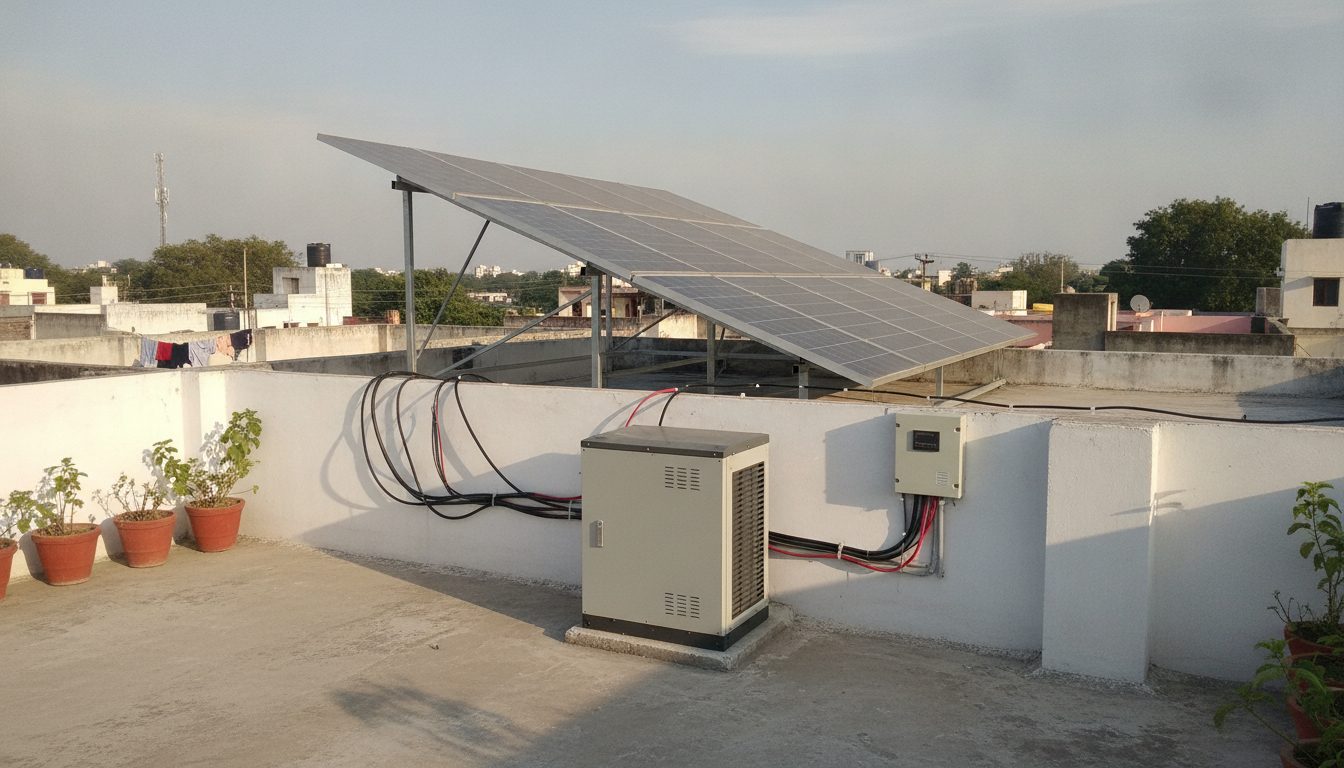
Understanding the Home Battery Storage Sizing Guide
As power cuts and Time-of-Use tariffs increase across Indian urban centers, residential hybrid systems with lithium-iron-phosphate (LiFePO4) batteries are growing in demand. This home battery storage sizing guide helps you plan a reliable backup setup. Homeowners must first map their essential daily loads, such as lights, fans, refrigerators, and Wi-Fi routers, to determine the total kilowatt-hours needed during a grid failure. You can evaluate your exact equipment requirements using the home inverter and battery backup size calculator before speaking with an installer.
Not sure what size you need? Our free solar calculator works out system size, cost after subsidy and payback from your monthly electricity bill.
Calculating Backup Loads and Energy Consumption
Calculating backup loads requires listing every appliance you intend to run simultaneously during a blackout. Multiply the wattage of each appliance by the number of hours it will operate to get total watt-hour requirements. LiFePO4 chemistry allows for deeper daily depth of discharge compared to older lead-acid alternatives without damaging cell health. Factor in the inverter efficiency losses and a safety buffer so your battery bank does not deplete prematurely during extended outages.
AC-Coupled Versus DC-Coupled Storage Setups
Choosing the right architecture depends on whether you are installing a new solar array or retrofitting storage onto an existing grid-tied system. In a DC-coupled setup, solar panels feed power directly into the hybrid inverter and battery through a charge controller, minimizing conversion steps. AC-coupled systems route solar power through a standard grid-tied inverter first, converting it to AC before a secondary battery inverter converts it back to DC for storage. DC-coupled layouts generally offer higher round-trip efficiency for new installations, while AC-coupled configurations suit existing rooftop setups.
Cost-Benefit Ratio: Storage Versus Net Metering Alone
Adding battery storage involves higher upfront capital costs than a standard grid-tied solar system with net metering alone. Homeowners must weigh this initial expense against the financial impact of frequent local power outages and rising peak-hour Time-of-Use electricity tariffs. If your local grid experiences stable supply with minimal tariff differentials, net metering alone provides faster financial returns. When prolonged grid instability disrupts daily routines or business operations, the added cost of a hybrid battery system provides tangible operational security.
🌟 Ready to Go Solar? Get 3 Free Quotes
Connect with verified, MNRE-empanelled solar installers near you — free, no obligation.
Get Free Solar Quotes →