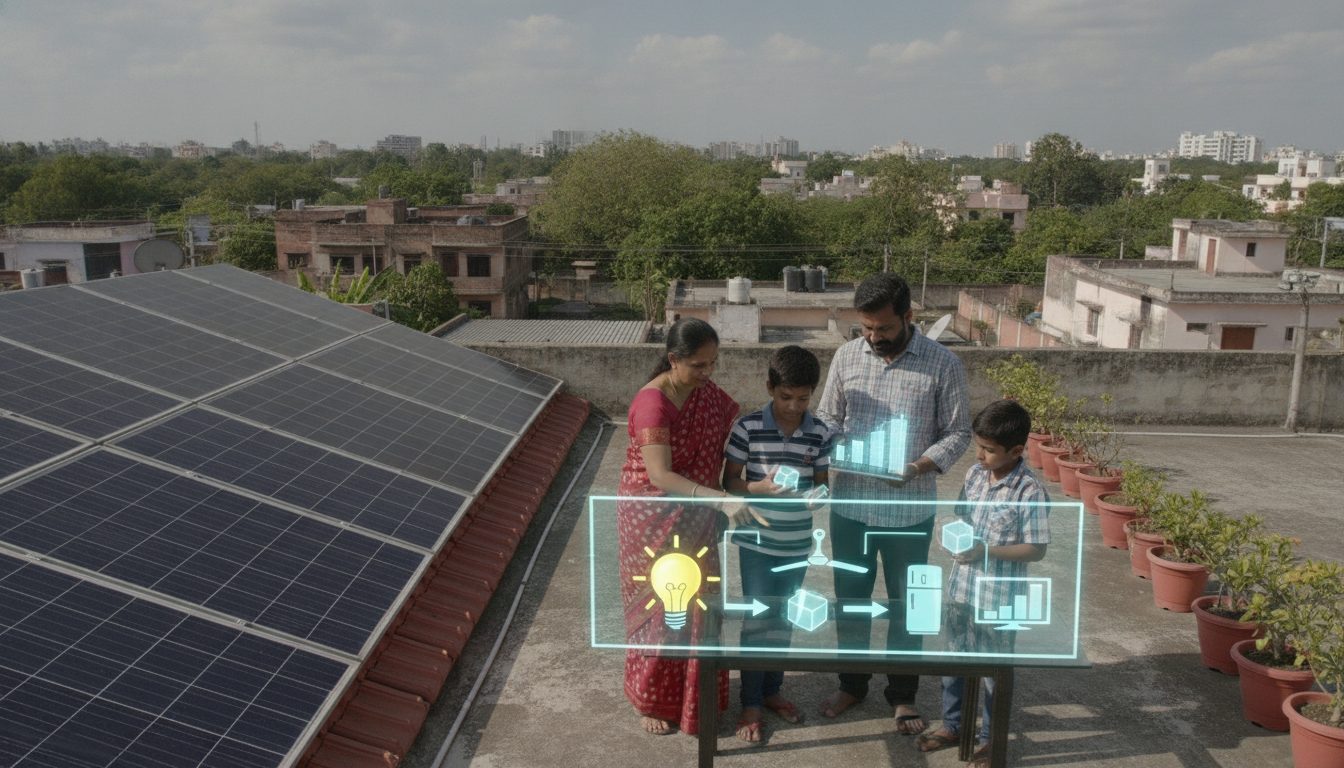
Calculating Your Household Daily Electricity Consumption
Knowing your exact daily electricity consumption is the first step to calculate solar panel capacity for home installations accurately. Check your monthly utility electricity bill for the total units consumed in kilowatt-hours (kWh). Divide this monthly figure by thirty to find your average daily consumption. For example, a home using 300 units monthly consumes roughly 10 units per day. High-draw appliances such as air conditioners and water heaters significantly spike your connected load requirements, so factor in seasonal usage patterns when looking at your bills.
Not sure what size you need? Our free solar calculator works out system size, cost after subsidy and payback from your monthly electricity bill.
Understanding Solar Generation and Peak Sun Hours
Solar panel output relies heavily on the amount of sunlight your roof receives. Solar generation depends on peak sun hours, averaging 4.5 to 5 hours daily across most Indian climatic zones. A 1kW solar system operating under 4.5 to 5 peak sun hours typically generates about 4 to 5 units of electricity per day. Actual generation varies depending on panel tilt, local weather conditions, and shading from nearby structures or trees.
Matching System Size to Monthly Utility Bills
Once you know your daily consumption and local generation averages, sizing your grid-tied system becomes straightforward. An average Indian household consuming 300 units per month typically requires a 3kW grid-tied solar system. To check how different setups fit your specific consumption pattern and tariff structure, you can run a quick simulation using the solar bill simulator and tariff calculator to estimate your monthly savings.
Assessing Appliance Wattage and Rooftop Area
Your physical roof space and connected appliance load dictate whether your chosen system layout is practical. List out your heavy appliances, including air conditioners, water heaters, refrigerators, and pumps, to sum up your total connected wattage. Standard solar panels require adequate unshaded surface area on your roof to mount the required capacity. You can verify if your property has enough space by checking the roof area required for solar panels calculator before purchasing equipment.
🌟 Ready to Go Solar? Get 3 Free Quotes
Connect with verified, MNRE-empanelled solar installers near you — free, no obligation.
Get Free Solar Quotes →