Understanding Soiling Losses in Indian Microclimates
Dust accumulation and bird droppings cause energy generation drops of up to 25% in dusty Indian regions. This primary solar panel cleaning and maintenance guide explains how particulate matter blocks sunlight from reaching photovoltaic cells, reducing overall system output. Without regular upkeep, thin layers of grime bake onto the glass surface under intense sunlight, compounding energy losses over weeks.
Microclimate conditions dictate how fast grime accumulates on rooftop arrays. Industrial zones face heavy soot, chemical fallout, and airborne particulate pollution, requiring frequent intervention. Agricultural regions deal with seasonal dust from tilling, harvesting, and localized organic debris. Homeowners can use the solar bill simulator and tariff calculator to check how dropping generation units affect monthly utility bill savings.
To check the numbers for your own home, try the solar calculator — enter your electricity bill and get system size, subsidy and payback in seconds.
Comparing Manual Washing and Robotic Cleaning Systems
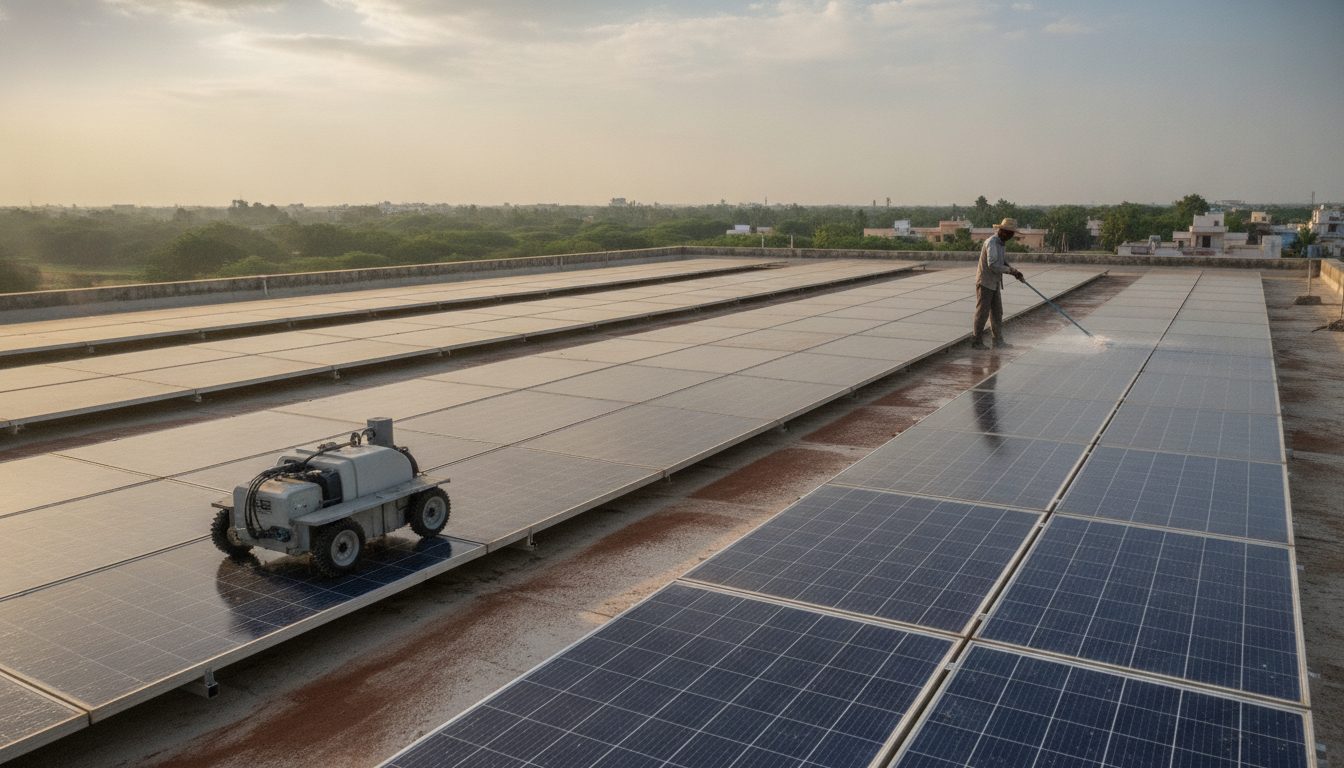
Manual washing remains common for residential roofs. This approach uses soft bristle brushes, wiper blades, and treated water to scrub away stubborn residue. Technicians must avoid abrasive scouring pads that scratch anti-reflective glass coatings. High-mineral hard water should also be avoided because mineral deposits leave white scaling films on panels that block solar irradiance.
Automated waterless robotic cleaning systems offer an alternative for large arrays or hard-to-reach residential setups. These units travel across the glass surface using microfiber rollers and dry brushing mechanisms without needing liquid water. Dry cleaning works well in arid regions where water scarcity is an issue, though stubborn bird droppings still require targeted manual spot cleaning.
Establishing a Frequency Schedule Based on Environment
Cleaning schedules depend entirely on local environmental exposure. Industrial and highway-adjacent installations need washing every two weeks due to rapid particulate settling. Agricultural rooftops require cleaning every three to four weeks during peak farming seasons. Coastal installations face salt spray that forms sticky films, requiring frequent rinsing to prevent corrosion on aluminum frames and module glass.
| Environment Type | Primary Contaminant | Recommended Frequency |
|---|---|---|
| Industrial Area | Soot, ash, heavy dust | Every 2 weeks |
| Agricultural Area | Soil dust, crop debris | Every 3 to 4 weeks |
| Urban Residential | General dust, vehicular smog | Monthly |
| Coastal Region | Salt spray, moisture grime | Every 2 to 3 weeks |
Safety Precautions and Glass Micro-Crack Prevention
Electrical safety is the first priority during any maintenance work. Technicians must isolate the solar array using DC isolator switches and inverter shut-down procedures before applying water or touching wiring harnesses. Working on wet, inclined rooftops also requires proper fall-arrest harnesses and stable ladder placement.
Excessive physical pressure causes glass micro-cracks that ruin photovoltaic cells internally. Workers must never step directly onto solar panels or lean heavy equipment against module frames. Using high-pressure water jets above manufacturer-recommended bar ratings can force moisture past junction box seals, causing short circuits and permanent electrical failure.
🌟 Ready to Go Solar? Get 3 Free Quotes
Connect with verified, MNRE-empanelled solar installers near you — free, no obligation.
Get Free Solar Quotes →