Understanding Commercial Open Access and State Thresholds
Medium-to-large industrial consumers facing high commercial electricity tariffs often turn to open access solar to source lower-cost renewable power. Rather than installing panels strictly on-site, businesses buy electricity from dedicated solar plants through the public transmission network. Eligibility depends on minimum capacity thresholds set by individual state electricity regulatory commissions. For example, Maharashtra, Gujarat, and Tamil Nadu maintain specific megawatt or kilowatt floor limits for consumers to qualify for open access transactions. Businesses evaluating their overall energy expenses often start by using the solar ROI and payback period calculator to project long-term financial viability against standard utility billing structures.
Key Regulatory Charges and Wheeling Mechanisms
Open access transactions involve several regulatory fees that impact overall financial returns. Consumers must pay wheeling charges for using transmission lines, cross-subsidy surcharges to compensate distribution companies for losing high-tariff customers, and additional surcharges where applicable. Banking facilities also vary by state, determining whether generators can deposit surplus daytime solar energy into the grid and withdraw it later during non-production hours. Understanding these variable state fees is essential before finalizing any power purchase agreement.
Financial Comparison: Captive Rooftop Solar versus Group Captive Open Access
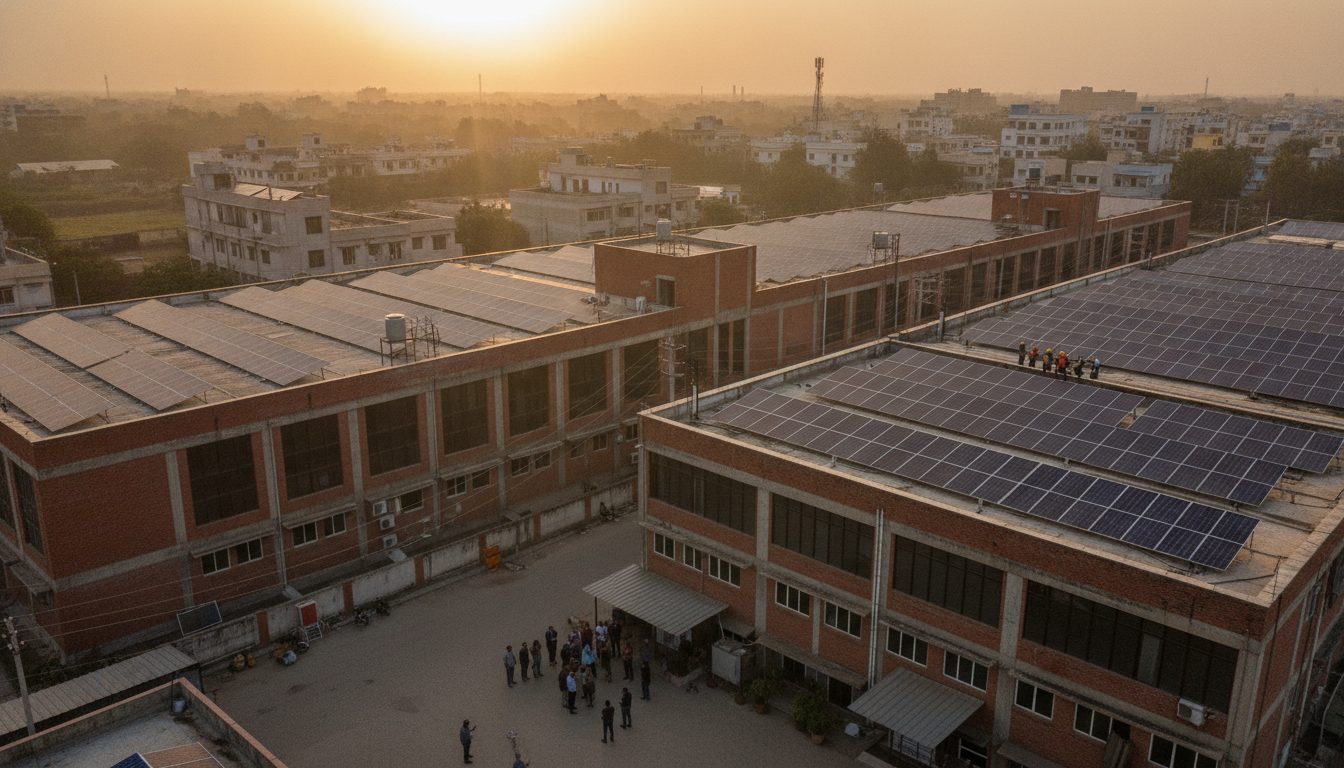
Industrial facilities choose between on-site captive rooftop systems and off-site group captive open access projects based on available space and capital allocation. Captive rooftop installations avoid transmission and wheeling charges entirely because power is consumed right where it is generated. Group captive open access suits facilities with high electricity demand that exceed available roof area, allowing them to own a stake in a remote solar park.
| Parameter | Captive Rooftop Solar | Group Captive Open Access |
|---|---|---|
| Land Requirement | Strictly on-site roof or ground space | Off-site solar park |
| Wheeling Charges | Not applicable | Applicable based on state rules |
| Cross-Subsidy Surcharge | Exempt in most states | Applicable |
| Scale of Generation | Limited by available premises | High capacity potential |
🌟 Ready to Go Solar? Get 3 Free Quotes
Connect with verified, MNRE-empanelled solar installers near you — free, no obligation.
Get Free Solar Quotes →