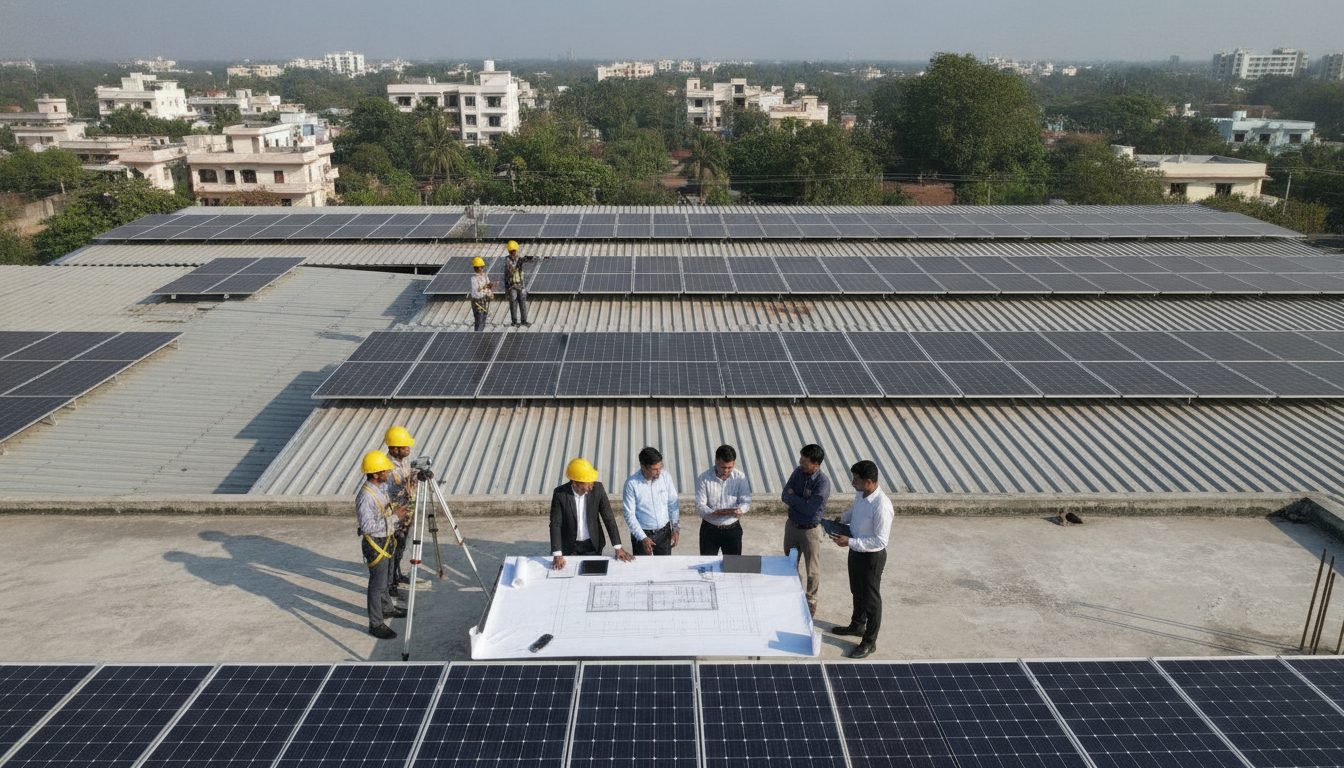
Understanding the Commercial Solar EPC Tender Framework
Executing a winning commercial solar EPC tender bidding strategy India starts with a clear breakdown of project requirements and site constraints. Bidding for C&I solar tenders requires precise estimation of Balance of System (BoS) costs, cable losses, and local labor rates. Installers frequently underbid due to unforeseen logistics and DISCOM grid-sync charges. Before submitting a proposal, verify the exact transformer capacity, HT line proximity, and shadow-free area. You can check structural feasibility using a solar roof area calculator to match panel placement against actual client load curves.
To check the numbers for your own home, try the solar calculator — enter your electricity bill and get system size, subsidy and payback in seconds.
Step-by-Step Bidding Framework for Contractors
A structured workflow prevents costly omissions during final bid submission. First, audit the site topography to determine correct cable routing and minimize losses. Second, factor in all local labor rates without assuming uniform regional wage standards. Third, calculate exact BoS expenses including mounting structures, inverters, and switchgear. Finally, build contingencies for DISCOM grid-sync charges and testing fees, which often scale unexpectedly during commercial approvals.
Margin Protection and Risk Mitigation Clauses
Unforeseen site delays and logistics bottlenecks can erode project margins entirely. Protect your bottom line by incorporating strict force majeure and delay clauses into the client contract. Clearly define responsibilities for DISCOM approvals and right-of-way permissions. Tie milestone payments directly to material delivery and physical installation progress rather than administrative sign-offs alone, keeping cash flow steady throughout the construction phase.
🌟 Ready to Go Solar? Get 3 Free Quotes
Connect with verified, MNRE-empanelled solar installers near you — free, no obligation.
Get Free Solar Quotes →