Understanding Capacity Thresholds Above 100kW
When evaluating commercial solar inverter string vs central India installations, system size dictates the primary hardware decision. Commercial rooftop solar installations require robust power conversion systems to maximize uptime and reduce Levelized Cost of Energy (LCOE). Projects crossing the 100kW capacity threshold demand careful evaluation of how power is aggregated from the panels to the grid.
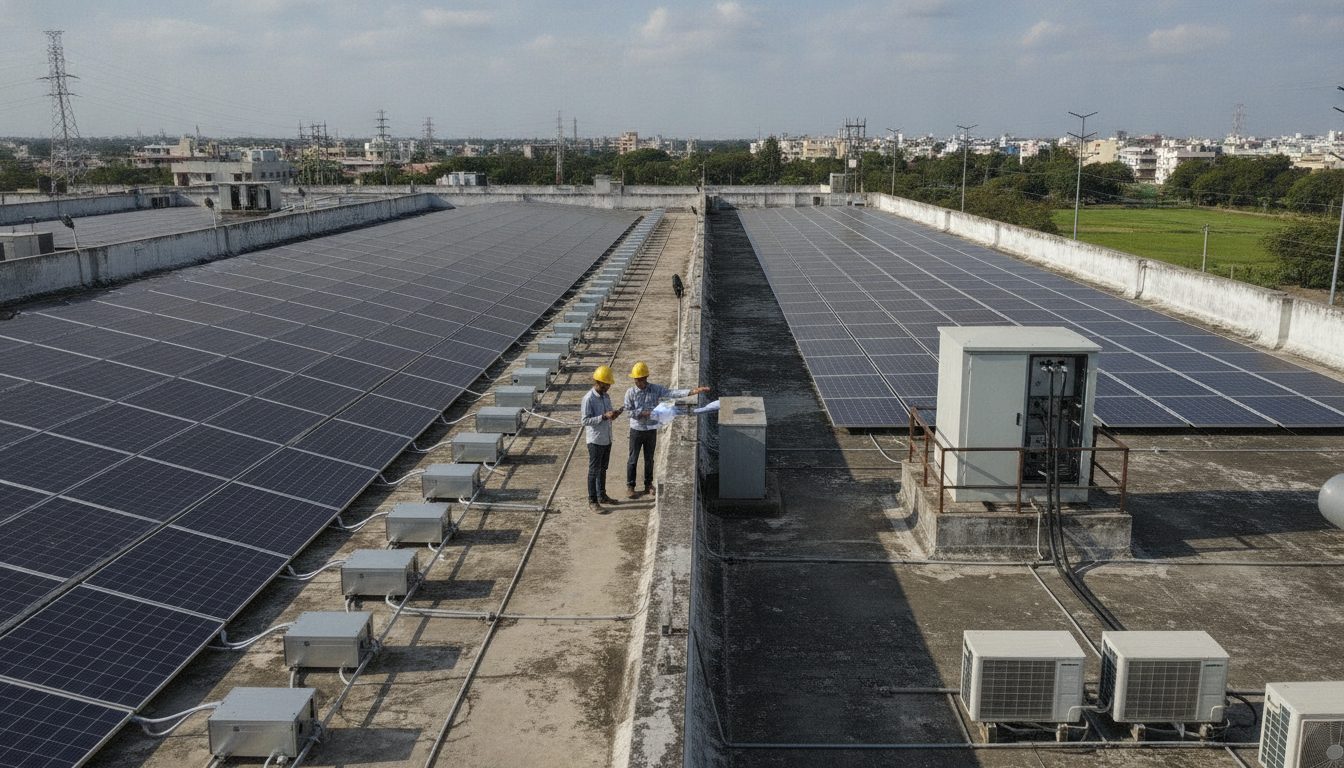
Central inverters consolidate energy from multiple large arrays into a single conversion unit. String inverters distribute the conversion load across multiple smaller units spread throughout the rooftop layout. Facility managers must weigh these structural differences against physical roof space limitations, which can be easily planned using a solar roof area calculator before procurement begins.
Not sure what size you need? Our free solar calculator works out system size, cost after subsidy and payback from your monthly electricity bill.
Maintenance Accessibility and Uptime Considerations
Physical access to hardware influences long-term operational expenses across Indian commercial sites. Central units concentrate all conversion components in one enclosure, simplifying routine physical checks for resident technicians. However, if a central unit experiences a fault, the entire connected block of generation capacity goes offline until repairs are completed.
String configurations reduce total system downtime risk. If an individual string unit encounters a technical issue, generation continues uninterrupted across the remaining units on the roof. Routine maintenance requires physical inspection points across various zones rather than a single service station.
MPPT Tracking Efficiency and Shadow Tolerance
Shading is a frequent operational challenge on Indian commercial rooftops due to surrounding structures, parapet walls, and ventilation equipment. Maximum Power Point Tracking (MPPT) efficiency determines how effectively an inverter extracts energy under varying irradiance conditions.
String topologies offer superior shadow tolerance because each unit manages fewer panels independently. If partial shading affects one section of the array, only the corresponding string suffers a drop in output. Central systems rely on wider arrays tied to fewer MPPT channels, meaning localized shading can impact a broader segment of total generation.
Technical Parameters for Indian Grid Conditions
Power conversion hardware must withstand local environmental and grid factors common across industrial zones in India. High ambient temperatures, dust accumulation, and voltage fluctuations test the thermal management and protection ratings of commercial inverters.
Both string and central units must comply with local utility interconnection codes, harmonic distortion limits, and fault ride-through requirements. Selecting the correct topology depends on matching these grid compliance parameters to the specific load profile and transformer capacity of the commercial facility.
🌟 Ready to Go Solar? Get 3 Free Quotes
Connect with verified, MNRE-empanelled solar installers near you — free, no obligation.
Get Free Solar Quotes →