Understanding Commercial Net Metering Caps
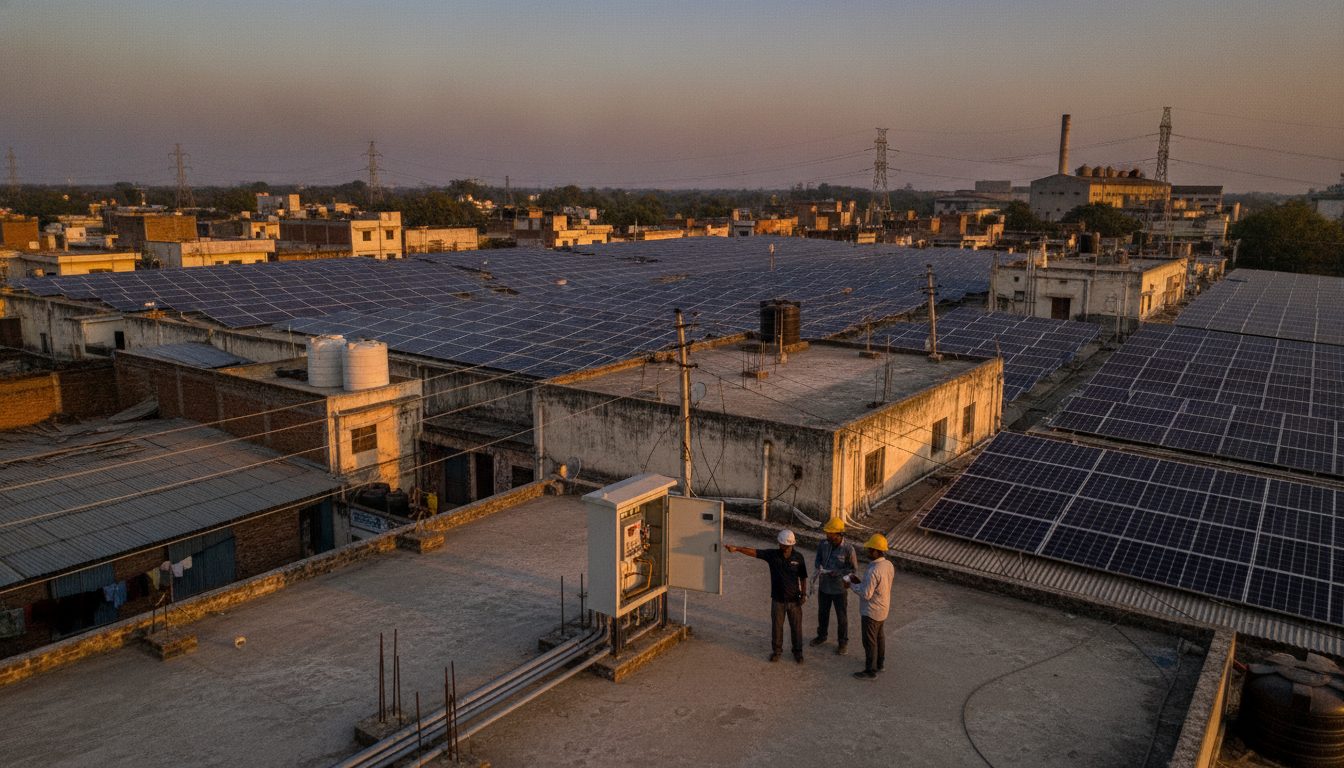
Commercial solar net metering limitations India dictate how much capacity a business can install behind the meter. State electricity regulatory commissions often cap net metering for commercial and industrial (C&I) consumers based on a percentage of their sanctioned load or contract demand. When businesses exceed these caps, surplus generation cannot be credited under standard net metering frameworks. Instead, state policies often push installations toward net billing, gross metering, or commercial tariff structures with high fixed charges.
Enterprise buyers must evaluate their consumption profile carefully before procuring hardware. To estimate space requirements for large installations before purchasing panels, use the solar roof area calculator to plan module placement effectively.
Not sure what size you need? Our free solar calculator works out system size, cost after subsidy and payback from your monthly electricity bill.
Wheeling Charges and Banking Restrictions Across States
Wheeling charges, cross-subsidy surcharges, and banking restrictions vary widely across industrial hubs like Maharashtra, Gujarat, and Tamil Nadu. Open access consumers often pay wheeling charges to transmit solar energy from a remote generation site to their consumption facility through state transmission grids. Banking charges dictate whether a factory can deposit excess solar units into the grid during peak production hours and withdraw them later. Regulatory frameworks in certain states restrict banking entirely during peak demand months or levy steep banking charges that reduce overall project financial returns.
Alternative Models for Enterprise Buyers
Business owners facing strict state caps on direct net metering often adopt alternative compliance frameworks. Captive and group captive solar models allow commercial entities to set up dedicated solar plants or group together to source solar power without triggering standard retail supply penalties. Another operational strategy involves zero-export devices. These controllers ensure that zero surplus energy flows back into the grid when net metering approvals are denied or capped at low capacities, keeping the installation compliant with local utility directives.
🌟 Ready to Go Solar? Get 3 Free Quotes
Connect with verified, MNRE-empanelled solar installers near you — free, no obligation.
Get Free Solar Quotes →