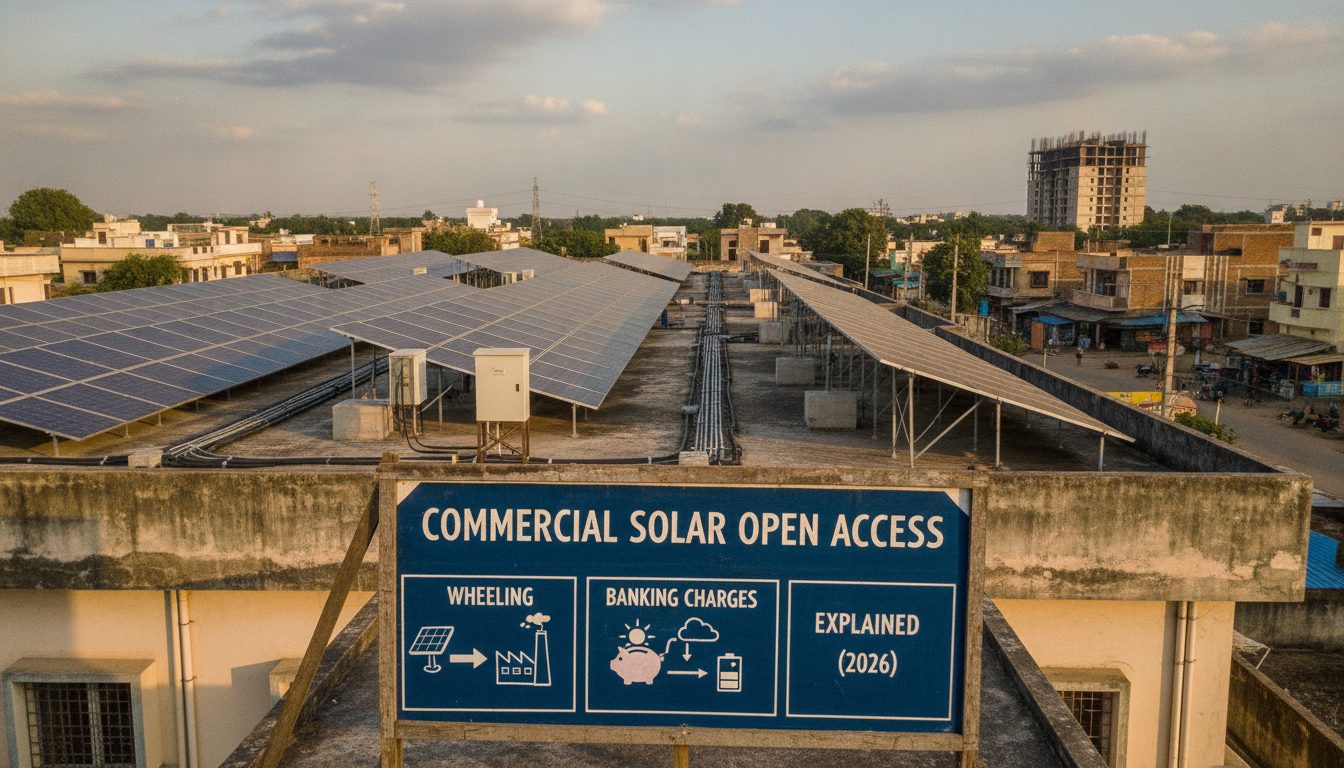
Understanding Solar Open Access Eligibility and Thresholds
Commercial and industrial clients often seek solar open access india frameworks to bypass high grid tariffs charged by conventional electricity boards. Instead of depending entirely on local discoms, large power consumers can source electricity directly from solar power plants. This route requires meeting specific regulatory criteria set by state electricity regulatory commissions. The primary eligibility rule involves a minimum capacity threshold, which is typically fixed at 1 MW for open access consumers. Industrial units with high energy consumption demands use this mechanism to secure lower power purchase costs over long terms.
Decoding Wheeling, Banking, and Surcharge Fees
Utilizing the existing transmission infrastructure means power consumers must pay specific fees to state utilities. State electricity boards levy cross-subsidy surcharges to compensate discoms for the loss of high-paying industrial customers. Additional surcharges apply under certain regulatory conditions. Wheeling charges cover the cost of transmitting electricity through the transmission lines of the distribution licensee. Banking charges apply when surplus solar energy is injected back into the grid for later use, depending on state-specific policies. Managing these recurring regulatory expenses is essential before running a solar ROI and payback period calculator to project true financial returns.
Comparing Captive and Third-Party Sale Models
Businesses evaluating open access typically choose between two primary financial structures. The captive model requires the consumer to hold a minimum equity stake of 26 percent in the power plant and consume at least 51 percent of the generated electricity. This structure often attracts lower cross-subsidy surcharges compared to other pathways. The third-party sale model involves purchasing power from an independent power producer without holding equity. While third-party setups involve fewer upfront capital requirements, they face higher regulatory fees and surcharges set by state utilities.
🌟 Ready to Go Solar? Get 3 Free Quotes
Connect with verified, MNRE-empanelled solar installers near you — free, no obligation.
Get Free Solar Quotes →