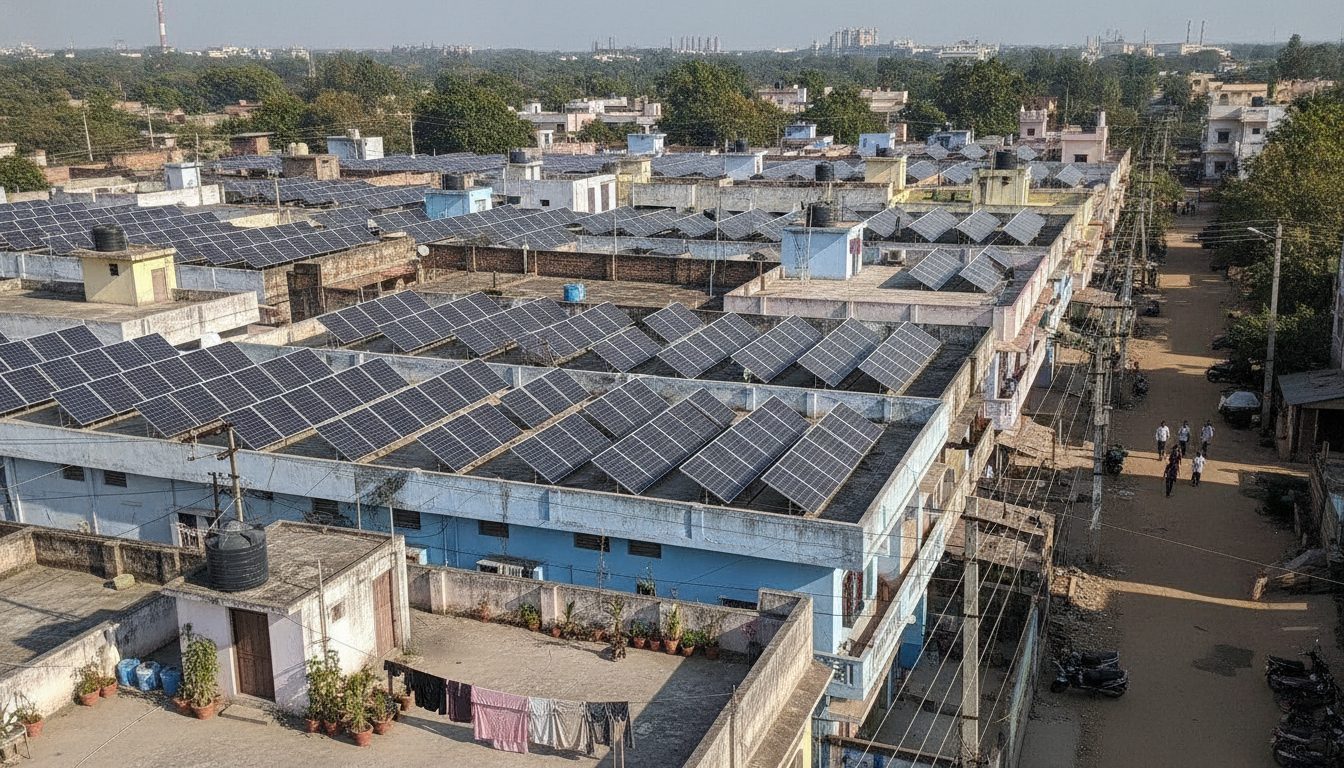
Understanding Commercial Solar PPA Financing and Captive Agreements
For C&I facility managers and factory owners exploring third-party ownership, the commercial solar PPA financing captive power agreement India framework offers a structured pathway to solar adoption without upfront capital expenditure. Under a Power Purchase Agreement (PPA), a solar developer builds, owns, and operates the generating asset on your premises or through open access. You simply purchase the generated electricity at a pre-agreed per-unit tariff over a long-term operational lifecycle.
Captive power agreements carry specific legal definitions. To qualify as a captive user under Indian electricity regulations, the consumer must hold a minimum equity stake in the special purpose vehicle building the plant, typically twenty-six percent, and consume at least fifty-one percent of the generated power annually. Meeting these thresholds helps industrial consumers exempt themselves from certain open access charges.
Before committing to an agreement, you can use our solar ROI and payback period calculator to evaluate how third-party tariffs compare against your current utility grid rates.
Not sure what size you need? Our free solar calculator works out system size, cost after subsidy and payback from your monthly electricity bill.
Tariff Structures, Open Access Charges, and Cross-Subsidy Surcharges
PPA tariffs are generally structured as a fixed per-unit rate with an agreed annual escalation clause, or as a flat rate for the entire contract duration. However, the commercial viability of these models depends heavily on state-specific open access regulations. When sourcing solar power from off-site ground-mounted installations through transmission lines, consumers face several regulatory fees.
Key charges impacting third-party solar economics include:
- Cross-Subsidy Surcharges (CSS): Levied to compensate the local distribution company for the loss of high-paying industrial consumers.
- Additional Surcharge: Imposed when open access consumers reduce their demand from the local utility, affecting fixed-cost obligations.
- Transmission and Wheeling Charges: Fees paid to state or central transmission utilities for using their grid infrastructure to transport power.
Captive structures often reduce or waive cross-subsidy surcharges depending on the state electricity regulatory commission guidelines, making them financially attractive for heavy industrial users.
Long-Term PPA Risk Allocations and Financial Metrics
A 25-year operational lifecycle requires clear risk allocation between the consumer and the solar developer. The PPA document must explicitly define Force Majeure events, grid unavailability penalties, performance ratio guarantees, and curtailment compensation. Developers assume the technological and maintenance risk, while consumers take on offtake risk and financial stability obligations.
Lenders evaluate these projects using specific financial metrics. The Levelized Cost of Energy (LCOE) determines the minimum constant price at which power must be sold to recover all project costs over its lifecycle. Meanwhile, the Debt Service Coverage Ratio (DSCR) measures the project cash flow available to pay current debt obligations, ensuring the developer maintains operational solvency throughout the contract tenure.
Asset Transfer and Exit Clauses After the Operational Lifecycle
The legal clauses governing asset transfer at the end of the 25-year PPA term require careful drafting during initial contract negotiations. Standard agreements typically offer three distinct pathways upon contract expiration:
- Extension of PPA: Extending the agreement at a significantly reduced tariff, factoring in that the capital cost of the solar assets has been fully amortized.
- Asset Transfer: Transferring ownership of the solar plant to the C&I consumer at nominal residual value, allowing continued self-consumption.
- Decommissioning: Safe dismantling and removal of the system by the developer, with site restoration responsibilities clearly assigned.
Clarifying these exit terms protects factory owners from unexpected liabilities or disputes once the primary operational period concludes.
🌟 Ready to Go Solar? Get 3 Free Quotes
Connect with verified, MNRE-empanelled solar installers near you — free, no obligation.
Get Free Solar Quotes →