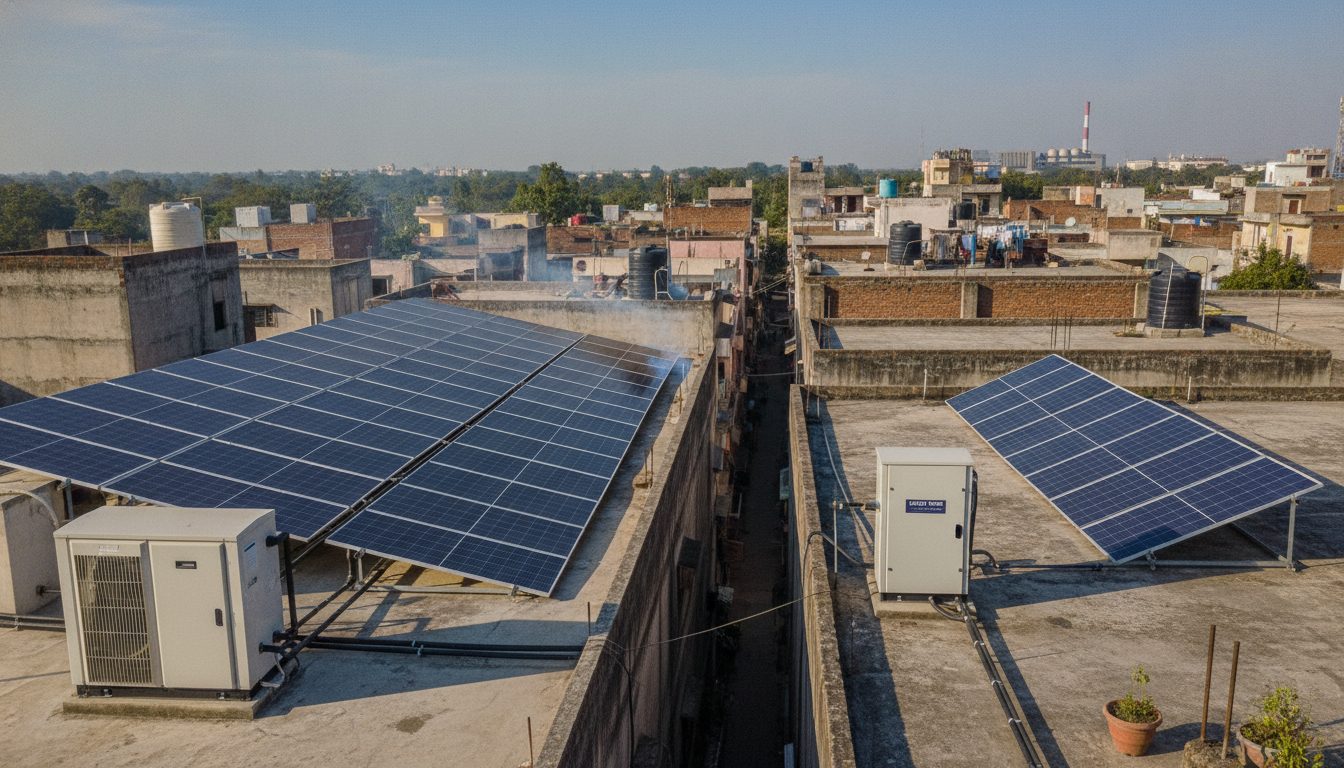
Understanding the Commercial Solar CAPEX vs OPEX India Framework
When evaluating commercial solar CAPEX vs OPEX India projects, industrial energy managers must weigh upfront capital investments against zero-capex RESCO and Power Purchase Agreement models. Choosing the right framework dictates your financial exposure, asset ownership, and long-term electricity pricing stability. Capital expenditure requires the company to fund the entire installation upfront. This path secures complete ownership of the solar plant from day one. Energy managers can use our solar ROI and payback period calculator to evaluate how direct capital outlay impacts multi-year cash flows.
Conversely, the OPEX or RESCO model transfers the capital burden entirely to a third-party developer. The industrial client simply signs a long-term agreement to buy the generated power at a pre-agreed tariff rate. This approach preserves internal capital for core business operations while still securing lower daytime energy costs compared to standard grid tariffs.
Want to see what this means for your roof? Use our free solar calculator for India to estimate system size, cost after the ₹78,000 subsidy and payback period.
Financial Implications of Tariff Structures and Regulations
Industrial power pricing involves complex tariff structures that directly influence the financial viability of solar projects. Grid electricity often carries high industrial tariffs and demand charges, making solar generation attractive for daytime load offsets. However, regulatory components add layers of cost that require careful calculation.
Open Access regulations, cross-subsidy surcharges, and additional surcharges apply when wheeling solar power from a remote location to your industrial facility. Under a CAPEX model, the industrial consumer absorbs these regulatory costs directly, relying on internal accounting to project savings. Under a PPA structure, the developer typically navigates these regulatory hurdles and factors them into the final per-unit tariff offered to the client. You can test different consumption scenarios using the solar bill simulator and tariff calculator to see how regulatory charges alter your projected electricity savings.
Long-Term O&M Liabilities and Asset Ownership
Solar plants require consistent operation and maintenance to ensure peak generation over a twenty-five-year lifespan. These ongoing liabilities differ significantly between the two financing structures.
| Parameter | CAPEX Model | OPEX / PPA Model |
|---|---|---|
| Upfront Cost | High capital investment required | Zero capital investment |
| Asset Ownership | Industrial client owns the plant | Third-party developer owns the plant |
| O&M Responsibility | Managed internally or via separate contract | Managed entirely by the developer |
| Performance Risk | Borne by the client | Borne by the developer |
Under a CAPEX installation, your maintenance team handles inverter replacements, module cleaning schedules, and performance monitoring, or outsources them via a separate service contract. Under an OPEX agreement, the developer retains full operational responsibility. If generation drops below guaranteed thresholds, the developer bears the financial penalty, insulating the industrial client from performance risk.
Presenting Clear ROI Metrics to the Board of Directors
Securing board approval for industrial solar adoption requires precise financial metrics. CAPEX proponents highlight higher cumulative lifetime savings because the company keeps all revenue generated after the initial payback period concludes. Internal rate of return and net present value calculations usually favor direct purchase if capital is readily available.
On the other hand, OPEX proposals appeal to boards focused on immediate operational expenditure reduction without balance sheet expansion. The PPA tariff provides a predictable expense line item that sits outside heavy capital budgeting constraints. Energy managers must present both options clearly, balancing the total cost of ownership against capital allocation priorities.
🌟 Ready to Go Solar? Get 3 Free Quotes
Connect with verified, MNRE-empanelled solar installers near you — free, no obligation.
Get Free Solar Quotes →