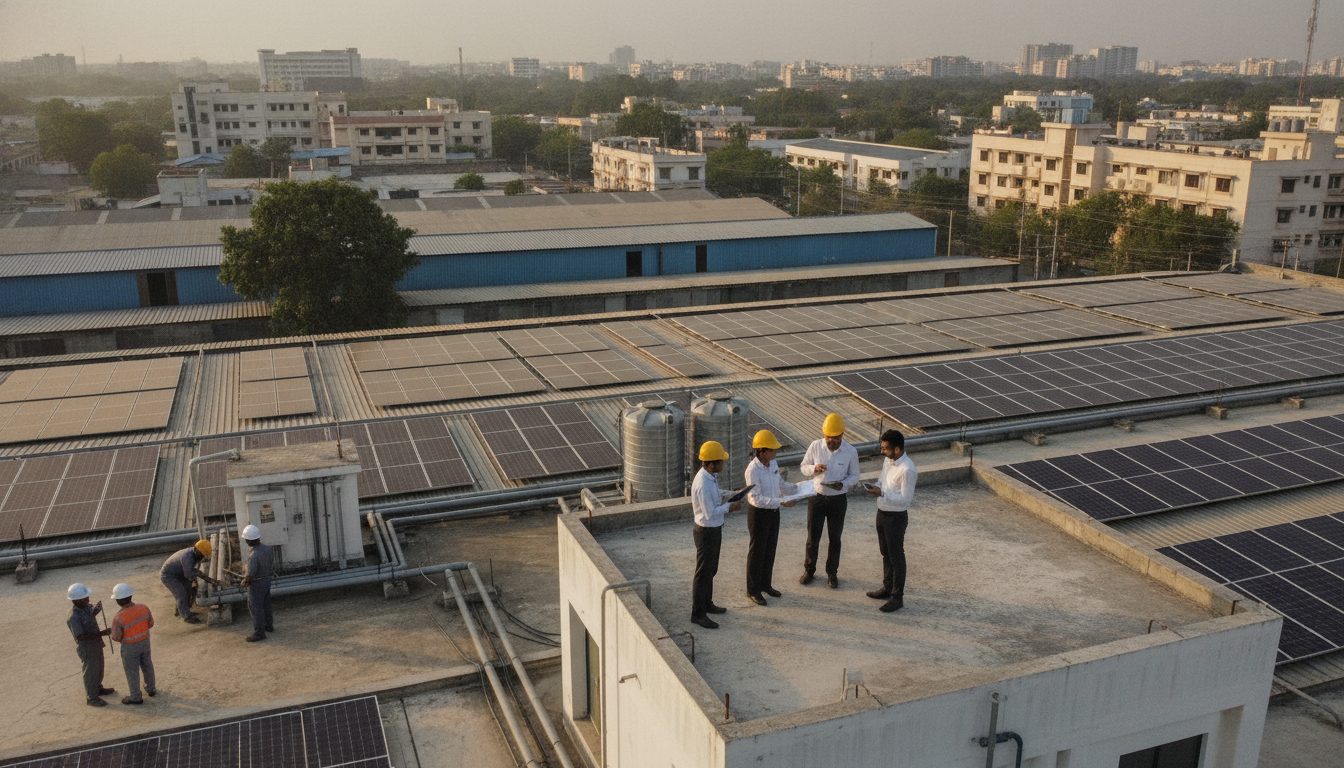
Understanding the Commercial OPEX Model in India
The solar opex model ppa commercial india accounts for a rapidly growing share of commercial and industrial solar adoption. Under this framework, often called the RESCO model, a third-party developer installs, owns, and operates the rooftop solar plant on the client premises. The commercial property owner pays only for the electricity consumed at a pre-agreed tariff, requiring zero upfront capital expenditure.
Property owners evaluating long-term financial returns versus outright capex purchases must weigh balance sheet flexibility against long-term electricity cost savings. While a capex purchase yields higher cumulative savings over the system lifetime, the opex model preserves working capital for core business operations while immediately reducing monthly grid electricity expenses.
To check the numbers for your own home, try the solar calculator — enter your electricity bill and get system size, subsidy and payback in seconds.
Core Clauses in a Commercial Solar PPA
Drafting a durable power purchase agreement requires precise handling of specific operational and financial clauses. Tariff escalation rates determine how the per-unit electricity price increases annually, usually tied to a fixed percentage or inflation index. Deemed generation guarantees protect the client when grid outages or plant maintenance prevents generation, ensuring the developer compensates for lost energy output.
Termination liabilities outline the financial obligations if either party exits the contract prematurely, including buyout formulas for the solar asset at specific milestone years. Force majeure clauses define how extraordinary events like natural disasters, civil unrest, or sudden regulatory shifts impact contract performance, timelines, and payment obligations without triggering default penalties.
Before committing to a long-term contract, facility managers can evaluate potential returns and payback timelines using the solar ROI and payback period calculator to benchmark expected PPA savings against internal hurdle rates.
Evaluating Long-Term Financial Returns Versus Capex
Commercial and industrial decision-makers often balance two distinct pathways for rooftop solar adoption. Outright capex ownership delivers maximum lifetime savings because the business owns the asset from day one and claims accelerated depreciation tax benefits. However, this path requires substantial upfront capital allocation and internal technical oversight for operations and maintenance.
The opex route shifts technical and financial risk entirely to the developer. The developer manages inverter replacements, insurance, cleaning schedules, and performance monitoring. While the cumulative lifetime cost under a PPA exceeds an outright purchase due to the profit margin retained by the developer, the complete absence of initial capital outlay makes this model accessible for scaling across multiple factory locations or warehouses simultaneously.
🌟 Ready to Go Solar? Get 3 Free Quotes
Connect with verified, MNRE-empanelled solar installers near you — free, no obligation.
Get Free Solar Quotes →