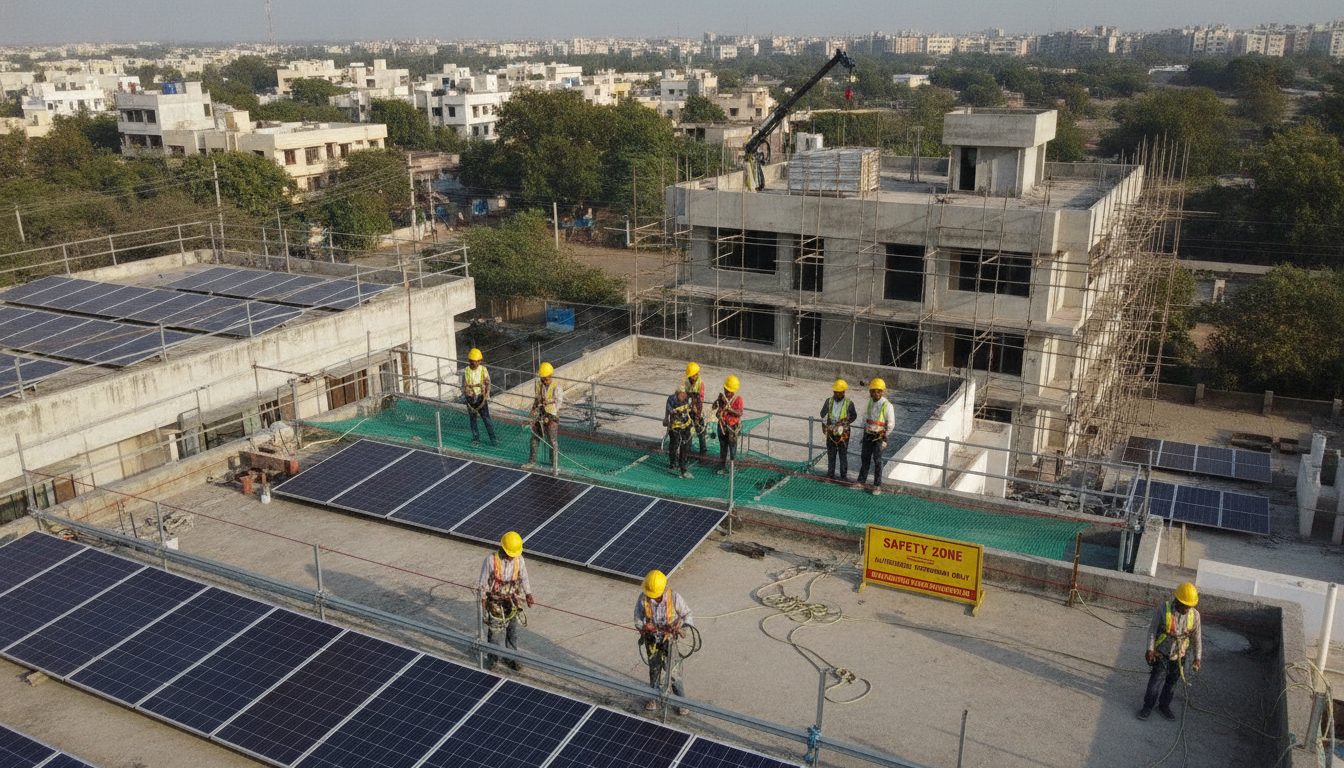
Fall Protection Protocols for Rooftop Solar Crews
Commercial rooftops present severe fall hazards and electrical risks during installation. Installers must adhere to strict safety guidelines to avoid liabilities and project delays. Every worker operating near unprotected edges or skylights requires a properly fitted safety harness connected to an approved anchorage system. Supervisors must inspect lifelines and lanyards daily for fraying, tears, or hardware deformation before any crew member steps onto the elevated work surface. Before finalizing mounting layouts, teams often evaluate structural dimensions using a solar roof area calculator to plan safe anchor placement zones away from fragile roofing material.
To check the numbers for your own home, try the solar calculator — enter your electricity bill and get system size, subsidy and payback in seconds.
Ladder Safety and Access Management
Safe rooftop access remains a frequent point of failure during commercial installations. Extension ladders must extend at least three feet above the upper landing surface and secure firmly at both top and bottom to prevent shifting. Workers should maintain three points of contact at all times while ascending or descending. Aluminum ladders are strictly prohibited near live electrical wires due to conductivity risks. Job sites require designated entry and exit points that stay clear of material staging zones and debris piles.
Mandatory Personal Protective Equipment
Personal protective equipment forms the final barrier against site injuries. Hard hats rated for electrical protection are mandatory for all ground and rooftop personnel. High-visibility vests ensure operators of heavy machinery can spot workers near material loading zones. Footwear must feature steel toes and puncture-resistant soles to guard against dropped mounting hardware and sharp metal shavings. Eye protection with side shields is required during drilling, cutting, and module framing activities.
🌟 Ready to Go Solar? Get 3 Free Quotes
Connect with verified, MNRE-empanelled solar installers near you — free, no obligation.
Get Free Solar Quotes →