Understanding Commercial Reverse Power Regulations
Many Indian DISCOMs prohibit reverse power flow for commercial consumers who lack proper net metering sanctions or open access approval. When a facility generates surplus solar power without a sanctioned export agreement, grid operators may impose penalties or disconnect the supply. Using a zero export device solar commercial setup ensures that your generation matches your exact facility load in real time, keeping your operations fully compliant.
To check the numbers for your own home, try the solar calculator — enter your electricity bill and get system size, subsidy and payback in seconds.
Hardware Setup and Communication Parameters
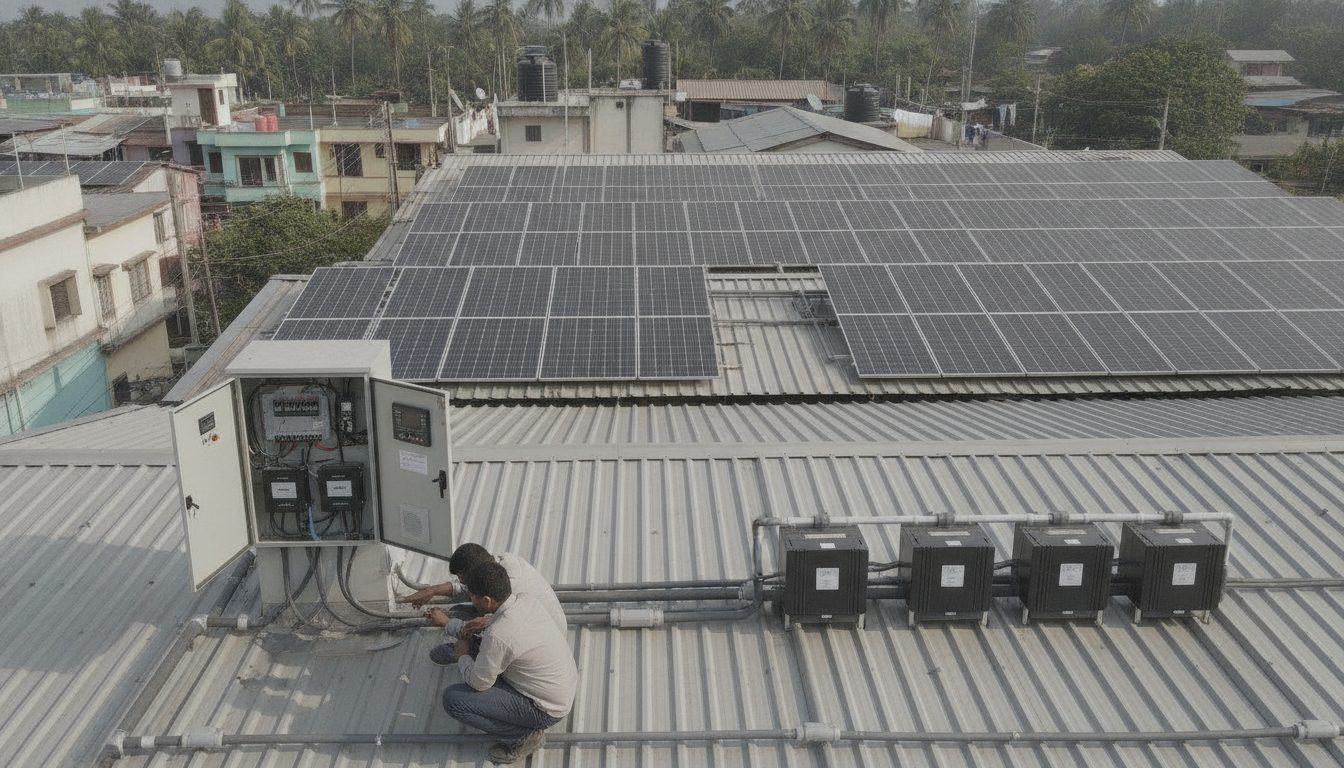
Commercial installations require specialized hardware to monitor grid export continuously. The core components include a dedicated controller, current transformers (CTs), and potential transformers (PTs) installed at the main incoming supply point. The controller communicates directly with string inverters to throttle output rapidly when load drops. You can evaluate your baseline energy needs before configuring hardware by checking our solar bill simulator and tariff calculator.
Technical configuration parameters include:
- Controller response time under 100 milliseconds
- RS485 serial communication wiring between meter and inverters
- Accurate CT/PT ratio matching for the main breaker rating
- Fail-safe mode programming to drop generation if communication fails
CT/PT Ratio Calculations and Wiring Guidelines
Proper CT and PT ratio configuration is vital for the controller to read load accurately. If the transformer ratios entered in the controller software do not match the physical hardware installed on the main panel, the system will miscalculate grid export and fail to throttle the inverters correctly. Technicians must verify polarity during installation to prevent phase mismatch errors.
| Parameter | Requirement | Action |
|---|---|---|
| Response Time | Under 100 ms | Verify RS485 baud rate |
| CT Sourcing | Main Incomer | Match primary current rating |
| Failsafe | Zero Output | Set inverter shutdown on fault |
Compliance and Operational Testing
Once wiring and configuration are complete, site engineers must perform a live load test to verify controller performance. This involves turning off major internal loads while the solar plant is running at high capacity to observe how quickly the inverters respond. If the system prevents export back to the grid within the mandated timeframe, the installation satisfies local utility compliance standards.
🌟 Ready to Go Solar? Get 3 Free Quotes
Connect with verified, MNRE-empanelled solar installers near you — free, no obligation.
Get Free Solar Quotes →