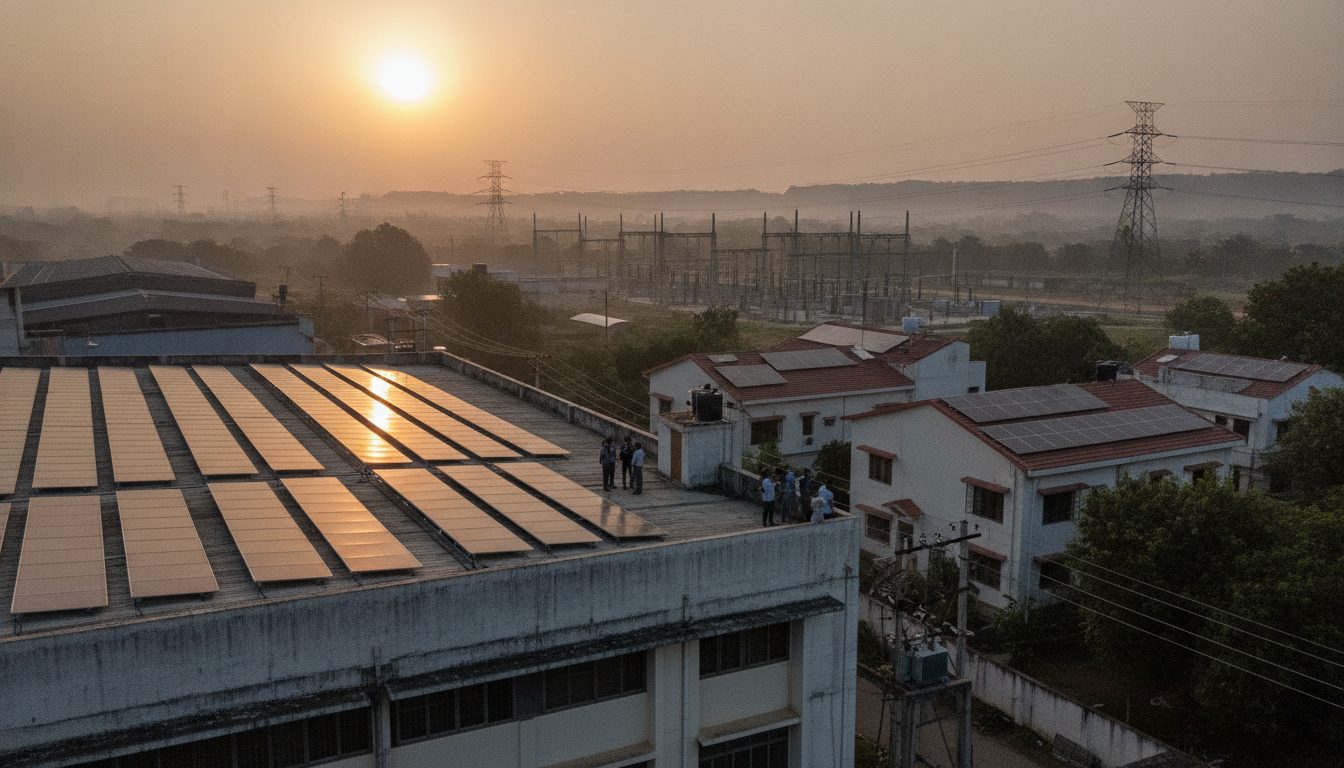
Understanding Commercial Net Metering Caps and Sanctioned Load Limits
Commercial and industrial (C&I) clients face complex net metering caps and grid connectivity approvals that vary significantly across states like Maharashtra, Gujarat, Tamil Nadu, and Karnataka. These regulations dictate the maximum capacity a business can install relative to its sanctioned load. Exceeding these limits often pushes facilities into gross metering or lower feed-in tariffs, making it essential to evaluate your solar roof area calculator outputs alongside your utility contract. Business owners must align system sizing precisely with state-level capacity ceilings to avoid unexpected grid restrictions.
Want to see what this means for your roof? Use our free solar calculator for India to estimate system size, cost after the ₹78,000 subsidy and payback period.
Navigating State-Specific Banking Charges and Surplus Rules
Generated electricity that is not consumed immediately is fed back into the grid, subject to state-specific banking regulations. Discoms in different regions levy distinct banking charges, transmission losses, and time-of-day restrictions on stored units. If your business injects surplus power without careful planning, the financial deductions can outweigh the benefits of the generation. Analyzing your consumption patterns using a solar bill simulator and tariff calculator helps project these charges accurately before you finalize plant capacities.
Avoiding Penalty Tariffs and Managing Self-Consumption Ratios
When commercial solar generation exceeds the approved net metering threshold or local consumption demand, utilities may impose penalty tariffs or purchase surplus power at heavily discounted rates. Optimizing your self-consumption ratio ensures that maximum daytime generation is absorbed directly by factory floors or office loads. Shifting heavy machinery operations to peak sunshine hours prevents surplus generation loss and keeps your facility clear of commercial penalty slabs.
🌟 Ready to Go Solar? Get 3 Free Quotes
Connect with verified, MNRE-empanelled solar installers near you — free, no obligation.
Get Free Solar Quotes →