Understanding Tilt Angle and Azimuth in India
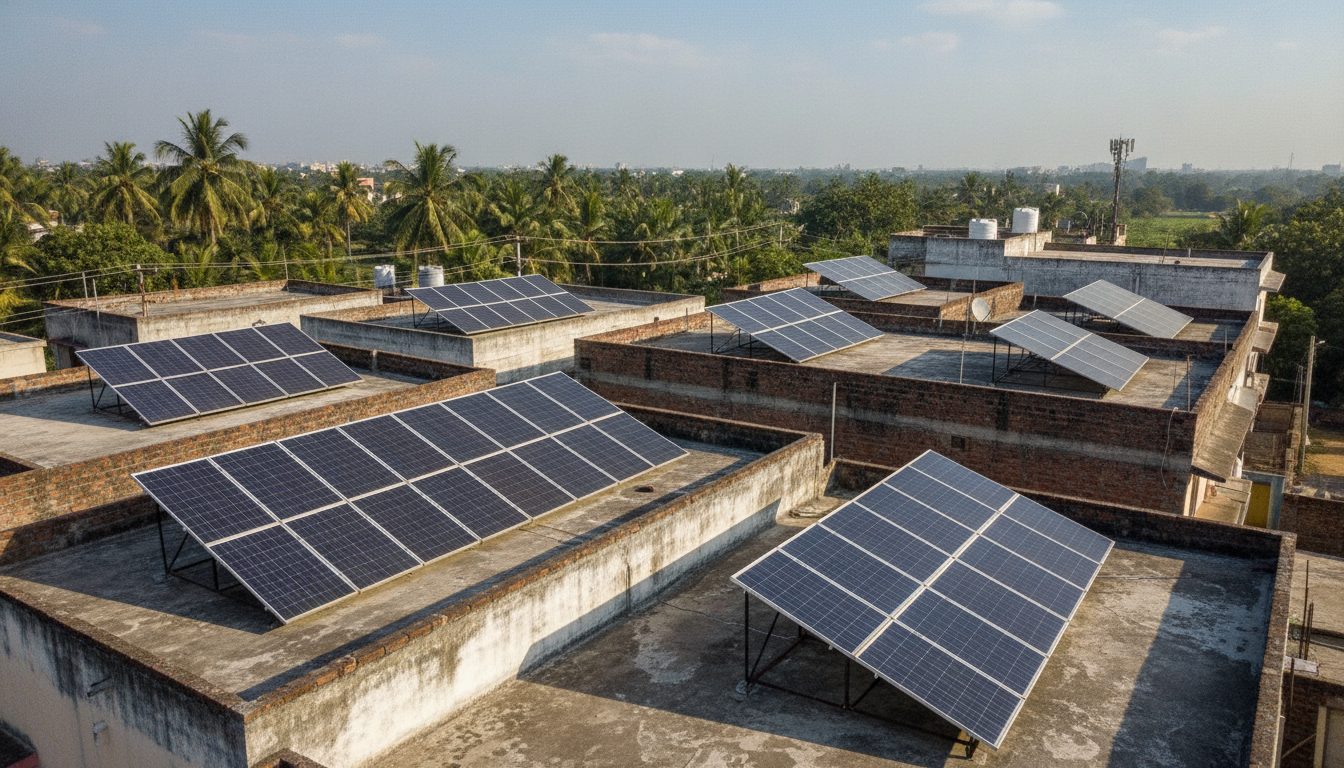
Setting the right solar panel tilt angle india is essential for capturing maximum sunlight throughout the year. India spans diverse latitudes, meaning a standard 15-degree tilt does not work uniformly from Kashmir to Kanyakumari. Alongside tilt, azimuth orientation dictates the compass direction your modules face. In the Northern Hemisphere, panels face true South to intercept peak midday radiation. Deviating from this path reduces the intensity of sunlight hitting the photovoltaic cells.
Improper panel orientation can reduce annual energy output by up to 12%. Homeowners often overlook these adjustments during rooftop installations. Matching the physical setup to your specific geographic coordinates ensures the system performs as expected across all seasons.
Not sure what size you need? Our free solar calculator works out system size, cost after subsidy and payback from your monthly electricity bill.
Calculating Optimal Angles by Latitude
Geography dictates the baseline arithmetic for your mounting structure. As a general guideline, the fixed tilt angle often aligns closely with the local latitude of the installation site. For regions closer to the equator, a lower angle suffices. Areas further north require a steeper tilt to catch low-angled winter sun.
Technicians adjust these angles based on seasonal sun path variations. During summer months when the sun sits higher in the sky, a shallower angle captures more light. Winter requires a steeper tilt to face the lower southern arc. Homeowners planning an installation can use a solar roof area calculator to evaluate how panel placement fits available rooftop space.
Fixing Alignment Errors for Better Output
Subtle errors in compass alignment or mounting angles accumulate over months of operation. Even a minor deviation from true South drops generation efficiency. Technicians use professional solar pathfinders and digital inclinometers to verify site conditions before bolting down the racking system.
Fixed-tilt mounts require manual seasonal adjustments twice a year in high-latitude regions. Automated tracking systems handle this movement dynamically, though they involve higher upfront hardware costs. Most residential roofs rely on fixed mounting structures designed for the local latitude midpoint to balance summer and winter generation.
🌟 Ready to Go Solar? Get 3 Free Quotes
Connect with verified, MNRE-empanelled solar installers near you — free, no obligation.
Get Free Solar Quotes →