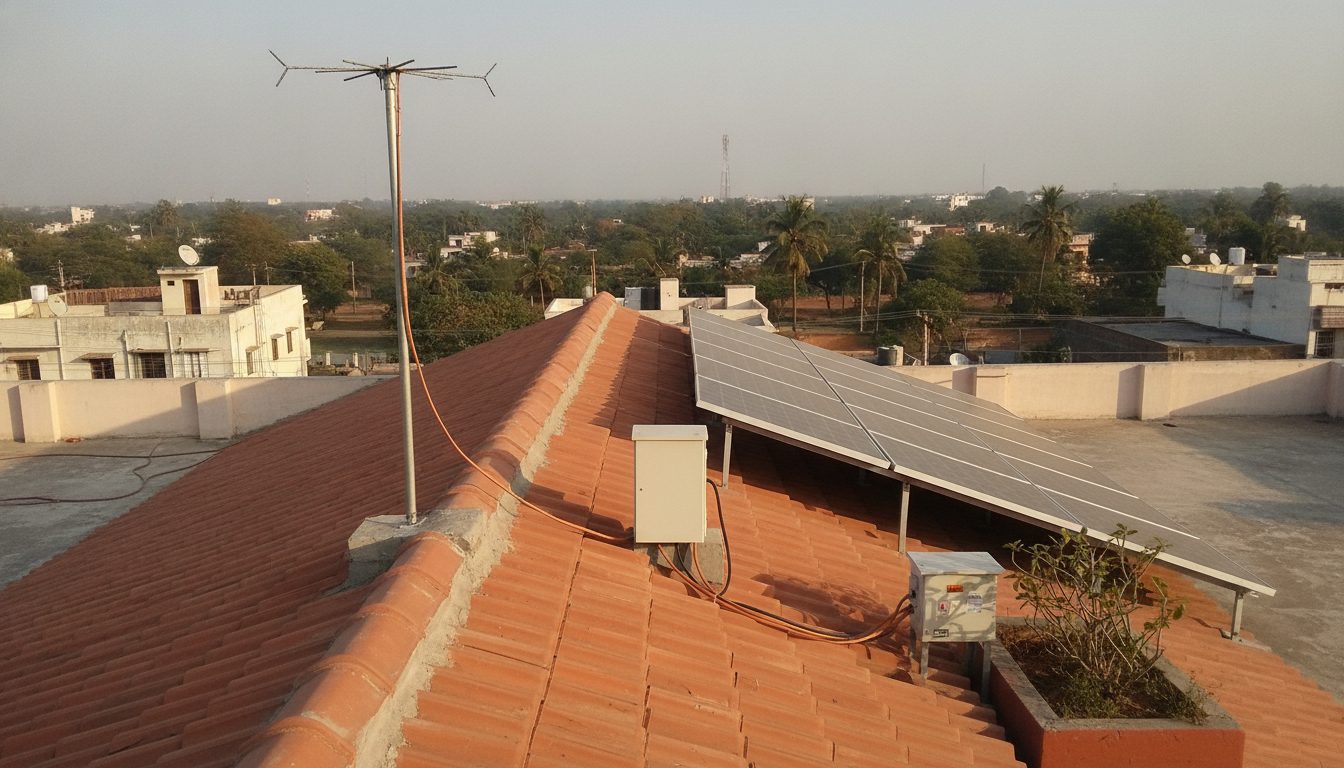
Understanding Risks in Indian Rooftop Solar
Monsoon lightning surges and improper grounding are primary causes of inverter blowouts and electrical fires in Indian rooftop solar arrays. When a direct or nearby lightning strike occurs, massive transient voltages travel down the DC cables and enter the inverter. Without adequate pathways to dissipate this energy safely into the earth, sensitive electronics fail instantly. Grounding faults also create severe shock hazards for anyone touching the metal module frames or mounting structures during wet weather.
Protecting your setup requires a proper solar system cost and savings calculation that factors in safety hardware from day one. Skipping these protective measures to save initial capital often leads to expensive component replacements during the peak monsoon season.
Not sure what size you need? Our free solar calculator works out system size, cost after subsidy and payback from your monthly electricity bill.
IEC Standards for Earthing Pits and Copper Strips
Compliance with the latest IEC standards ensures your installation passes mandatory electrical inspectorate safety audits. Earthing systems must utilize chemical earthing pits filled with conductive, moisture-retaining backfill compounds rather than plain salt and charcoal. These chemical electrodes maintain a consistently low earth resistance value year-round, even during dry summer months when soil resistivity increases.
Copper strip sizing must match the short-circuit current capacity of your inverter and array configuration. Main earth continuity conductors and equipment earthing leads require specific cross-sectional areas to safely carry fault currents without melting. The electrical inspector checks these dimensions against system capacity during final verification.
Surge Protection Device Coordination
Surge protection device coordination requires installing multi-stage protection across both the DC and AC sides of the system. Type 2 surge protection devices are standard inside modern grid-tied inverters, but Type 1 devices are mandatory near the array junction box if your building has an external lightning protection mast. This tiered approach clamps high-voltage spikes before they reach delicate internal circuit boards.
Every surge protector must feature a visual status indicator and a thermal disconnect mechanism. If a severe transient surge degrades the internal varistors, the indicator turns red. Homeowners must inspect these devices regularly to ensure continuous protection against grid-side voltage fluctuations and indirect lightning strikes.
🌟 Ready to Go Solar? Get 3 Free Quotes
Connect with verified, MNRE-empanelled solar installers near you — free, no obligation.
Get Free Solar Quotes →