Understanding Your Insurance Options
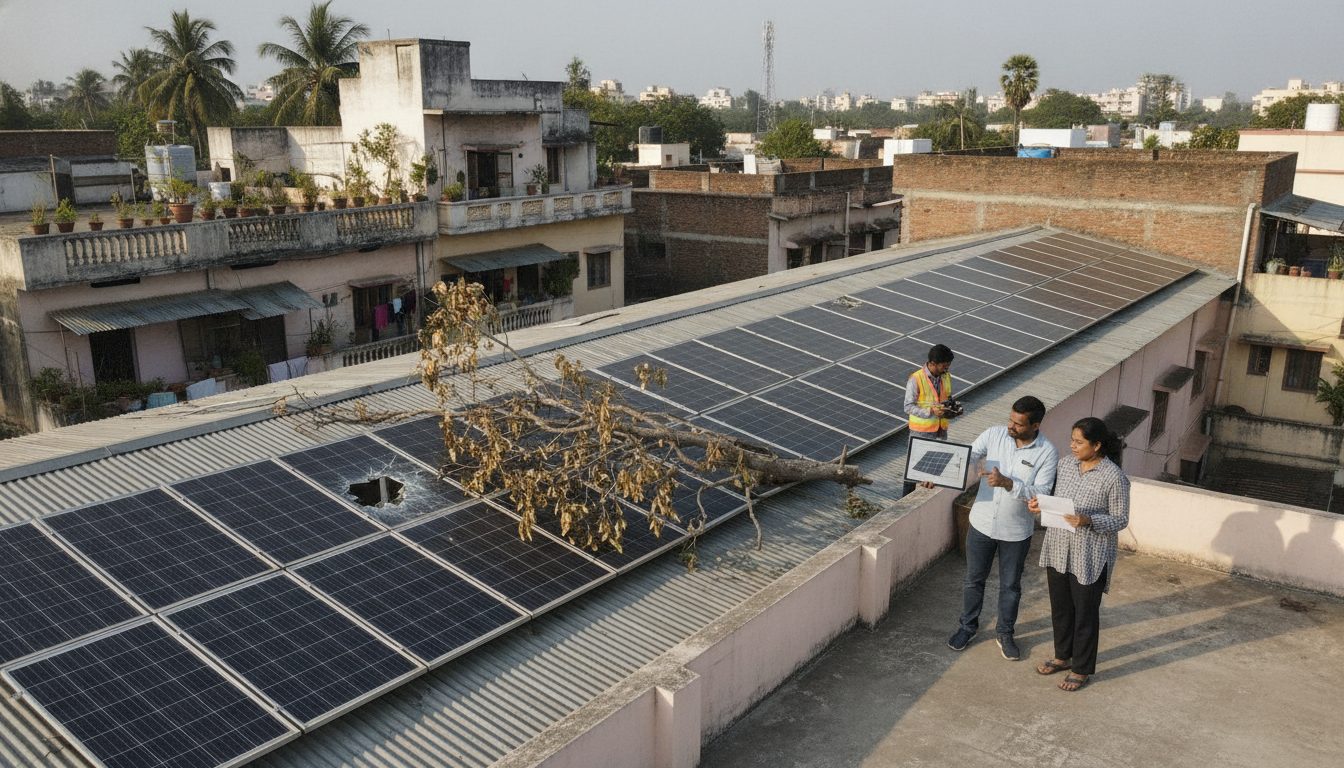
Commercial and large residential solar assets face severe environmental risks from hail, lightning, high winds, and electrical surges that standard property insurance may exclude. Standard home insurance rarely covers outdoor electrical equipment adequately. Property owners need to verify whether their policy includes generation loss alongside physical damage.
Before finalizing your setup or planning your finances using a solar system cost and savings calculator, check if your provider offers specialized riders. General property policies often leave gaps for weather-related generation downtime.
Want to see what this means for your roof? Use our free solar calculator for India to estimate system size, cost after the ₹78,000 subsidy and payback period.
Policy Types for Rooftop Installations
Comprehensive 'All Risk' policies and 'Standard Fire and Special Perils' policies cover generation loss and physical damage. An 'All Risk' plan protects against sudden, unforeseen physical loss or damage from external causes. Fire and special perils policies protect against specific events like storms, fires, and impact damage.
Reviewing policy wordings helps clarify whether inverter failures caused by grid surges fall under the active coverage scope. Insurers often require specific surge protection devices to be installed as a baseline safety measure.
Required Documentation for Claim Settlement
Filing a successful damage claim requires precise paperwork and timely reporting to the insurer. Insurers evaluate the upkeep of the installation before approving payouts for weather or theft damage.
Detail the documentation required for claim settlement, including generation logs, FIR reports for theft, and periodic health audit certificates. Keeping digital copies of maintenance logs simplifies the verification process significantly.
🌟 Ready to Go Solar? Get 3 Free Quotes
Connect with verified, MNRE-empanelled solar installers near you — free, no obligation.
Get Free Solar Quotes →