The Impact of DISCOM Delays on Solar Cash Flow
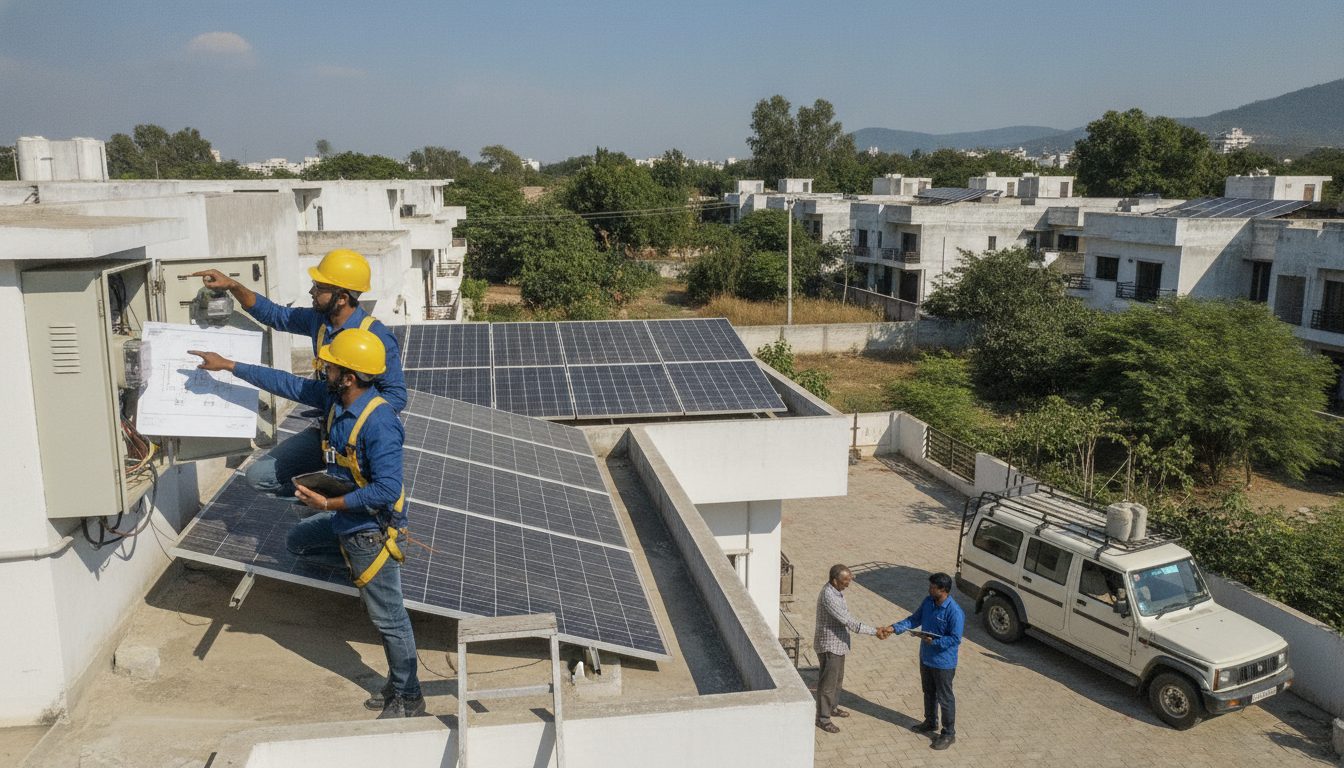
Navigating the net metering approval process india requires patience because state electricity boards often experience significant backlogs. DISCOM approval delays severely impact project cash flow and customer satisfaction for solar installers. When bi-directional meter installation stalls, homeowners cannot export surplus energy to the grid. This delay frustrates clients who expected immediate electricity bill reductions after commissioning. Installers must factor these regulatory bottlenecks into their project timelines, especially when managing multiple residential accounts simultaneously.
Understanding your system size and projected output before filing paperwork helps prevent technical objections from utility engineers. You can test potential generation metrics using a solar bill simulator and tariff calculator to ensure your grid-tie application matches standard consumption patterns.
Not sure what size you need? Our free solar calculator works out system size, cost after subsidy and payback from your monthly electricity bill.
State-Specific Bottlenecks Across Major Boards
Administrative hurdles vary significantly depending on the utility board governing the installation site. Major boards like MSEDCL, TANGEDCO, and BESCOM each operate distinct online portals with unique verification stages. MSEDCL in Maharashtra often sees high application volumes that slow down feasibility study reports. TANGEDCO in Tamil Nadu requires strict adherence to single-line diagram formats during initial submission. BESCOM in Karnataka involves specific scrutiny regarding sanctioned load limits and transformer capacity in residential neighborhoods.
Installers must train their operations teams on these regional nuances. Missing a minor field in one state portal can trigger a rejection notice, forcing the team to restart the queue from the beginning.
Documentation Timelines and Portal Submissions
Meeting the exact documentation timeline required for portal submissions is the most reliable way to avoid application rejections. The standard workflow begins with submitting the consumer application form along with property ownership proof, recent electricity bills, and installer empanelment certificates.
| Stage | Required Documents | Common Pitfall |
|---|---|---|
| Feasibility | Application form, recent bill, ID proof | Mismatch in consumer name and meter bill |
| Technical Sanction | Single-line diagram, equipment datasheet | Unapproved inverter brand listed |
| Inspection Request | Completion report, test certificates | Missing earthing test reports |
Once the utility issues a technical feasibility approval, the installer procures and installs the approved bi-directional meter system according to board specifications.
Handling Inspection Pushback and Meter Commissioning
Physical inspections by DISCOM junior engineers often bring unexpected pushback regarding earthing resistance values, AC-DC distribution box labeling, or inverter settings. Installers must conduct pre-inspections internally to verify that wiring adheres strictly to safety codes before calling the utility inspector to the site. Having all test certificates printed and organized on-site prevents the inspector from rescheduling the visit.
After the physical verification clears, the file moves to the metering department for sealing and database integration. Maintaining open communication channels with local line staff helps expedite this final meter commissioning phase so the homeowner can finally start earning credits for exported solar units.
🌟 Ready to Go Solar? Get 3 Free Quotes
Connect with verified, MNRE-empanelled solar installers near you — free, no obligation.
Get Free Solar Quotes →