Sizing and Load Management Challenges
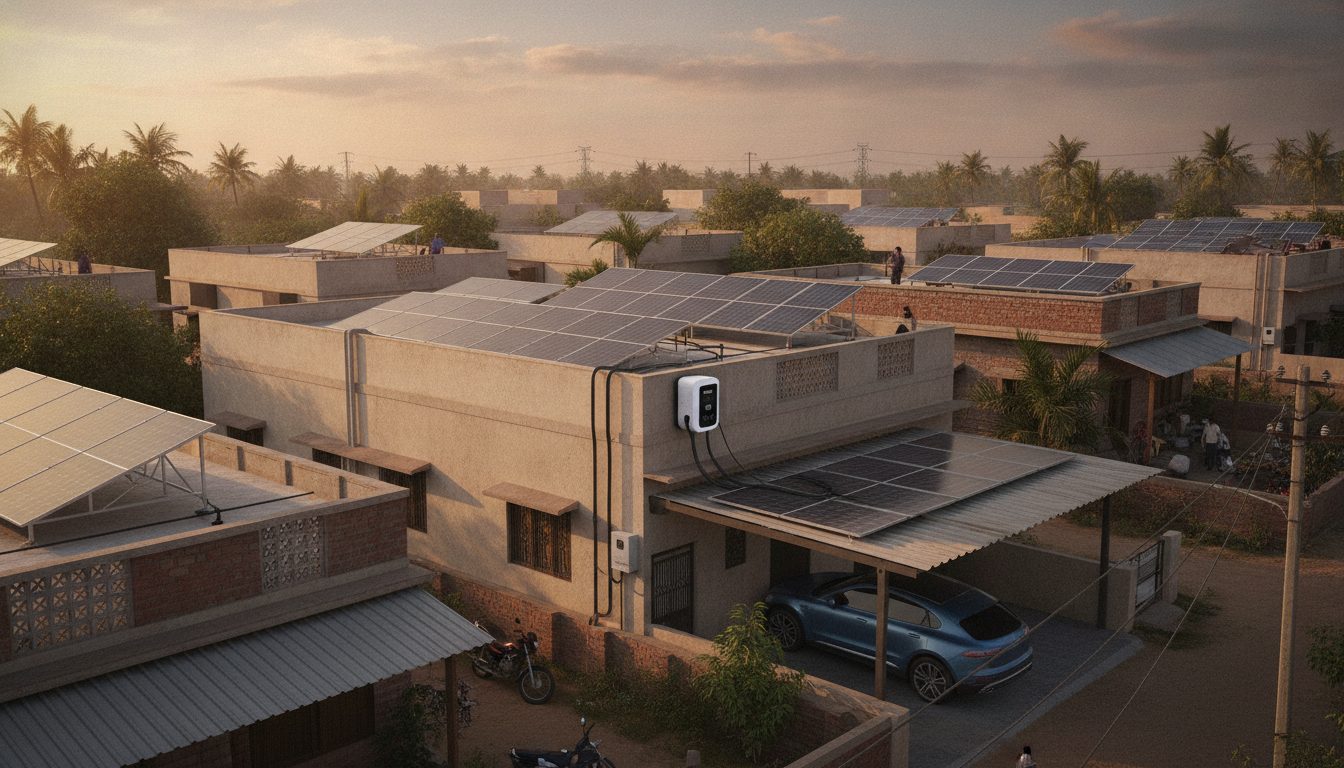
The convergence of residential solar and electric vehicle adoption creates unique sizing and load management challenges for homeowners in India. Charging an electric vehicle adds a heavy electrical load that often exceeds standard household consumption patterns. When you add a vehicle battery to your daily routine, your existing system setup must handle both home appliances and vehicle charging simultaneously.
Before installing equipment, you should estimate your energy requirements using a solar for EV charging calculator to understand how vehicle charging shifts your daily energy demand profile.
Want to see what this means for your roof? Use our free solar calculator for India to estimate system size, cost after the ₹78,000 subsidy and payback period.
Smart Chargers and Dynamic Load Balancing
Smart EV chargers compatible with solar generation help homeowners manage electrical capacity safely. These systems communicate with your home electrical panel to monitor total power draw in real time. Dynamic load balancing prevents main breaker trips by automatically reducing the charging rate when other heavy household appliances turn on.
This automated regulation protects your home wiring from overload conditions during peak usage hours without requiring manual intervention from the homeowner.
Utilizing Excess Daytime Solar Generation
Rooftop solar systems generate maximum electricity during daytime hours when sunlight is strongest and many vehicles are parked away from home. EV charger integration with rooftop solar allows homeowners to capture this surplus energy instead of exporting all of it to the grid. By scheduling charging sessions during peak generation windows, you can power your commute using self-generated renewable energy.
If your daytime generation falls short or if your vehicle remains plugged in overnight, you draw power from the grid or a battery storage system to complete the charge.
Impact on Daily Electricity Consumption Profiles
Integrating a 3kW to 5kW EV charging buffer affects overall daily household electricity consumption profiles significantly. A charging load of this size can double or triple a home's daily energy usage depending on how many kilometers you drive each day.
Proper system sizing ensures that your inverter and wiring can handle the extended operational hours required to replenish the vehicle battery alongside standard household loads.
🌟 Ready to Go Solar? Get 3 Free Quotes
Connect with verified, MNRE-empanelled solar installers near you — free, no obligation.
Get Free Solar Quotes →