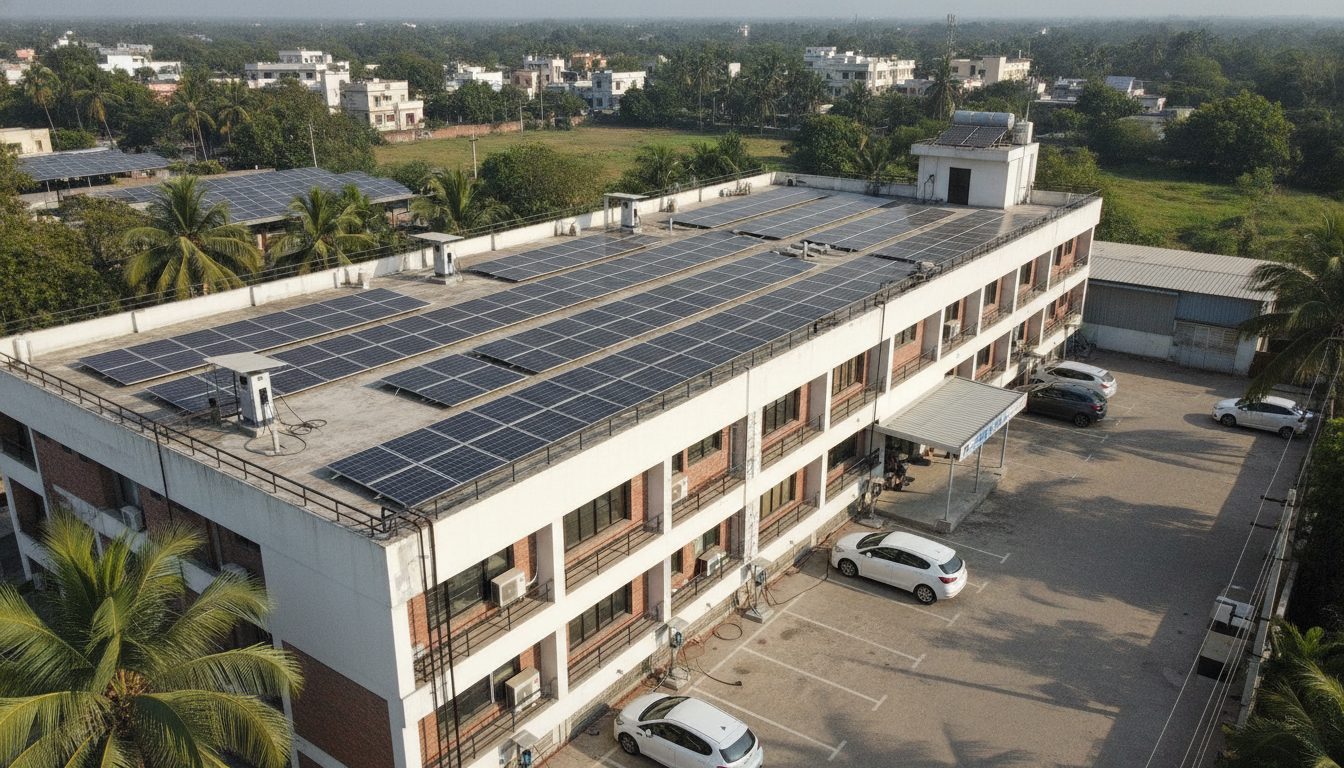
Matching Daily Load Profiles with Solar Carports
Commercial properties are increasingly pairing solar carports with DC fast chargers to maximize self-consumption. Daytime office hours or industrial shifts create high electrical demand. Solar generation peaks during these same daylight hours. By channeling solar power directly into electric vehicles parked on site, businesses avoid exporting excess power to the grid at lower feed-in tariffs.
To estimate your required rooftop capacity and generation potential, you can check our solar roof area calculator before planning your physical layout. Shifting daytime fleet charging to solar generation hours reduces reliance on grid power during peak tariff windows.
Want to see what this means for your roof? Use our free solar calculator for India to estimate system size, cost after the ₹78,000 subsidy and payback period.
Deploying DC Fast Chargers and Bi-Directional Tech
Industrial clients require rapid turnaround times for electric transport fleets. Pairing commercial rooftop solar with DC fast chargers delivers the high power output necessary for fast vehicle replenishment. Beyond simple charging, businesses must evaluate bi-directional charging considerations. Vehicle-to-grid and vehicle-to-building capabilities allow parked electric vehicles to act as secondary storage units, discharging power back into the commercial facility when solar generation drops or building demand spikes.
Upselling EV Infrastructure to Industrial Clients
Solar dealers can upsell EV infrastructure packages to industrial clients by presenting a unified energy and transport solution. Many factories and warehouses already evaluate rooftop solar for baseline electricity needs. Adding electric vehicle charging bays transforms a standard solar pitch into an expanded energy asset. Industrial facility managers gain a predictable fuel cost for logistics fleets while improving corporate sustainability metrics.
🌟 Ready to Go Solar? Get 3 Free Quotes
Connect with verified, MNRE-empanelled solar installers near you — free, no obligation.
Get Free Solar Quotes →