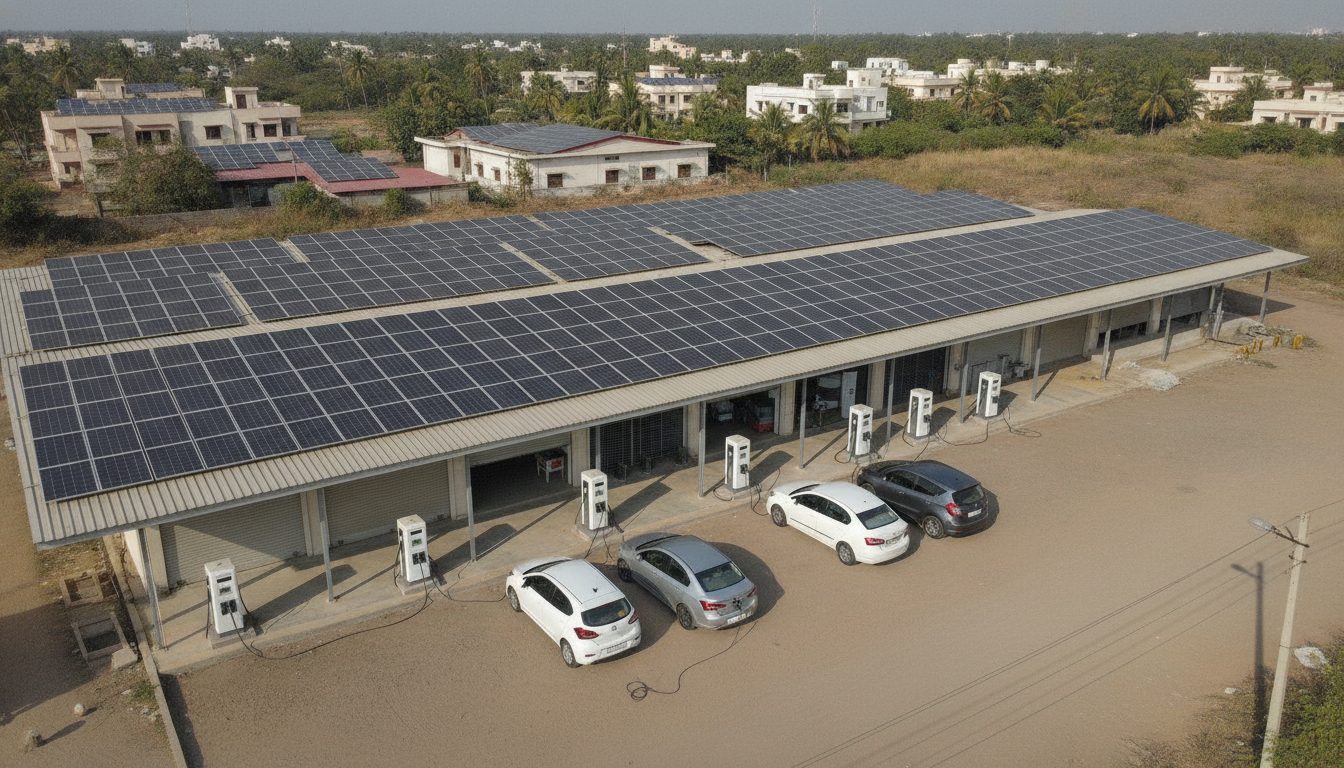
Synergy of Rooftop Solar and Commercial EV Charging
Commercial properties such as malls, office parks, and fleet depots are increasingly combining rooftop solar installations with EV charging hubs to optimize daytime energy consumption. This dual deployment allows businesses to consume generated solar power directly on-site when commercial electricity tariffs are typically at their highest. By pairing an ev charging station solar commercial rooftop india configuration, facility managers ensure that daytime vehicle charging loads match peak solar generation hours.
Property owners evaluating spatial requirements can use the solar roof area calculator to plan adequate panel placement across available concrete or metal sheets. Simultaneous deployment also cuts down transmission losses and utilizes vacant parking spaces for clean energy generation.
To check the numbers for your own home, try the solar calculator — enter your electricity bill and get system size, subsidy and payback in seconds.
Managing DISCOM Peak Demand Charges
Simultaneous deployment of solar generation and DC fast chargers can help businesses bypass peak demand charges imposed by DISCOMs. Commercial electricity consumers often face severe financial penalties when sudden high-draw loads, such as multiple fast-charging electric vehicles, spike their grid demand simultaneously. Drawing power directly from adjacent rooftop solar panels reduces this immediate grid reliance.
To check overall financial viability and long-term savings potential against standard utility bills, facility managers often utilize the solar ROI and payback period calculator before finalizing system capacities.
Sizing Methodologies and Bi-Directional Charging
Proper sizing of commercial charging hubs requires careful balancing of peak vehicle arrival times and daily solar generation curves. Battery-buffered EV chargers store excess daytime solar energy instead of exporting it back to the grid at lower feed-in tariffs, releasing that stored power later when vehicles plug in during cloudy intervals or evening hours.
Bi-directional charging potential introduces vehicle-to-grid and vehicle-to-building capabilities, allowing parked commercial fleets to act as mobile energy storage units. Businesses can discharge vehicle batteries back into the facility during sudden load spikes or grid outages, creating an additional layer of energy security without investing in standalone stationary storage systems.
Regulatory Approvals for Monetizing Parking Lots
Monetizing commercial parking lots through green mobility requires specific regulatory approvals from local distribution companies and state electrical inspectors. Operators must secure net-metering or open-access permissions depending on the sanctioned load of the facility and the total capacity of the solar rooftop installation. Safety clearances for high-capacity DC fast chargers must comply with central electrical authority guidelines.
Compliance frameworks also govern how businesses bill external EV users for electricity consumption, requiring approved sub-meters and tariff structures set by state electricity regulatory commissions. Securing these approvals beforehand prevents operational delays and ensures legal compliance for commercial charging hubs.
🌟 Ready to Go Solar? Get 3 Free Quotes
Connect with verified, MNRE-empanelled solar installers near you — free, no obligation.
Get Free Solar Quotes →