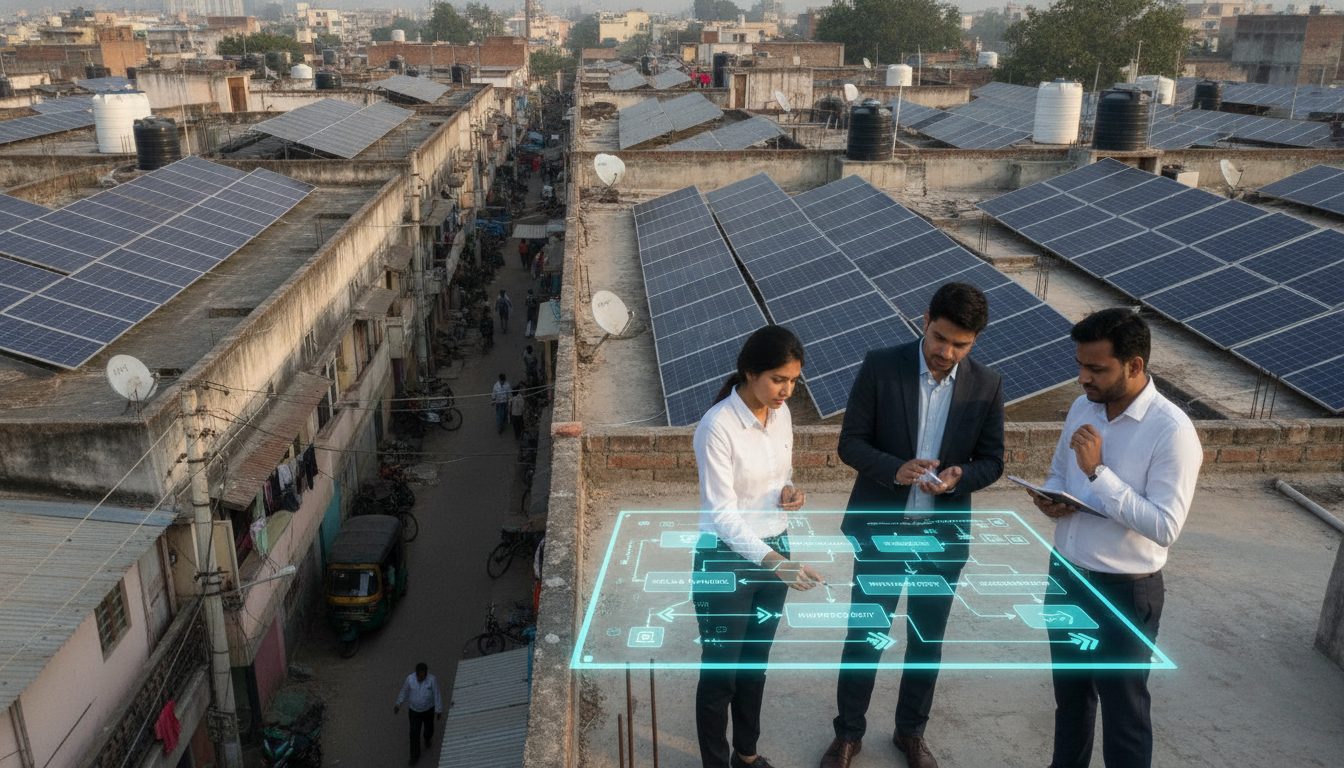
Understanding GST Rates on Solar Components
Solar components currently attract varying GST rates, creating significant accounting challenges for installation firms across the country. Specifically, solar modules are taxed at 12 percent, while most inverters and balance-of-system parts are taxed at 18 percent. This discrepancy creates a classic inverted duty structure where the tax paid on outward supplies is lower than the tax paid on inward purchases.
Before finalizing client contracts or submitting bids, project developers must evaluate their total hardware procurement costs carefully. You can use our solar system cost calculator to estimate material expenses accurately before factoring in tax variations.
To check the numbers for your own home, try the solar calculator — enter your electricity bill and get system size, subsidy and payback in seconds.
Managing Working Capital and Input Tax Credit
Because input taxes exceed output taxes on standard installations, EPC businesses frequently face working capital blockages while waiting for GST refunds from state and central tax authorities. Accumulated input tax credit sits in electronic ledger accounts rather than circulating as cash. This delay puts pressure on short-term liquidity, forcing companies to secure alternative credit lines to manage daily operations and vendor payments.
To maintain healthy cash flow, finance teams must file refund applications promptly upon the closure of each tax period. Proper tracking prevents minor documentation errors from delaying the disbursement of accumulated tax credits.
Practical Documentation and Compliance Strategies
Strict adherence to documentation rules remains essential for protecting profit margins and avoiding penalties during audits. Every movement of goods between warehouses, distribution yards, and client sites requires precise e-way bills generated in compliance with current tax regulations. Discrepancies between physical inventory and digital filings often trigger notices from tax departments.
Accountants should maintain clean separation between project supply contracts and service contracts. Clear bifurcation helps justify input tax credit claims during scrutiny by state or central tax officers. Regular internal audits of inward and outward supplies ensure that all vendor invoices match entries in the portal.
🌟 Ready to Go Solar? Get 3 Free Quotes
Connect with verified, MNRE-empanelled solar installers near you — free, no obligation.
Get Free Solar Quotes →