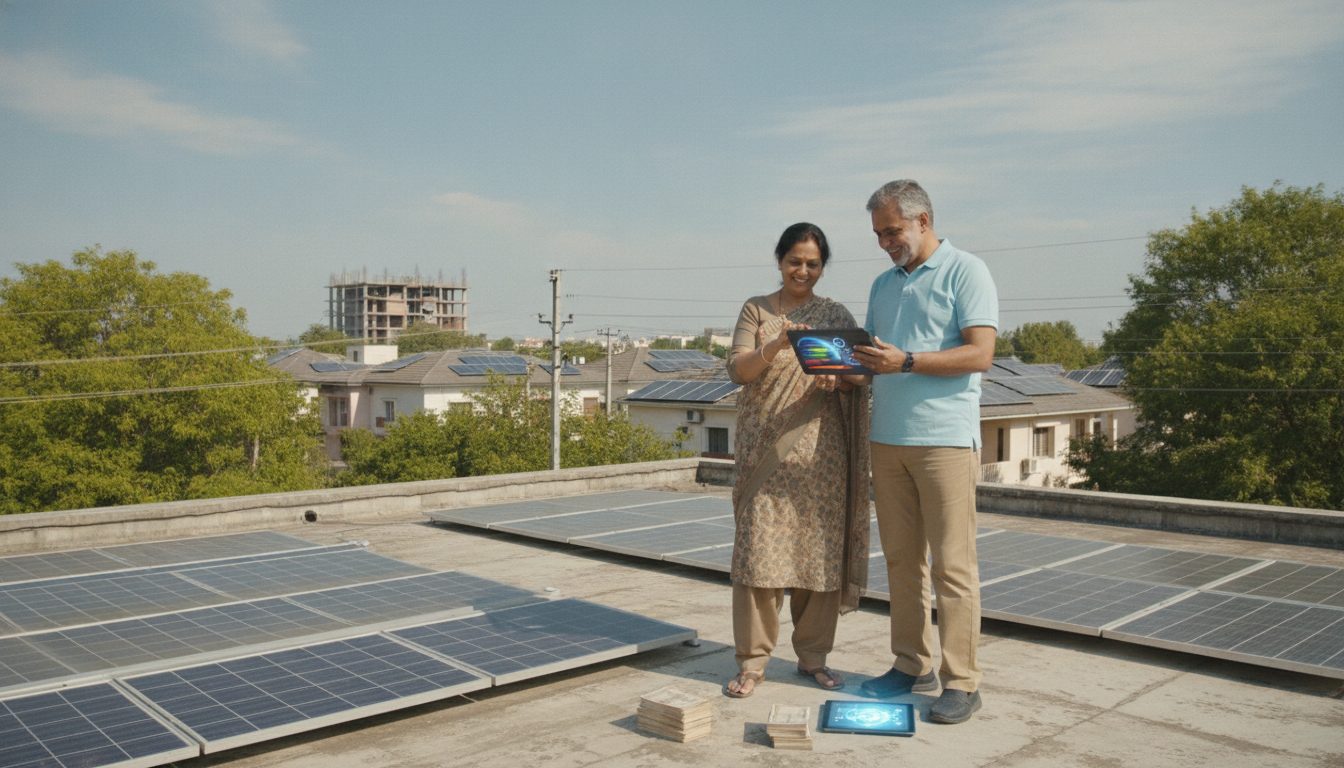
How Slab Tariffs Maximize Solar Savings
Residential grid tariffs across Indian states typically range from ₹6 to ₹9 per unit, but electricity bills rarely use a flat rate. Most state electricity boards apply telescopic or slab-based billing. As your monthly consumption increases, you move into higher slabs where the per-unit cost increases significantly.
When you install a rooftop solar system, it offsets your grid consumption from the top down. Because solar generation wipes out your highest-tier consumption units first, the financial relief on your bill is disproportionately higher than a simple average rate calculation might suggest. This is why learning how to calculate electricity bill savings solar installations provide requires looking at your specific consumption slabs rather than just your average bill amount.
Estimating Units Generated and Bill Reduction
To estimate your monthly savings, you need to match your system size with expected generation. A 1kW rooftop solar system generates roughly 90 to 120 units per month in India. A larger 3kW system generates roughly 270 to 360 units per month.
To estimate your savings, multiply the expected monthly units generated by your current per-unit tariff rate from your utility bill. For example, if a 3kW system generates 300 units in a month and your top slab tariff is ₹8 per unit, you save ₹2,400 on that month's energy charges. Real-world output varies based on weather, shadow, and panel tilt, but these generation averages offer a reliable baseline for planning.
Understanding the PM Surya Ghar Subsidy Structure
Government financial support reduces your upfront capital cost significantly. Under the PM Surya Ghar Muft Bijli Yojana, residential households receive direct financial assistance based on system capacity.
| System Capacity | Subsidy Amount | Average Generation |
|---|---|---|
| 1 kW | ₹30,000 | 90-120 units/month |
| 2 kW | ₹60,000 | 180-240 units/month |
| 3 kW and above | ₹78,000 (maximum) | 270-360 units/month (for 3kW) |
These subsidies are credited directly to your bank account after installation and inspection through the official national portal.
Net Metering and Long-Term Warranty Protection
Net metering ensures that any surplus solar power exported to the grid during peak daytime hours is credited against your nighttime consumption. Net metering is available in all major states under MNRE's 2022 guidelines, and the application is submitted through your installer or local DISCOM.
Solar equipment also includes long-term manufacturer backing. Panels carry a 25-year performance warranty ensuring roughly 80 percent output at year 25, alongside a 10 to 12 year product warranty against manufacturing defects.
🌟 Ready to Go Solar? Get 3 Free Quotes
Connect with verified, MNRE-empanelled solar installers near you — free, no obligation.
Get Free Solar Quotes →