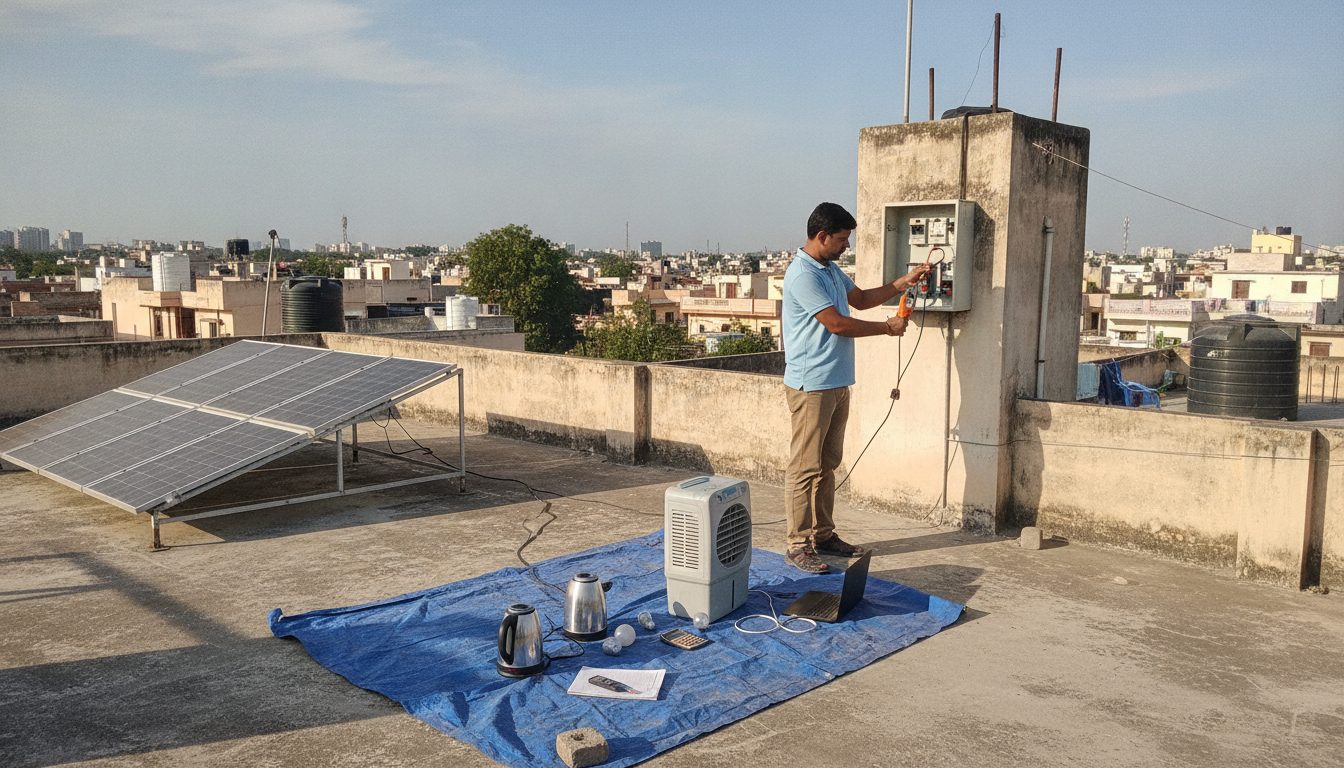
Auditing Your Monthly Electricity Bills
The foundation of planning a solar installation starts with your monthly electricity consumption data. To accurately calculate home solar load India homeowners must gather electricity bills from the past twelve months to capture seasonal variations, such as increased summer cooling demand. Look specifically at total units consumed, which are measured in kilowatt-hours (kWh). Dividing your annual consumption by twelve gives you a reliable monthly average. This average daily and monthly unit consumption forms the baseline for determining the proper system size. Undersizing a solar system leads to high electricity bills because you still pull heavy power from the grid, while oversizing wastes capital on equipment you do not need.
To check the numbers for your own home, try the solar calculator — enter your electricity bill and get system size, subsidy and payback in seconds.
Accounting for Inductive Loads and Starting Surges
Standard resistive appliances draw a steady current, but inductive appliances require special attention during your assessment. Devices with electric motors, such as air conditioners, refrigerators, and water pumps, experience a high starting surge when they turn on. This momentary spike in power demand exceeds their running wattage. Your solar inverter and overall system capacity must safely handle these surges without tripping. Reviewing the nameplate ratings on your heavy appliances reveals their exact running and starting power requirements, ensuring your final system configuration remains stable under peak usage conditions.
Matching Solar Capacity to Your Sanctioned Grid Load
Your residential electricity connection operates under a sanctioned grid load, which is the maximum power sanctioned by your local distribution company. When sizing your solar setup, your total kilowatt capacity should align with this sanctioned limit and your roof space availability. You can check your sanctioned load directly on your monthly electricity bill. To verify if your physical roof can support the required panel footprint, use the solar roof area calculator to check spacing requirements before purchasing equipment. Keeping your solar capacity aligned with your sanctioned load prevents regulatory compliance issues with net metering approvals.
🌟 Ready to Go Solar? Get 3 Free Quotes
Connect with verified, MNRE-empanelled solar installers near you — free, no obligation.
Get Free Solar Quotes →