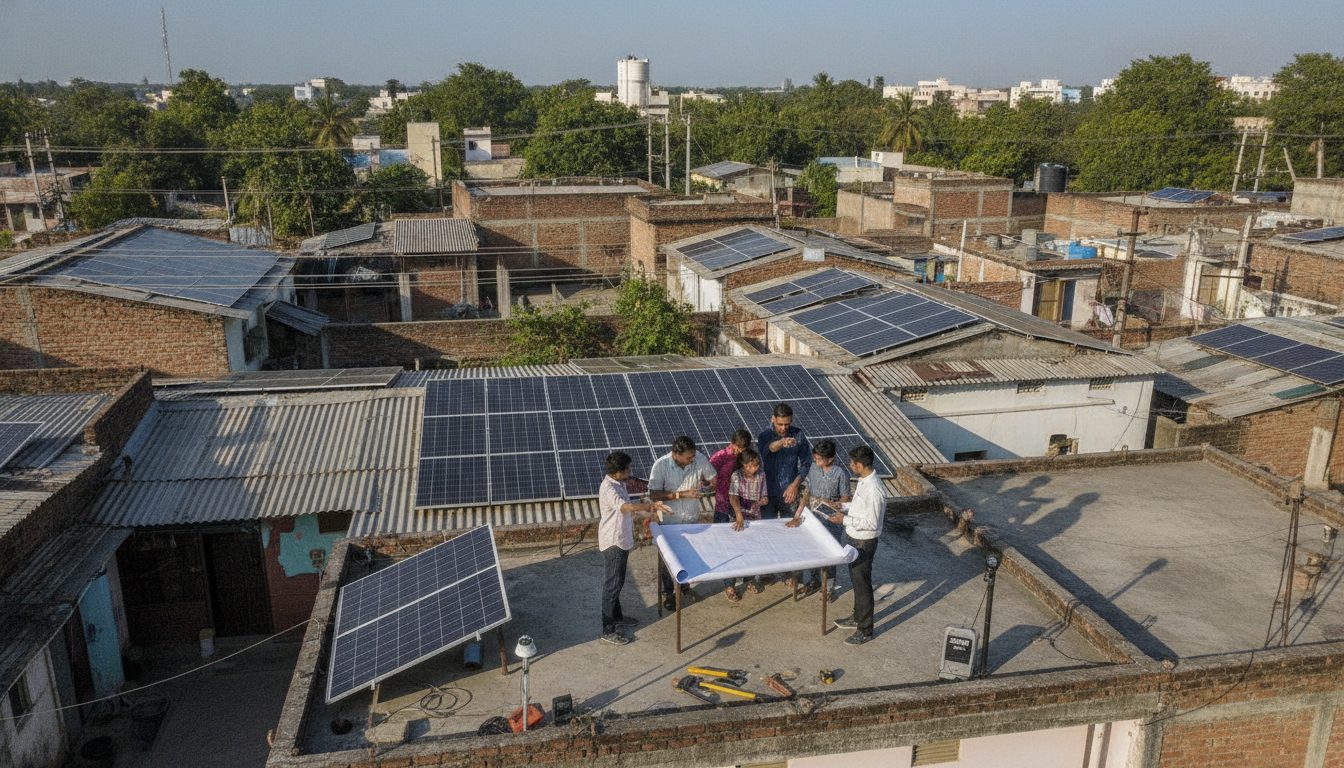
The Basic Formula for Sizing Your Rooftop Solar System
Knowing how to calculate solar system size starts with your monthly electricity bill. A rooftop solar system is sized primarily by your average monthly energy consumption measured in kilowatt-hours, commonly called units.
To find the right system capacity in kilowatts, use this simple step-by-step formula:
- Step 1: Take your total monthly electricity consumption in units and divide it by 30 to get your daily unit requirement.
- Step 2: Divide that daily figure by your local average daily sun hours, which is typically 4 to 5 hours for most regions in India.
For example, if a household consumes 300 units per month, the calculation is 300 divided by 30 to get 10 units per day. Dividing 10 by 4 sun hours results in a 2.5 kW system requirement, meaning a 2 kW or 3 kW setup will fit your needs.
Expected Generation and Tariffs across India
Understanding your expected solar generation helps confirm whether your calculated system size matches your actual usage patterns. In India, a 1 kW rooftop solar system generates roughly 90 to 120 units per month under normal weather conditions. Scaling that up, a 3 kW system typically generates roughly 270 to 360 units per month.
Residential grid electricity tariffs across Indian states typically range between ₹6 and ₹9 per unit. Installing an appropriately sized solar array offsets a large portion of this monthly utility expense, depending on your consumption bracket and state-specific net metering rules.
Financial Support through the PM Surya Ghar Scheme
The central government provides financial incentives under the PM Surya Ghar Muft Bijli Yojana to make residential rooftop solar installations more affordable. The central financial assistance is structured according to your system capacity:
| System Capacity | Subsidy Amount |
|---|---|
| 1 kW system | ₹30,000 |
| 2 kW system | ₹60,000 |
| 3 kW system and above | ₹78,000 (maximum cap) |
These subsidies are credited directly to your bank account after installation and inspection through the official national portal.
Component Warranties and Grid Connection
Solar panels require minimal physical maintenance, but checking the manufacturer warranties protects your investment over the long term. Standard photovoltaic panels carry a 25-year performance warranty, guaranteeing at least 80 percent power output by year 25, alongside a 10 to 12 year product warranty against manufacturing defects.
For grid-connected systems, net metering is available in all major states under MNRE guidelines. This setup requires an approved bi-directional meter installed by your local electricity distribution company, which your solar installer will help you apply for during the paperwork phase.
🌟 Ready to Go Solar? Get 3 Free Quotes
Connect with verified, MNRE-empanelled solar installers near you — free, no obligation.
Get Free Solar Quotes →