
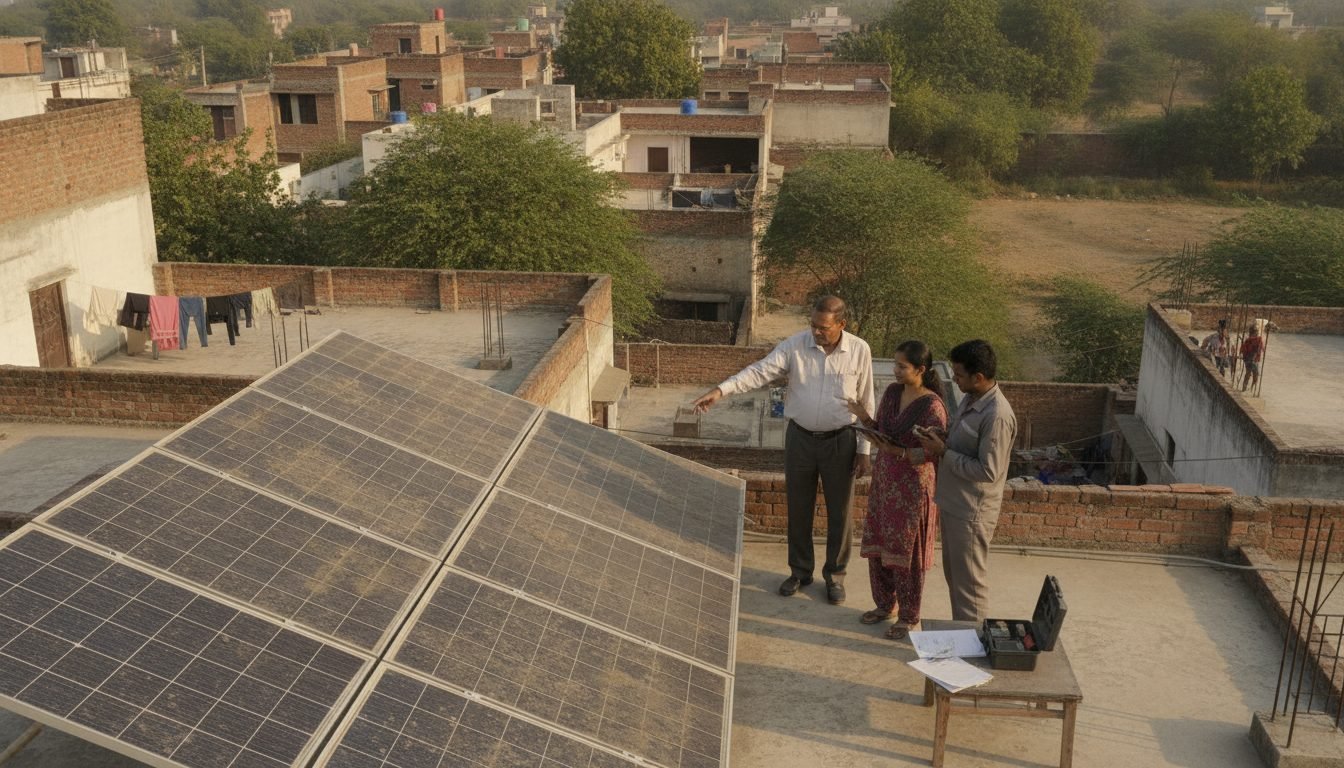
Understanding Tier-1 Solar Panel Warranties in India
A high-quality rooftop solar system is designed to generate clean electricity reliably for 25 to 30 years. Leading Indian and global solar panel manufacturers (such as Tata Power Solar, Waaree Energies, Adani Solar, Vikram Solar, and Goldi Solar) provide comprehensive warranties to protect consumers against defective manufacturing and abnormal power loss.
However, when a solar panel underperforms or develops visible hotspots, many homeowners struggle to navigate the warranty claim process. This guide provides an end-to-end blueprint on how to identify covered defects, conduct necessary testing, and secure free replacements.
30-Second Quick Takeaways
Essential warranty rights and replacement filing guidelines
- Dual Warranty Protection: Tier-1 solar panels carry two distinct warranties: a 10 to 12-year Product Workmanship Warranty (covering physical defects, delamination, and junction box failure) and a 25 to 30-year Linear Performance Warranty (guaranteeing >=84.8%–88% power output at year 25).
- Recognizing Warrantable Failures: Snail trails, Potential Induced Degradation (PID), localized bypass diode burnouts, EVA backsheet yellowing, and thermal hotspots are 100% eligible for free manufacturer replacement.
- Documenting the Claim: You need clear thermal imaging (FLIR thermography) showing hotspot ΔT > 20°C, string Voc/Isc electrical testing logs, and original stamped warranty cards with serial numbers.
- Escalation Protocols: If local EPC installers are unresponsive, homeowners and businesses can lodge direct warranty replacement tickets with manufacturer service portals (Tata Power, Waaree, Adani Solar, Vikram Solar) with statutory consumer forum backing.
Common Warrantable vs Non-Warrantable Solar Defects
| Defect Type | Root Cause | Warranty Eligibility | Action Required |
|---|---|---|---|
| Thermal Hotspots (ΔT > 20°C) | Internal bypass diode failure or microcracked cell | 100% Covered | Thermal IR camera imaging report |
| Potential Induced Degradation (PID) | Voltage leakage between frame and cell circuits | 100% Covered | Electroluminescence (EL) & IV Curve test |
| EVA Delamination & Water Bubbles | Defective vacuum lamination curing process | 100% Covered | High-resolution close-up photographs |
| Hailstone / Stone Impact Shatter | External physical force / accidental impact | Excluded (Force Majeure) | File under Rooftop Solar Insurance Policy |
| Monkey Chew Damage to DC Cables | External wildlife interference | Excluded | Install SS304 conduit & monkey guard mesh |
Step-by-Step Solar Warranty Claim Process
Identify Serial Numbers & Barcodes
Photograph the RFID label embedded under the front glass and the barcode sticker on the frame edge. Note down the model number, wattage, and date of manufacture.
Conduct String Electrical & Thermal Testing
Measure open-circuit voltage (Voc) and short-circuit current (Isc) under clear sunlight (>800 W/m² irradiance) using a calibrated clamp meter. Capture infrared thermography showing excessive heat concentration.
Submit Ticket to Manufacturer RMA Portal
Register a service ticket with the manufacturer's official after-sales portal with the original tax invoice, installation completion certificate, and testing logs.
⚡ Calculate Your 2026 Solar Savings & Subsidy
Select your monthly electricity bill to calculate the ideal system capacity, PM Surya Ghar subsidy, and lifetime savings:
📲 Join 25,000+ Solar Homeowners in India
Get instant answers on PM Surya Ghar subsidies, net-metering status, and installer quotes.
Frequently Asked Questions (FAQs)