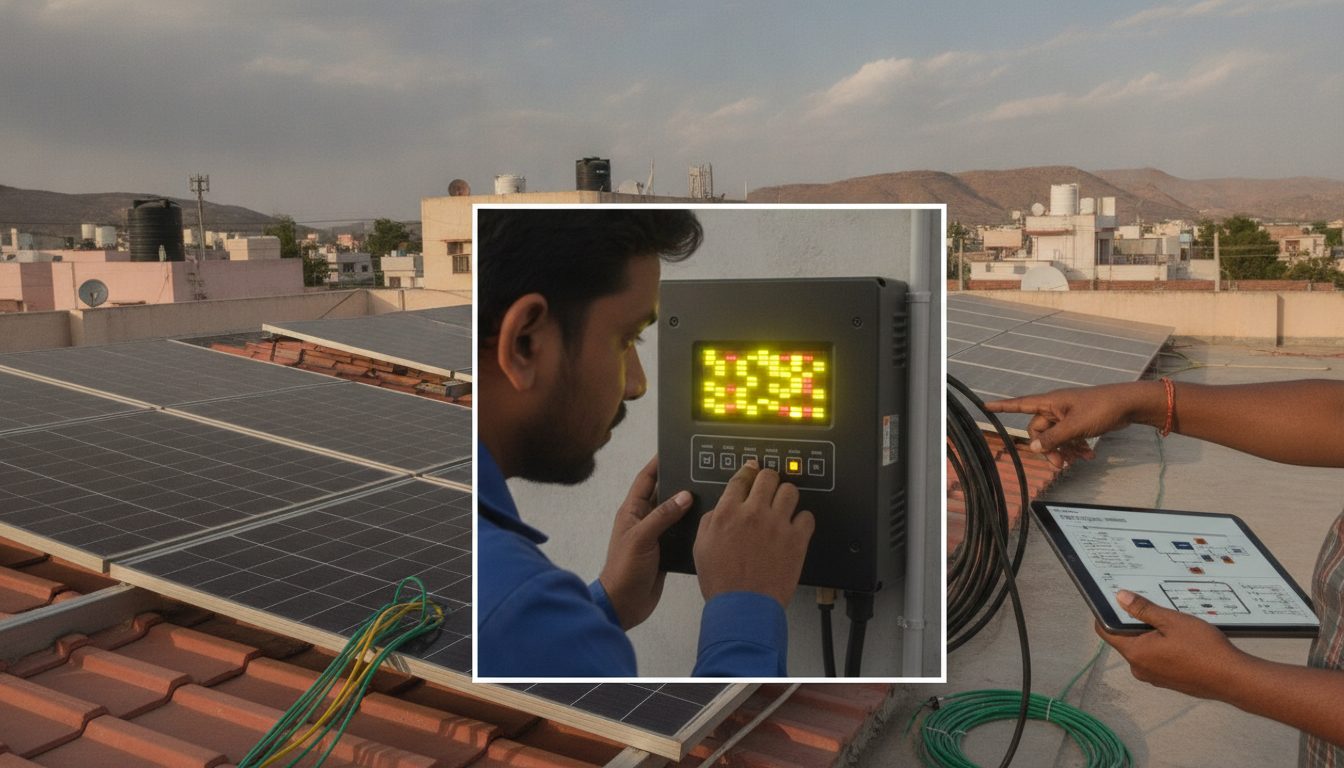
Understanding Common Inverter Fault Codes in India
Grid fluctuations and high ambient temperatures in India frequently trigger inverter fault codes like insulation resistance errors, grid overvoltage, and phase mismatch. This homeowner-focused guide breaks down what common error codes on popular string inverters mean, when to attempt a safe soft reset, and exactly which issues require calling an accredited technician. Local weather swings and thermal stress place heavy demands on solar hardware.
Before planning system expansions or checking if your setup matches your home load, you can evaluate your space using a solar roof area calculator to ensure your array configuration stays within safe operational limits.
Want to see what this means for your roof? Use our free solar calculator for India to estimate system size, cost after the ₹78,000 subsidy and payback period.
Critical Safety Precautions Before Touching Equipment
Emphasize safety precautions regarding DC side high-voltage shocks before touching any equipment. Solar panels generate live direct current whenever daylight hits them, meaning the DC cables remain energized even when the grid is offline or the AC breaker is flipped.
Never attempt to open the inverter casing, touch internal wiring, or disconnect DC plug connectors without proper insulated tools and certified safety gear. If an error code points to internal component failure, leave the physical inspection strictly to professionals.
Troubleshooting Grid Overvoltage and Phase Issues
Grid overvoltage occurs when local utility voltage rises above the permitted safety threshold programmed into your inverter. This is common in Indian residential feeders with high solar penetration during peak afternoon hours. When this happens, the inverter trips and displays an overvoltage fault code to protect your appliances.
Phase mismatch errors appear when the three-phase or single-phase supply sync fails due to local utility maintenance or sudden line drops. You should check your main distribution board to see if utility supply is stable across all lines before attempting any inverter restart.
Addressing Insulation Resistance and Ground Faults
Insulation resistance errors usually stem from moisture ingress, damaged DC cable insulation, or micro-cracks in panels caused by extreme weather and thermal expansion. High humidity and heavy monsoon rains in India worsen these DC isolation faults, causing the inverter to shut down for safety.
When an insulation fault appears, a safe soft reset can be performed by turning off the AC breaker first, then switching off the DC isolator, waiting for the screen to go completely blank, and reversing the sequence. If the error persists immediately after power returns, call your accredited technician to test the wiring with an insulation tester.
🌟 Ready to Go Solar? Get 3 Free Quotes
Connect with verified, MNRE-empanelled solar installers near you — free, no obligation.
Get Free Solar Quotes →