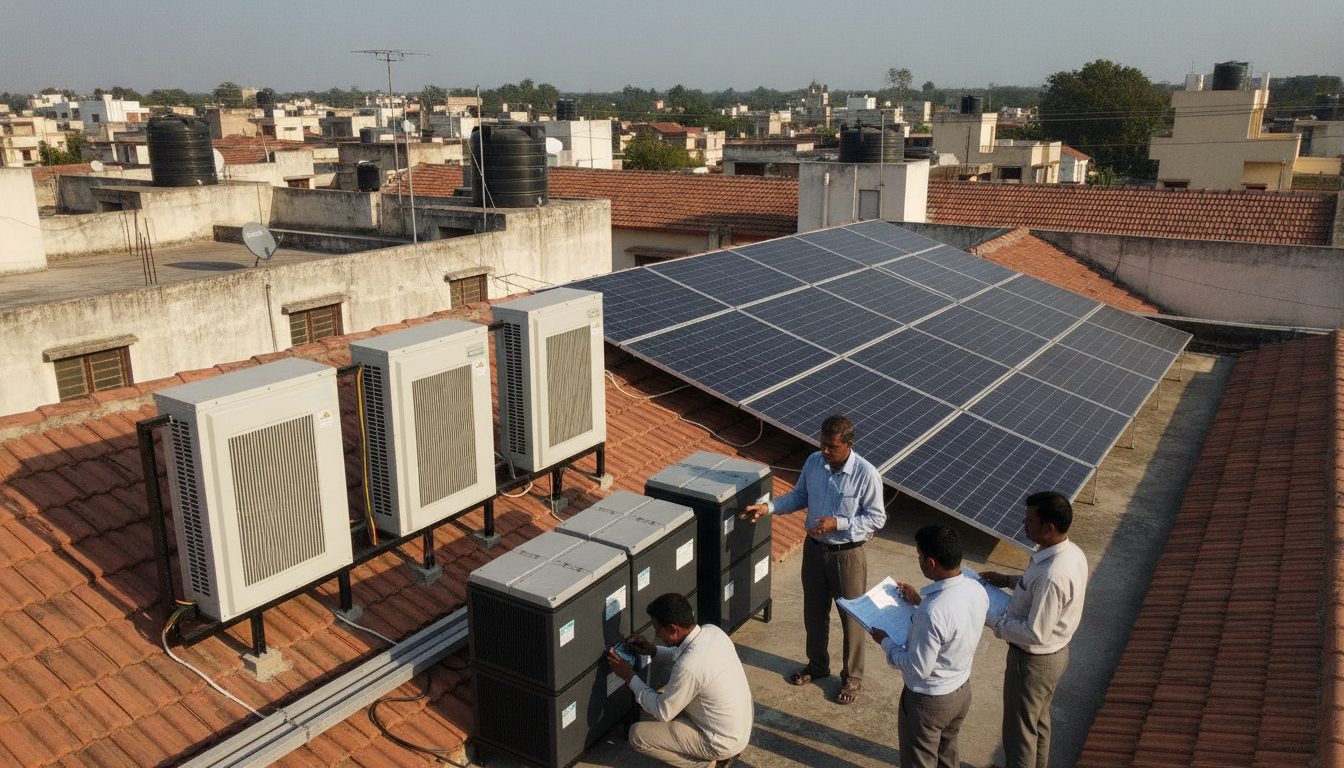
Calculating Critical Loads for Frequent Grid Failures
When frequent power outages disrupt your daily routine, getting your hybrid solar inverter sizing power cuts right ensures your essential appliances stay operational without draining the battery prematurely. Start by listing your critical loads. These typically include lights, fans, Wi-Fi routers, the refrigerator, and select charging points. Non-essential high-draw appliances like room heaters or heavy kitchen equipment should be left off the backup circuit during extended outages to conserve stored energy.
To determine the correct system capacity, sum the running wattage of all critical appliances you plan to run simultaneously. You can use our home inverter and battery backup size calculator to map out your specific household power needs. Add a safety buffer to this total wattage to account for minor fluctuations and future appliance additions.
Not sure what size you need? Our free solar calculator works out system size, cost after subsidy and payback from your monthly electricity bill.
Managing Surge Loads from Water Pumps and Air Conditioners
Inductive appliances such as water pumps, washing machines, and air conditioners require a massive surge of current during startup. This surge is often two to three times higher than their normal running wattage. If your hybrid inverter lacks adequate surge capacity, the system will trip the moment a motor tries to start during a power cut.
Check the technical specifications of your hybrid inverter to verify its peak surge rating, not just its continuous output rating. When sizing your system for areas with unstable grids, choose an inverter that handles these instantaneous spikes safely. This prevents unexpected shutdowns when your water pump or AC kicks on while running on battery power.
The Role of Automatic Transfer Switches in Unstable Grids
An Automatic Transfer Switch (ATS) is an essential component for residential and small commercial buyers facing frequent grid failures. The ATS detects a grid outage instantly and reroutes your home power supply to the battery and inverter source within milliseconds. This transition happens fast enough that sensitive electronics like computers and medical equipment do not reboot or lose data.
Unlike manual changeover switches, an integrated ATS in a hybrid setup operates without manual intervention. It also manages the reverse process safely, reconnecting your home to the main grid once utility power stabilizes, while simultaneously routing excess solar generation back to recharge your batteries or export to the grid.
Matching Battery Storage Capacity to Outage Duration
Inverter capacity dictates how many appliances you can run at once, but battery capacity determines how long you can run them. Battery storage is measured in kilowatt-hours (kWh). To size your storage correctly, multiply your total critical load wattage by the average duration of power cuts in your area, then divide by the usable depth of discharge for your battery type.
Lithium-ion batteries typically allow a higher depth of discharge compared to older lead-acid variants, meaning you get more usable energy from a smaller physical footprint. Plan your battery bank to cover your evening and night outages when solar panels produce zero electricity, ensuring true energy independence even during prolonged grid downtime.
🌟 Ready to Go Solar? Get 3 Free Quotes
Connect with verified, MNRE-empanelled solar installers near you — free, no obligation.
Get Free Solar Quotes →