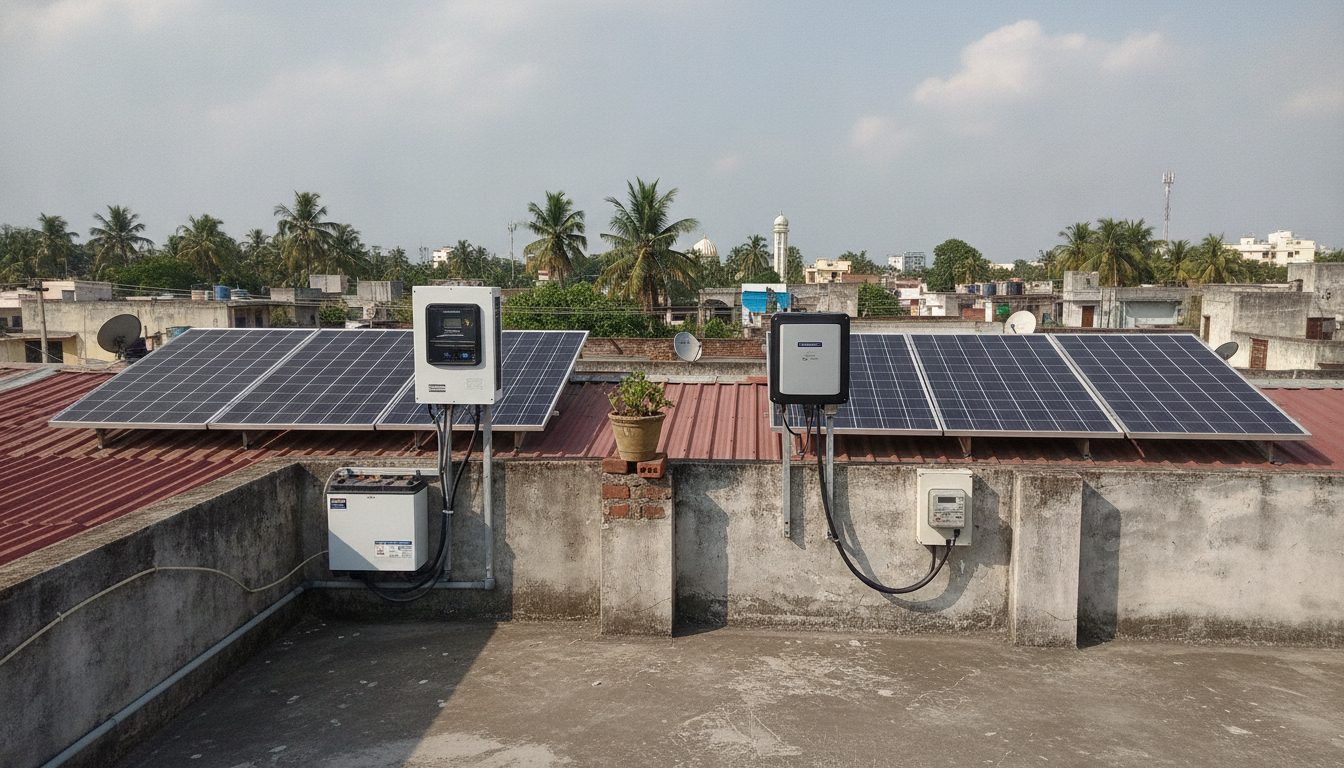
Understanding the Core Difference in Power Management
When deciding between a hybrid vs grid tied solar inverter for your rooftop setup, the operational mechanism during a grid failure is the deciding factor. Grid-tied inverters feed solar electricity directly into the utility grid and power your home appliances simultaneously. However, these standard units shut down completely during blackouts for safety reasons known as anti-islanding protection, preventing electricity from flowing back into lines where utility workers might be repairing faults. This shutdown often frustrates homeowners who still face frequent power cuts.
Hybrid options solve this limitation by integrating solar panel generation with battery storage. They manage power flow dynamically between your panels, the utility grid, and your battery bank. You can check your estimated setup requirements and potential savings using the solar system cost and subsidy calculator before making a purchase decision.
Not sure what size you need? Our free solar calculator works out system size, cost after subsidy and payback from your monthly electricity bill.
Evaluating Costs and Initial Hardware Investment
Budget planning is essential when comparing these two technologies for Indian households. Standard grid-tied systems require fewer components, making them the most common choice for reliable urban power grids. Hybrid systems require additional hardware, including compatible deep-cycle battery banks and more complex charge controllers.
Because of this added hardware, hybrid units come with a 30 to 40 percent higher initial cost compared to standard grid-tied equivalents. Homeowners must weigh this upfront expense against the utility of having continuous electricity during grid outages. To understand your financial returns over time, you can evaluate your projected savings using the solar ROI and payback period calculator.
Load Handling Capacities and Practical Utility
Load handling differs significantly based on the inverter type you install on your roof. A grid-tied inverter matches its output to your immediate daytime consumption and exports excess units to the grid through net metering. It does not store energy, meaning night usage relies entirely on grid power.
A hybrid unit directs surplus daytime generation into batteries, supplying power to designated critical loads during evening hours or grid outages. If you want to size your battery backup correctly for household appliances, you can reference the home inverter and battery backup size calculator to match your daily consumption profile.
Compatibility with Time-of-Day Tariffs
State electricity boards across India are progressively introducing Time-of-Day (ToD) electricity tariffs. Under this billing structure, electricity costs more during peak evening hours and less during solar generation hours. Grid-tied users draw expensive grid power during peak evening slots because they lack storage.
Hybrid system owners can program their inverters to store cheap solar energy during the day and discharge battery power during peak evening ToD rate hours. This capability helps mitigate rising grid tariffs, altering the long-term financial payback timeline for residential installations.
🌟 Ready to Go Solar? Get 3 Free Quotes
Connect with verified, MNRE-empanelled solar installers near you — free, no obligation.
Get Free Solar Quotes →