Understanding DISCOM Rules on Reverse Power Flow
DISCOMs in several states prohibit reverse power flow for unapproved capacities before net metering approval. Grid connection inspectors check for unauthorized exports during commissioning. If a system feeds solar generation back into the local distribution transformer without prior clearance, the utility can levy penalties or delay approvals.
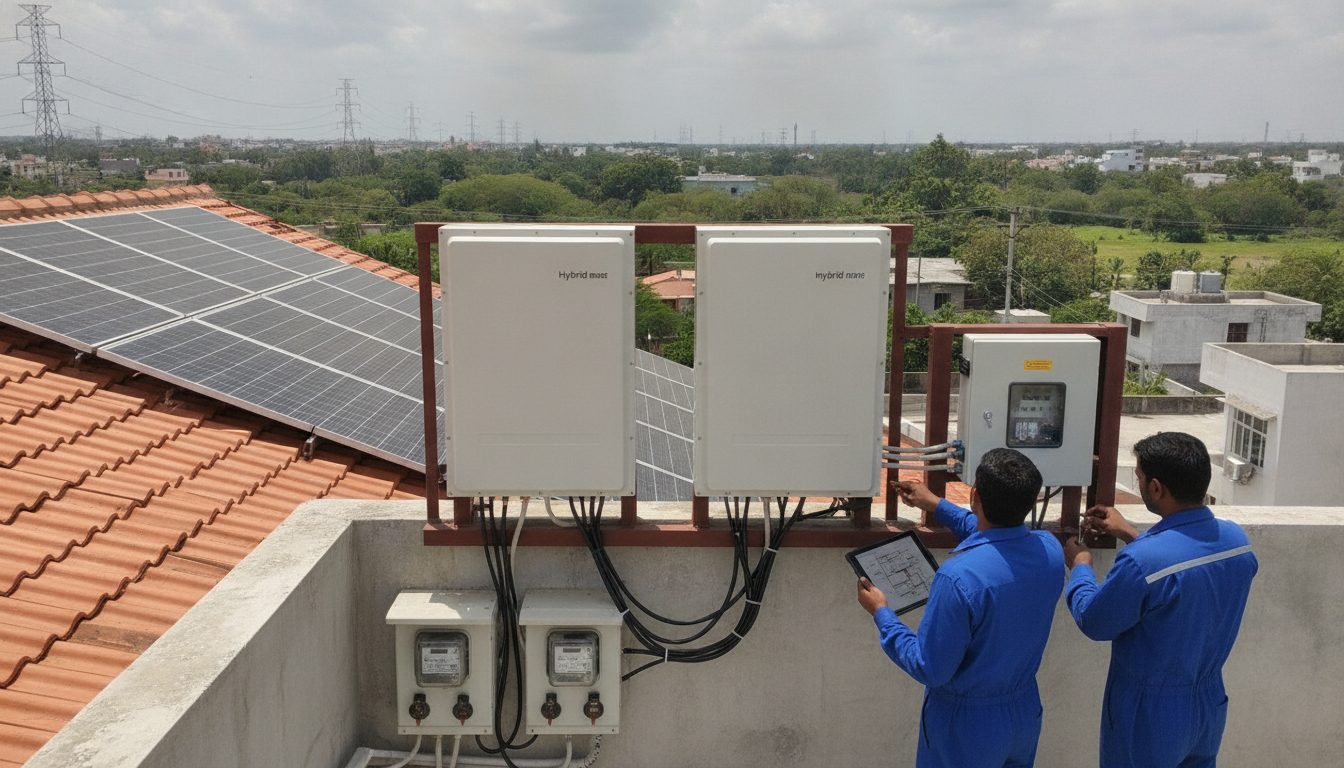
Installers must manage this interim period carefully. Property owners want their systems active immediately after physical mounting and wiring finish. A hybrid solar inverter zero export device allows the installation to power loads locally while physically blocking any surplus energy from reaching the transmission lines.
To check the numbers for your own home, try the solar calculator — enter your electricity bill and get system size, subsidy and payback in seconds.
Hardware Integration and CT Clamp Placement
Proper physical setup dictates whether the export limiter functions correctly under varying household loads. Current transformer, or CT, clamps form the core sensing mechanism of the setup. Technicians must mount these clamps on the main incoming supply lines right after the utility meter.
Correct orientation matters during installation. If the direction arrow on the CT clamp faces the wrong way, the control logic misreads consumption as generation and shuts down power prematurely. Wire the data cable from the clamps directly to the designated communication port on the inverter body or the standalone controller unit.
Inverter Settings and Configuration Steps
Hardware placement is only half the process. Technicians need to log into the inverter firmware via the manufacturer mobile application or web portal. Navigate to the power control menu and locate the export limitation parameters. Enable the external meter function and set the target feed-in power limit to zero watts.
Some firmware versions allow a small buffer to prevent nuisance tripping when heavy inductive loads switch off suddenly. Verify these settings using our home inverter and battery backup size calculator to ensure your hardware specifications match the consumption profile of the property. Once saved, test the setup by turning on major appliances while observing real-time grid meter readings.
Preventing Regulatory Penalties During Grid Connection
Compliance inspections by state electricity boards can happen weeks after physical installation concludes. Utilizing zero-export controllers demonstrates to utility engineers that the facility respects grid safety guidelines. This precaution protects the property owner from fines and administrative holds on the eventual net metering application.
Keep documentation of the controller settings and wiring diagrams ready for the visiting inspector. Once the formal net metering approval arrives from the DISCOM, technicians can disable the zero-export limitation via the inverter menu, allowing normal grid export and credit accumulation to begin.
🌟 Ready to Go Solar? Get 3 Free Quotes
Connect with verified, MNRE-empanelled solar installers near you — free, no obligation.
Get Free Solar Quotes →