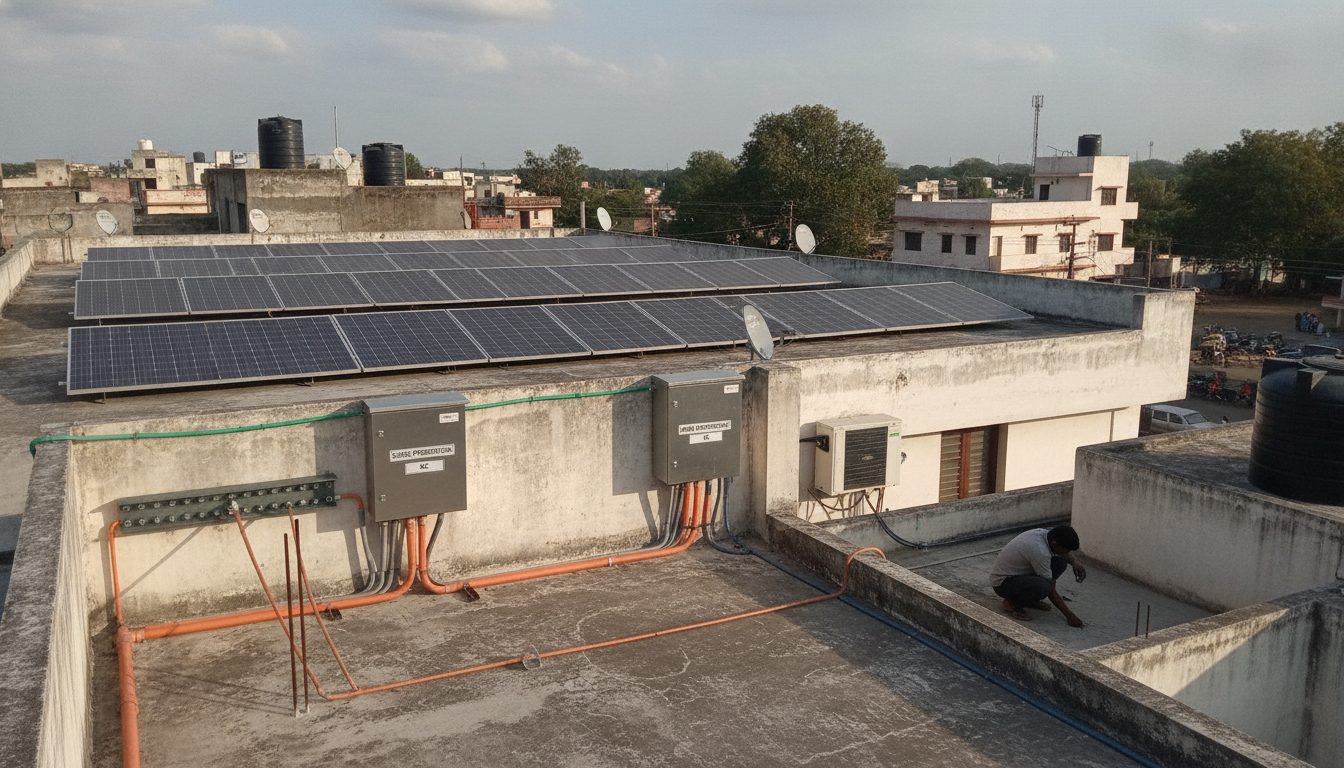
Understanding Surge Risks and Protection Basics
Monsoon lightning strikes and sudden grid surges are primary causes of inverter blowouts and string failure in Indian rooftop arrays. Without proper barriers, high transient voltages travel directly from the AC grid or DC panel lines into sensitive electronics. Implementing a proper solar surge protection device sizing guide helps installers match equipment ratings to actual site exposures. These devices divert dangerous voltage spikes safely into the ground before they reach the inverter or charge controller.
Protecting a residential array starts with understanding the difference between direct and indirect strikes. Type 1 surge protection devices handle direct lightning currents, while Type 2 units manage indirect switching surges from the distribution transformer. Using both layers ensures comprehensive safety for homes. Before finalizing equipment, homeowners often check space requirements using a solar roof area calculator to plan physical module layouts alongside electrical pathways.
Want to see what this means for your roof? Use our free solar calculator for India to estimate system size, cost after the ₹78,000 subsidy and payback period.
CEA and IEC Compliance Standards
Indian electrical inspectorates strictly enforce safety guidelines laid out by the Central Electricity Authority and International Electrotechnical Commission. These rules govern every aspect of electrical safety, from equipment ratings to physical installation methods. To pass mandatory audits, all rooftop systems must incorporate coordinated SPD placement right at the inverter inputs and distribution boards.
Installers must document equipment compliance certificates for both DC-side and AC-side protection devices. Inspectors verify that clamping voltages match the maximum continuous operating voltage of the inverter. Failing to meet these strict thresholds results in delayed commissioning and denied net metering approvals by local distribution companies.
Earthing Pit and Copper Strip Specifications
A robust earthing network forms the backbone of any safe rooftop solar installation. Safety codes mandate dedicated earth pits for the module mounting structure, inverter body, and lightning arrestor mast. These pits must maintain very low resistance paths to earth, typically under five ohms, to safely dissipate high-energy fault currents.
Copper strips and bare copper conductors used for interconnecting earthing pits must meet specific cross-sectional area requirements based on system capacity. Galvanized iron pipes or maintenance-free chemical earthing electrodes are common across residential sites. Installers must ensure all bolted joints use spring washers and anti-corrosion compound to prevent long-term degradation from soil moisture and heavy monsoon rains.
🌟 Ready to Go Solar? Get 3 Free Quotes
Connect with verified, MNRE-empanelled solar installers near you — free, no obligation.
Get Free Solar Quotes →