Understanding Mono PERC and Bifacial Panel Technology
When comparing mono perc vs bifacial solar panels for an Indian home, the main difference lies in how each technology captures sunlight. Mono PERC panels absorb light exclusively from the front surface, which makes them the standard, reliable choice for typical residential rooftops. Bifacial panels feature a glass-on-glass or transparent backsheet construction that absorbs light from both the front and the back surfaces.
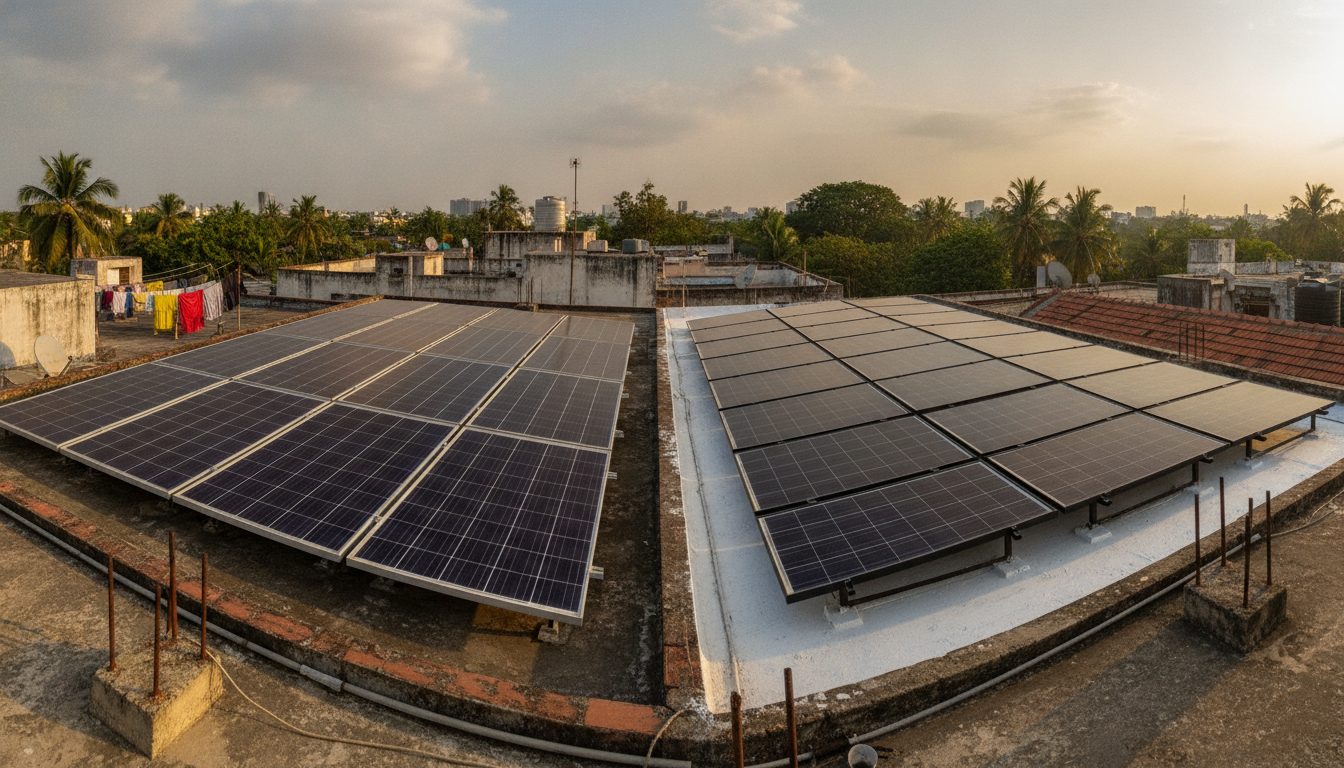
Because Indian homes feature varying roof types, homeowners can check their available space using a solar roof area calculator before purchasing. Standard flat concrete roofs usually favor mono perc modules unless specific steps are taken to reflect light underneath the panels.
Not sure what size you need? Our free solar calculator works out system size, cost after subsidy and payback from your monthly electricity bill.
Energy Generation and Albedo Requirements
Bifacial panels generate 5% to 25% more energy than single-sided modules, but this increase depends entirely on the installation environment. They require high-albedo or reflective surfaces, such as white painted concrete, light-colored tiles, or ground-mounted structures, to bounce sunlight onto the rear side of the panel.
Standard rooftop solar systems in India generate roughly 90 to 120 units of electricity per month for every 1kW installed. A standard 3kW system produces roughly 270 to 360 units per month. Residential grid tariffs across Indian states typically range between ₹6 and ₹9 per unit, meaning any extra generation from bifacial modules directly reduces electricity bills if your roof reflects enough light.
Cost, Weight, and Financial Support
Bifacial panels cost slightly more upfront and are heavier than standard mono perc panels, which requires stronger mounting structures on residential roofs. To offset setup costs, homeowners can utilize the PM Surya Ghar Muft Bijli Yojana subsidy. The scheme provides financial assistance of ₹30,000 for a 1kW system, ₹60,000 for a 2kW system, and ₹78,000 for a 3kW system and above.
Net metering is available in all major states under MNRE guidelines and must be applied for through your installer or local DISCOM. To calculate your actual financial returns after subsidies and local tariffs, use the solar ROI and payback period calculator to estimate your timeline.
Warranties and Long-Term Reliability
Both panel types offer reliable long-term performance backed by industry standards. Panels carry a 25-year performance warranty, ensuring that output remains at roughly 80% by the end of year 25. The product warranty covering manufacturing defects typically spans 10 to 12 years.
Standard maintenance involves periodic cleaning to remove dust accumulation, ensuring that both front and rear glass surfaces remain unobstructed for optimal generation throughout the 25-year lifespan.
🌟 Ready to Go Solar? Get 3 Free Quotes
Connect with verified, MNRE-empanelled solar installers near you — free, no obligation.
Get Free Solar Quotes →