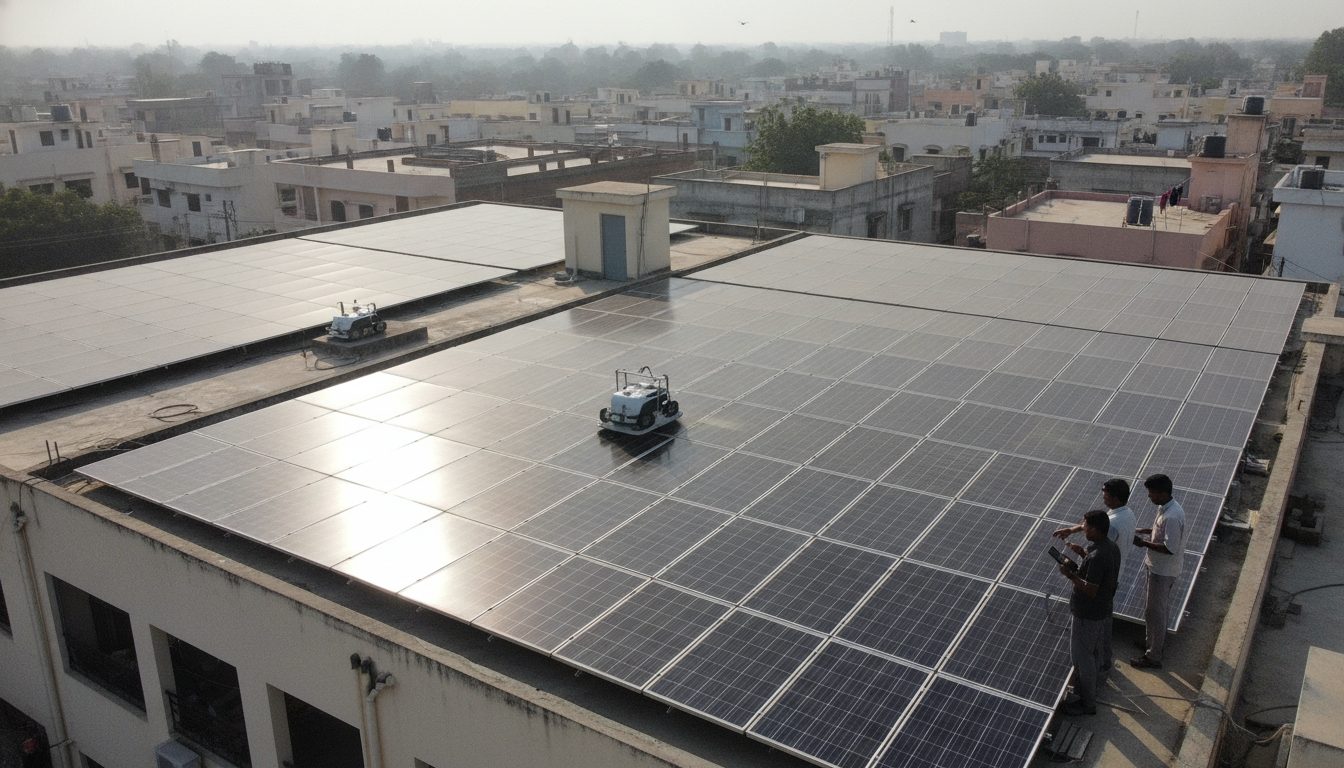
The Impact of Dust on Industrial Rooftop Solar Generation
Dust and particulate accumulation in industrial belts across India can cause daily energy generation losses of up to 15-25% if panels are washed manually with water. When soot, grime, and industrial pollutants settle on large arrays, traditional cleaning methods require huge volumes of water and heavy manual labor. Plant owners managing extensive commercial setups often find that manual washing fails to keep pace with rapid dust accumulation, leading to sustained drops in power output. To estimate how much electricity your specific roof footprint can generate before factoring in dust losses, you can use the solar roof area calculator for accurate sizing.
Not sure what size you need? Our free solar calculator works out system size, cost after subsidy and payback from your monthly electricity bill.
How Waterless Robotic Systems Protect Glass and Save Resources
Automated robotic cleaning systems utilize microfiber brushes and dry-cleaning mechanisms to protect delicate anti-reflective glass coatings while saving thousands of liters of water. Traditional cleaning methods often risk scratching panel surfaces or leaving mineral residue behind. Dry-cleaning robots sweep away particulate matter without moisture, preserving the integrity of the glass. This approach eliminates the logistical challenges of sourcing water tankers for remote or sprawling industrial rooftops, making upkeep predictable and consistent.
Analyzing Capital Expenditure and O&M Labor Cost Reductions
Plant managers must evaluate capital expenditure against ongoing operational savings when transitioning to automated upkeep. While installing automated machinery requires an upfront investment, it significantly reduces recurring O&M labor expenses. Manual cleaning crews demand continuous wage outlays and safety monitoring, whereas robots operate on programmed schedules. To understand your overall financial returns and payback timeline after accounting for equipment and maintenance shifts, you can check the solar ROI and payback period calculator.
🌟 Ready to Go Solar? Get 3 Free Quotes
Connect with verified, MNRE-empanelled solar installers near you — free, no obligation.
Get Free Solar Quotes →