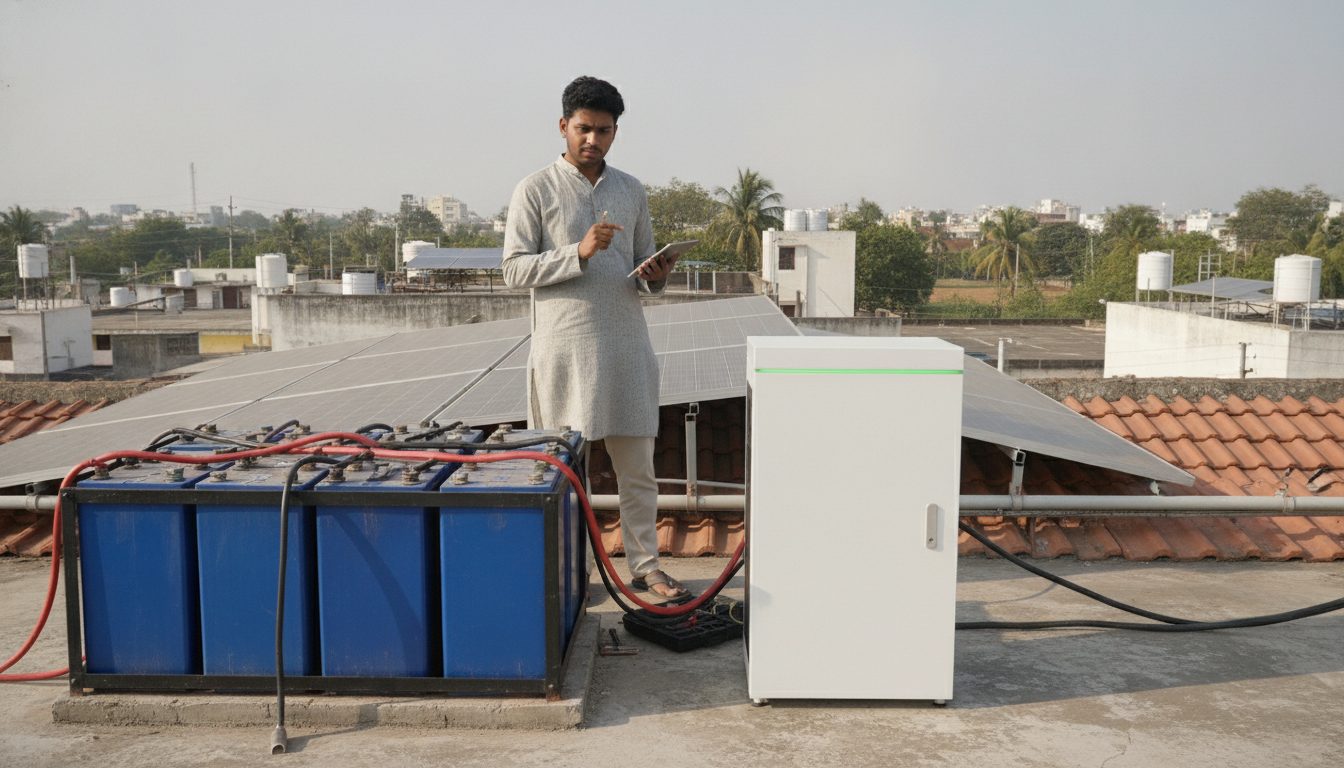
Evaluating Battery Chemistries for Indian Homes
When planning a continuous power backup for an Indian household, selecting the right energy storage chemistry determines both daily reliability and long-term expenses. Homeowners comparing a LiFePO4 vs tubular battery for home solar India typically weigh traditional lead-acid reliability against modern lithium iron phosphate efficiency.
You can estimate your specific backup sizing requirements by using the home inverter and battery backup size calculator to understand what capacity suits your daily power cuts.
Not sure what size you need? Our free solar calculator works out system size, cost after subsidy and payback from your monthly electricity bill.
Depth of Discharge and Lifecycle Comparison
Depth of discharge (DoD) dictates how much stored energy you can draw from a battery before recharging it. Tubular lead-acid options typically require restricted discharge depths to preserve plate longevity, whereas LiFePO4 chemistry safely permits much deeper daily utilization without degrading internal components prematurely.
Lifecycles also diverge sharply between the two technologies. Conventional tubular lead-acid models generally provide around 1200 cycles under standard operating conditions. In contrast, quality LiFePO4 variants frequently exceed 6000+ cycles, directly influencing the overall lifecycle cost per kilowatt-hour over decades of residential use.
Thermal Safety and Ambient Temperature Tolerance
High ambient temperatures across many regions in India place heavy thermal stress on residential energy storage equipment. Lithium Iron Phosphate inherently offers superior thermal stability compared to older lithium formulations, but proper thermal safety standards remain critical during intense summer peaks.
Tubular lead-acid systems handle heat through liquid electrolyte replenishment and simpler physical construction, yet they suffer from faster fluid loss and plate sulfation in unventilated spaces. Selecting appropriate installation locations and compliant hardware ensures safe daily operation regardless of seasonal weather shifts.
The Role of BMS Compliance in Residential Safety
A Battery Management System (BMS) acts as the electronic control center for any LiFePO4 setup. It monitors individual cell voltages, regulates charge and discharge rates, and cuts off power during thermal anomalies or short circuits.
Tubular lead-acid batteries operate without complex electronic management, relying instead on manual water topping and external inverter settings. For lithium-based residential installations, strict BMS compliance is non-negotiable to meet safety standards and protect household appliances from voltage surges or overcharging risks.
🌟 Ready to Go Solar? Get 3 Free Quotes
Connect with verified, MNRE-empanelled solar installers near you — free, no obligation.
Get Free Solar Quotes →