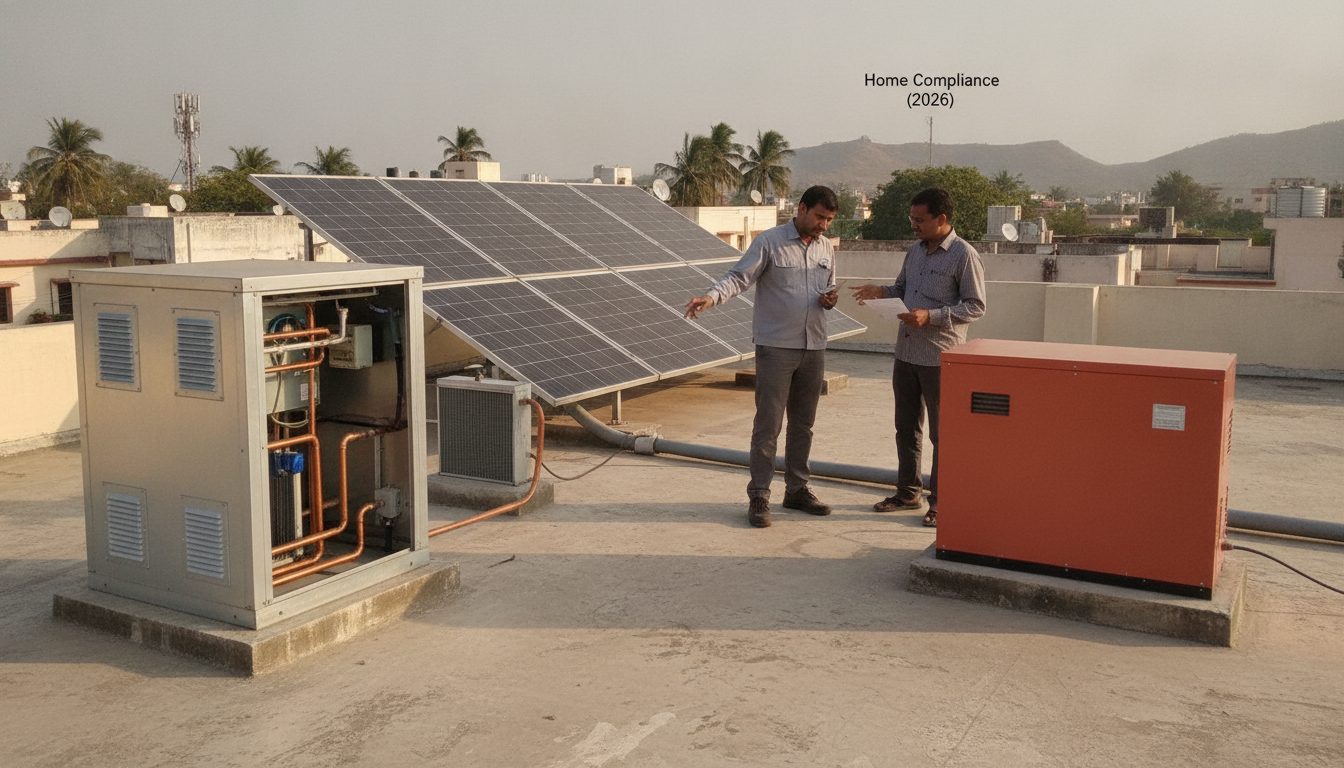
Understanding Battery Chemistry and Thermal Runaway in Indian Weather
With the rise of residential hybrid systems, battery safety and thermal runaway risks in Indian weather conditions are major consumer concerns. High ambient temperatures across many parts of the country test the limits of energy storage chemistry. Standard lithium-ion chemistries can be sensitive to extreme heat, while Lithium Iron Phosphate (LFP) variants provide a more stable thermal profile. Evaluating your setup requirements properly helps manage these physical stresses, and you can check your overall requirements with an inverter size calculator before finalizing equipment.
Want to see what this means for your roof? Use our free solar calculator for India to estimate system size, cost after the ₹78,000 subsidy and payback period.
BIS Standards and Home Compliance Requirements
Regulatory compliance protects residential properties from electrical hazards. The Bureau of Indian Standards provides specific benchmarks for energy storage devices used in tandem with rooftop photovoltaic installations. Adhering to these norms ensures that the installed hardware meets rigorous electrical, mechanical, and thermal endurance tests. Homeowners must verify that the chosen energy storage units carry the necessary certification labels before indoor or outdoor setup begins.
The Role of Battery Management Systems (BMS)
A sophisticated Battery Management System acts as the primary defense against overcharging, deep discharging, and excessive temperature spikes. It constantly monitors individual cell voltages and thermal levels, cutting off power flow if operating thresholds are breached. This active digital monitoring prevents hazardous conditions from developing inside the residential storage unit, particularly during peak summer months when grid fluctuations coincide with high ambient heat.
Ventilation and Indoor versus Outdoor Installation Protocols
Proper placement of energy storage hardware determines long-term safety and operational efficiency. Outdoor installations require protective enclosures shielded from direct sunlight and heavy monsoon rain. Indoor setups demand adequate cross-ventilation to dissipate any accumulated heat or minor off-gassing during high-load cycles. Following manufacturer guidelines regarding clearance distances from walls and living spaces reduces potential risks significantly.
🌟 Ready to Go Solar? Get 3 Free Quotes
Connect with verified, MNRE-empanelled solar installers near you — free, no obligation.
Get Free Solar Quotes →