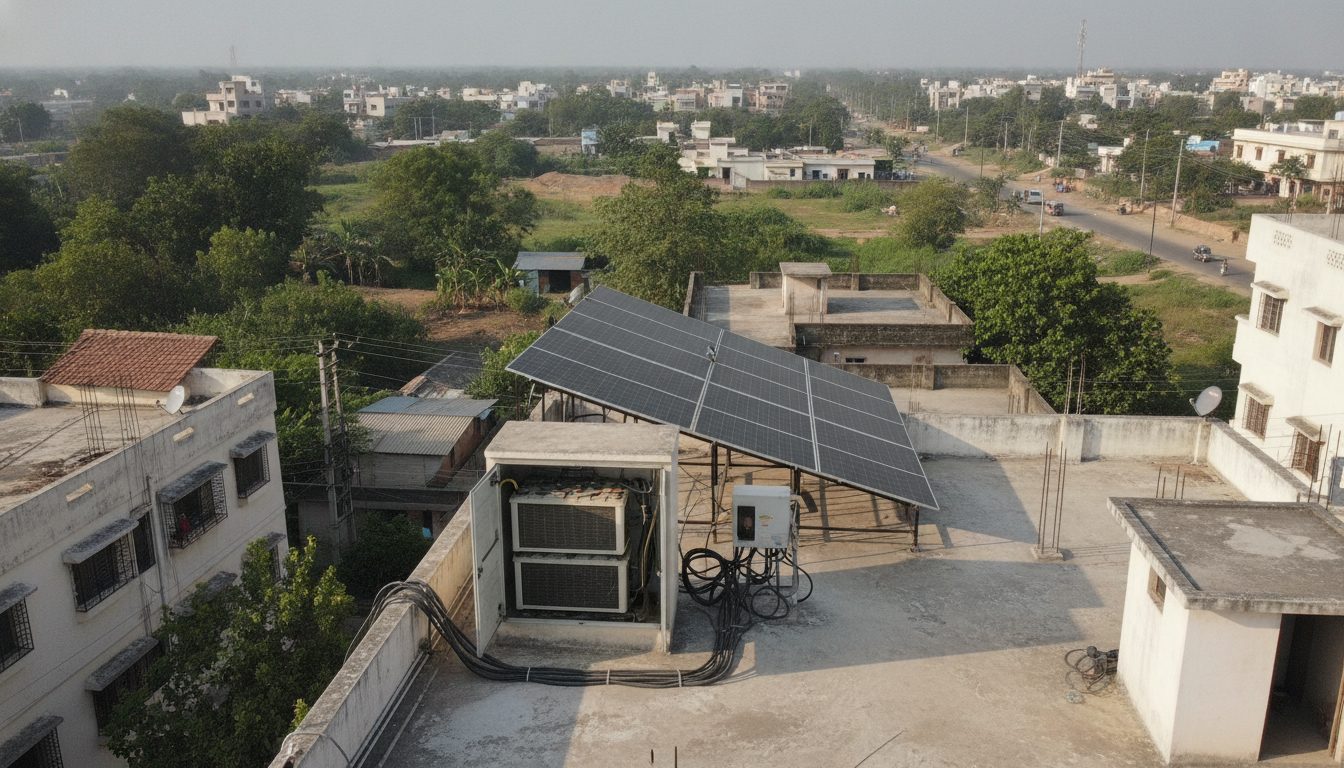
Understanding Power Backup Needs in Indian Homes
Frequent grid power outages and rising peak-hour tariffs across Indian states make reliable energy storage essential for modern households. Households face daily disruptions and variable utility pricing that make reliance on the grid alone impractical. Managing these challenges requires investing in a dedicated battery bank that keeps critical appliances running when the mains fail.
Choosing the right hardware starts with comparing battery chemistries. Homeowners generally select between lithium-ion units and tubular lead-acid options. Lithium-ion systems offer higher efficiency, a longer operational lifespan, and deeper discharge limits, though they require a higher upfront investment. Tubular lead-acid batteries cost less initially, but they demand regular maintenance and have a shorter replacement cycle. You can evaluate your baseline energy needs by checking the home inverter and battery backup size calculator before purchasing equipment.
Not sure what size you need? Our free solar calculator works out system size, cost after subsidy and payback from your monthly electricity bill.
Step-by-Step Battery Sizing Formula
Accurate sizing prevents power shortages and avoids spending money on excess capacity. The sizing process relies on calculating daily household consumption and critical load requirements.
- Step 1: List every critical appliance you intend to run during a power cut, such as lights, fans, the refrigerator, and Wi-Fi routers.
- Step 2: Multiply the wattage of each appliance by the expected hours of use per day to find the total watt-hours.
- Step 3: Divide the total watt-hours by 1,000 to convert the figure into daily kilowatt-hours (kWh).
- Step 4: Apply a safety factor and account for the depth of discharge limits based on whether you use lithium-ion or lead-acid technology.
Lead-acid batteries should not be discharged past fifty percent of their total capacity to preserve lifespan, whereas lithium-ion models can handle much deeper discharges without sustaining damage. This technical difference changes the total battery capacity you must purchase to achieve the exact same hours of backup time.
Integrating Hybrid Inverters for Off-Grid Transitions
A standard string inverter shuts down during a grid failure for safety reasons, cutting off power to your home even if the sun is shining on your rooftop panels. Modern homes solve this limitation by installing hybrid inverters coupled with energy storage. A hybrid inverter manages power flow between your solar panels, the battery bank, the household load, and the utility grid simultaneously.
During normal operation, the hybrid inverter powers your home appliances using solar generation and charges the battery with any surplus energy. When a grid outage occurs, the system switches to backup mode within milliseconds. This transition happens without manual intervention, keeping sensitive electronics running without interruption. To check the broader financial viability of adding panels and storage to your property, you can use the main solar system cost, savings, and subsidy calculator to plan your total setup budget.
🌟 Ready to Go Solar? Get 3 Free Quotes
Connect with verified, MNRE-empanelled solar installers near you — free, no obligation.
Get Free Solar Quotes →