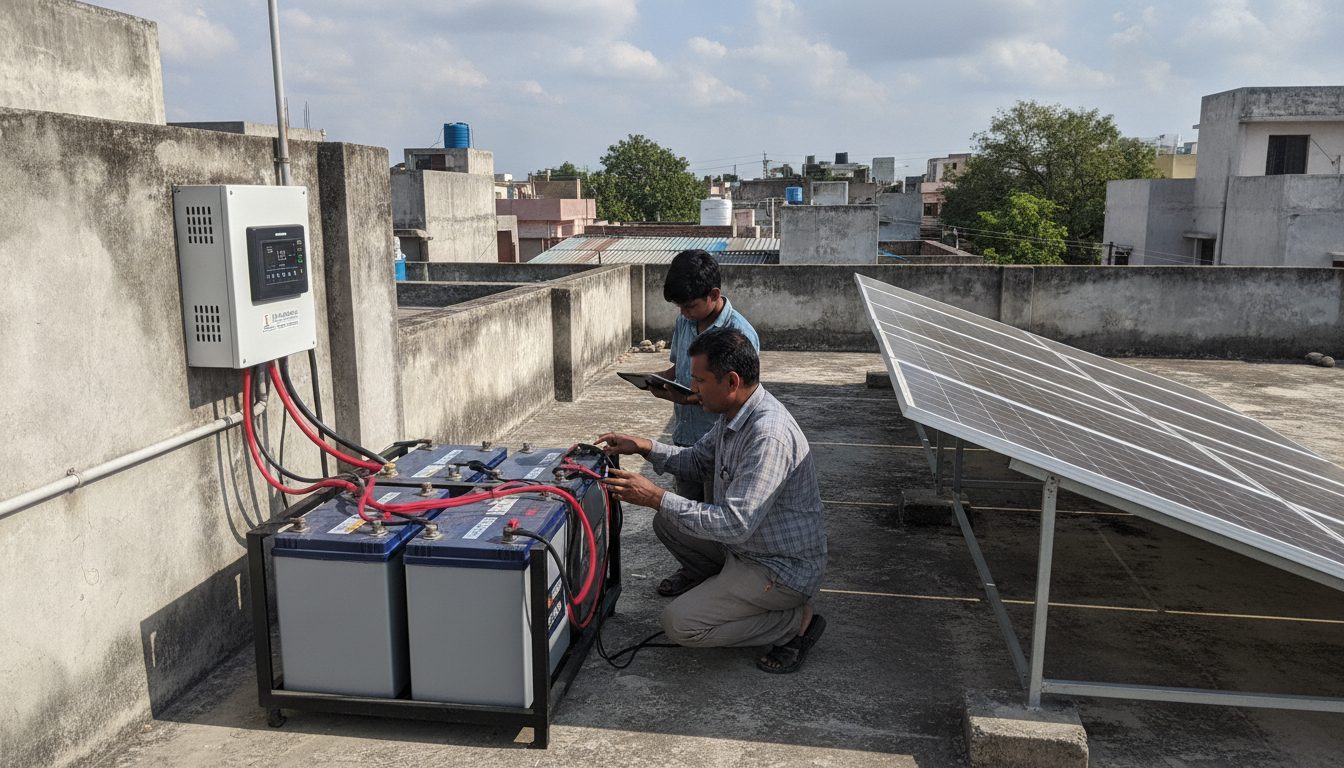
Understanding LiFePO4 Lifespan and Depth of Discharge
Lithium Iron Phosphate (LiFePO4) batteries are now the gold standard for residential hybrid setups due to their 6000-cycle lifespan. Homeowners frequently mismanage ambient temperature controls and Depth of Discharge (DoD) limits, which can shorten the operational life of the equipment. Proper LiFePO4 solar battery maintenance India requires careful tracking of how deeply the battery discharges each day.
To check if your overall solar setup matches your energy requirements, you can run your numbers through the home inverter and battery backup size calculator before adjusting your battery limits.
Not sure what size you need? Our free solar calculator works out system size, cost after subsidy and payback from your monthly electricity bill.
Practical BMS Settings and DoD Limits
The Battery Management System (BMS) controls the charge and discharge parameters to protect the internal chemistry. Setting safe DoD limits prevents premature capacity fade over years of daily cycling. Review your inverter configuration to ensure the lower cutoff voltage matches the manufacturer recommendations for LiFePO4 cells.
Exceeding recommended depth of discharge boundaries places undue stress on the internal cells. Keep daily usage within sensible thresholds to retain the high cycle durability that these units provide.
Ventilation Requirements and Thermal Management
Heat remains the primary threat to lithium battery chemistry. Homeowners must install storage units in well-ventilated areas away from direct sunlight and enclosed spaces lacking airflow. Ambient temperature spikes force the BMS to throttle performance or disconnect entirely to prevent damage.
Maintain adequate clearance around the battery rack for natural air circulation. If the installation room gets excessively warm during summer months, consider adding a dedicated exhaust fan or shading structure to protect your investment and preserve warranty terms.
🌟 Ready to Go Solar? Get 3 Free Quotes
Connect with verified, MNRE-empanelled solar installers near you — free, no obligation.
Get Free Solar Quotes →