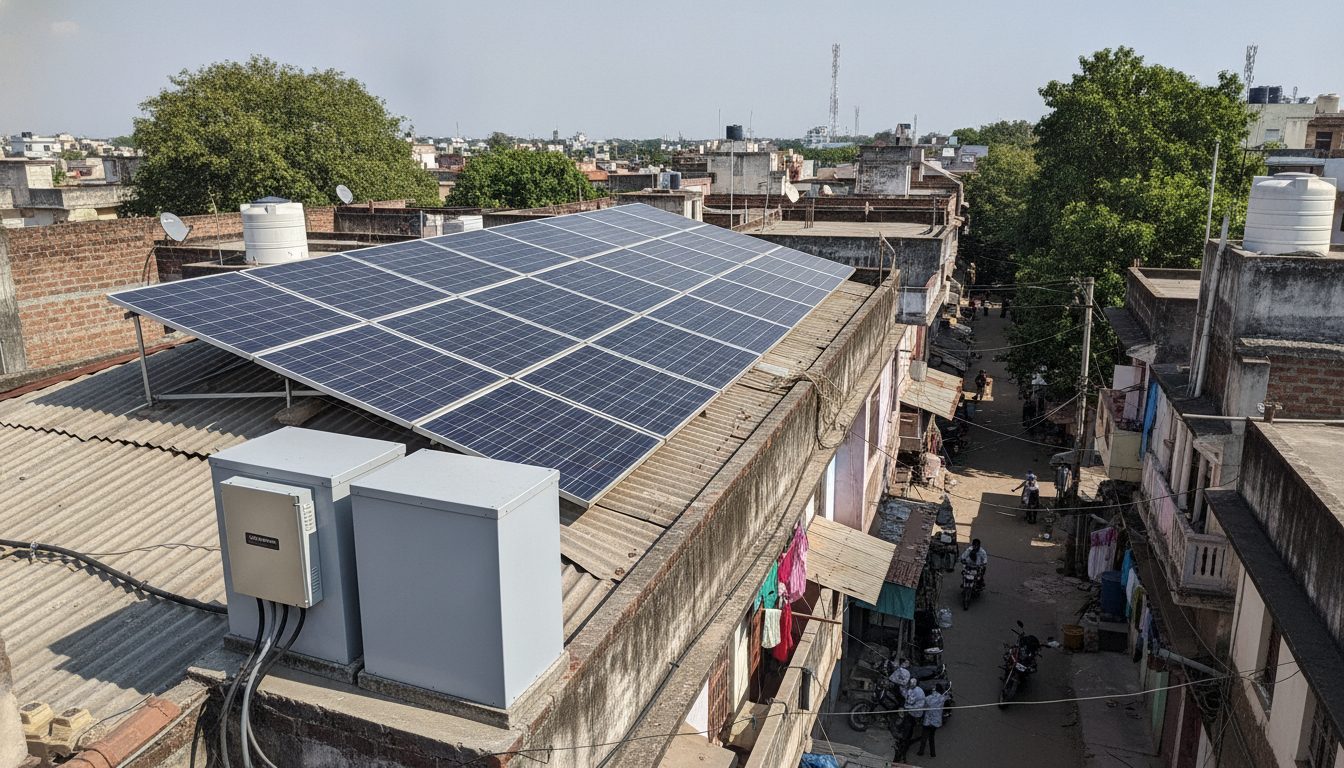
Calculating Backup Requirements During Grid Outages
Reliable backup during frequent grid outages starts with a clear audit of your household appliances. You must differentiate between continuous loads and peak surge loads. Continuous loads include refrigerators, lights, and fans that draw a steady current over hours. Peak surge loads happen when heavy appliances like air conditioners or water pumps start up. These motors demand a temporary spike in power that can be three to five times higher than their running wattage.
To size your setup correctly, list every appliance you want to run simultaneously during a blackout. Add their running wattages for continuous load, then check the starting surge requirements for motor-based devices. If you plan to expand your system or check structural feasibility, you can evaluate your setup via the home inverter and battery backup size calculator before buying hardware.
To check the numbers for your own home, try the solar calculator — enter your electricity bill and get system size, subsidy and payback in seconds.
Understanding Depth of Discharge Limits in Lithium Batteries
Modern energy storage relies heavily on lithium iron phosphate packs. These units offer high thermal stability and a long operational lifespan compared to older lead-acid alternatives. However, you must respect the Depth of Discharge limits specified by the manufacturer. Depth of discharge dictates how much stored energy you can safely extract without degrading the chemical cells prematurely.
While lead-acid systems typically restrict usable capacity to fifty percent, lithium iron phosphate packs often allow eighty to ninety percent depth of discharge. Running these batteries within safe parameters prevents overheating and protects the internal battery management system. Always match your daily kilowatt-hour consumption with the usable capacity rather than the total nameplate rating of the battery module.
Matching Inverter Capacity with High-Voltage Storage Modules
A hybrid inverter manages power flow between your solar panels, battery bank, and the local utility grid. Matching your inverter capacity with high-voltage storage modules ensures the system handles both battery charging and heavy household loads efficiently. High-voltage setups reduce thermal losses during power conversion compared to low-voltage alternatives.
When selecting your hybrid inverter, verify that its continuous output rating exceeds your total concurrent household demand. Check the maximum charge and discharge current limits of the inverter to ensure compatibility with your selected battery string. Proper sizing prevents the inverter from throttling power delivery when multiple high-draw appliances run at the same time.
Real-World Appliances and DISCOM Safety Clearances
Running inductive loads like air conditioners and water pumps off-grid requires careful management of starting currents. A standard residential water pump or split air conditioner can trip a hybrid inverter if the surge rating is insufficient. Ensure your inverter can handle momentary overloads without dropping voltage to sensitive electronics.
Beyond technical sizing, grid-tied hybrid installations require formal approvals from your local electricity distribution company. DISCOM guidelines mandate specific anti-islanding protection. This safety feature stops the inverter from feeding power back into the grid during a blackout, protecting utility workers from electrocution. Always use certified installers who handle net metering applications and secure the necessary safety clearances before commissioning your system.
🌟 Ready to Go Solar? Get 3 Free Quotes
Connect with verified, MNRE-empanelled solar installers near you — free, no obligation.
Get Free Solar Quotes →