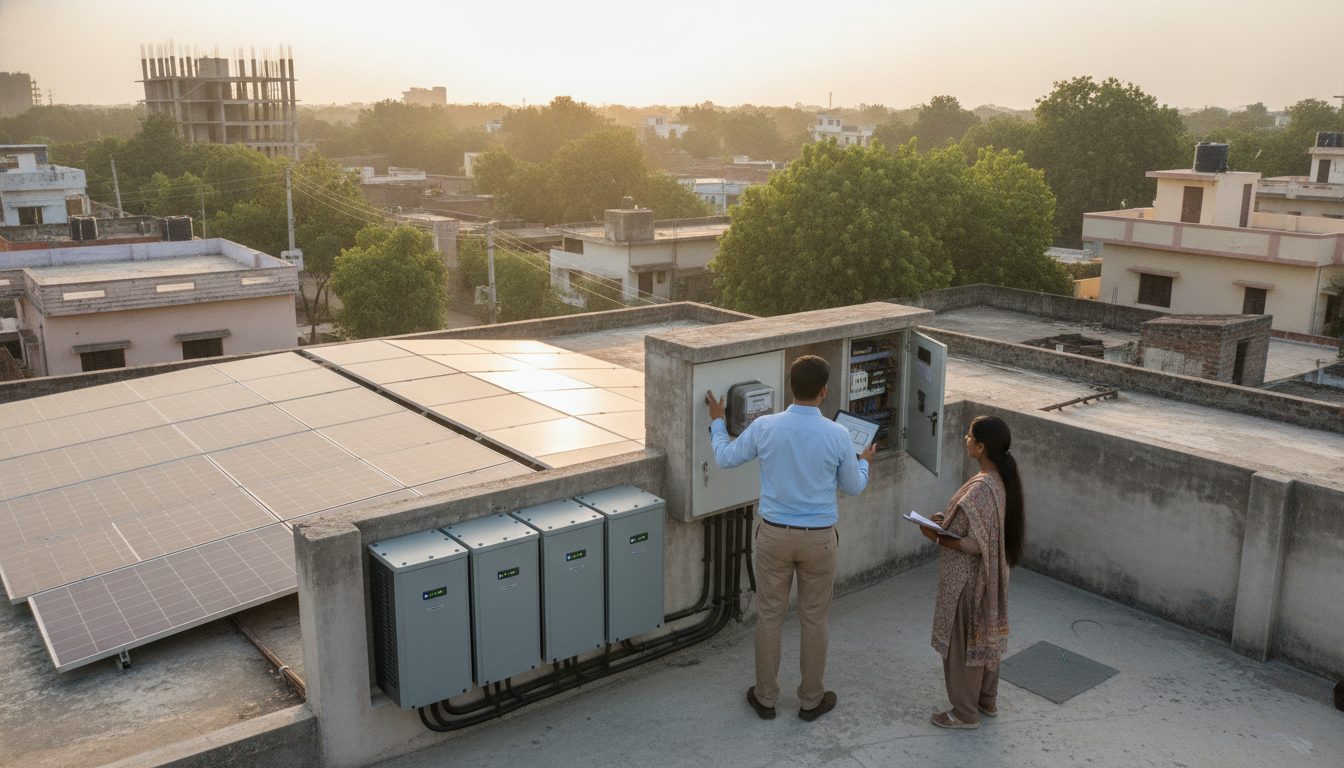
Managing Grid Tariffs and Blackouts with Hybrid Systems
Rising grid tariffs and localized blackouts are driving residential demand for hybrid inverters paired with LFP batteries. When the main power supply fails, a properly configured hybrid setup keeps essential home circuits running without interruption. Homeowners also use stored energy during peak tariff hours to lower monthly electricity bills. To find out how much panel capacity you need alongside your storage, you can use the solar roof area calculator to check your available rooftop space.
Not sure what size you need? Our free solar calculator works out system size, cost after subsidy and payback from your monthly electricity bill.
Understanding Depth of Discharge Limits in LFP Batteries
Lithium iron phosphate or LFP batteries offer high chemical stability and long cycle life for residential use. However, every battery has a recommended Depth of Discharge limit that protects its internal chemistry from premature wear. While lead-acid alternatives degrade quickly when drained deeply, quality LFP units safely deliver a high percentage of their rated capacity on a daily basis. Sizing calculations must account for this usable capacity rather than the nominal nameplate rating to prevent unexpected shutdowns during a grid outage.
Handling Heavy Loads and C-Rate Requirements
Running heavy loads like submersible water pumps requires careful attention to the C-rate of your battery and inverter. A submersible pump draws a massive surge of current when the motor first starts, which can overload an undersized battery bank instantly. High C-rate LFP batteries discharge the necessary high currents safely without triggering thermal protection limits. You should list every high-surge appliance in your household before finalizing your hardware specifications.
Evaluating Payback Periods Under Net-Billing Frameworks
Adding storage alters the financial payback period compared to a simple grid-tied solar setup. Under standard net-billing frameworks, you earn credits for exporting excess solar generation to the grid while drawing power during peak evening rates. Storing your solar generation for self-consumption reduces the units imported from the utility provider at high slab rates. You can evaluate your potential financial returns using the solar ROI and payback period calculator to understand how battery integration affects your overall investment timeline.
🌟 Ready to Go Solar? Get 3 Free Quotes
Connect with verified, MNRE-empanelled solar installers near you — free, no obligation.
Get Free Solar Quotes →