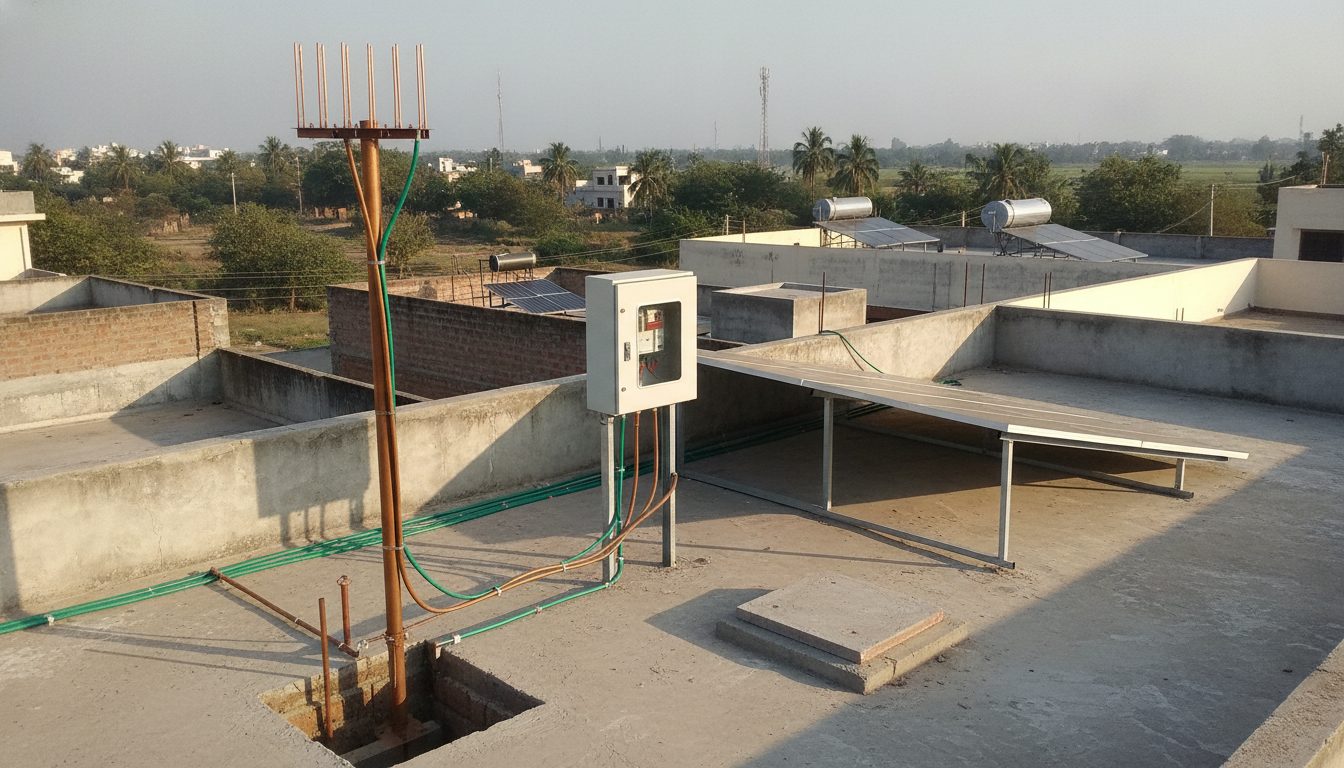
Regulatory Compliance and Electrical Safety
Electrical safety and compliance with CEA (Measures Relating to Safety and Electric Supply) regulations are mandatory for all residential rooftop installations. Following these standards protects residents from electrical hazards and ensures legal operation of the grid-tied system. Before finalizing your setup layout, you can check your overall requirements and financial planning using the main solar system cost, savings, and subsidy calculator.
Adhering to safety rules prevents equipment damage during standard grid fluctuations. Proper documentation of earth resistance values is typically required during net metering inspection by local distribution companies.
To check the numbers for your own home, try the solar calculator — enter your electricity bill and get system size, subsidy and payback in seconds.
Understanding Earthing Materials and Pit Installation
A reliable grounding network requires choosing between copper and galvanized iron earth pit installation based on soil conditions and budget. Copper offers superior electrical conductivity and longevity, while galvanized iron serves as a standard alternative in less corrosive soils.
Installation involves driving rods deep into the soil and backfilling with specialized chemical earthing compounds. These compounds maintain low earth resistance by retaining moisture around the electrode during dry summer months, ensuring fault currents safely dissipate into the ground.
Lightning Arresters and Surge Protection Devices
Inadequate earthing and missing surge protection devices frequently cause inverter burnouts during intense monsoon lightning strikes. Lightning arresters installed at the highest points of the roof intercept direct atmospheric discharges and safely channel the current down through dedicated down-conductor cables.
Surge protection devices placed on both the DC side between panels and the inverter, as well as the AC side between the inverter and the distribution board, clamp high-voltage spikes. This dual-layer defense stops transient surges from reaching sensitive internal components of the inverter.
Testing Standards and Maintenance
Regular testing of the earthing system ensures it remains functional over the operational lifetime of the solar array. Earth resistance must be measured periodically using a digital earth tester to verify that readings stay within safe limits specified by electrical codes.
Maintenance tasks include inspecting mechanical fasteners for corrosion, checking the physical integrity of copper or galvanized iron strips, and pouring water into earth pit funnels during dry periods to maintain moisture levels for the chemical compounds.
🌟 Ready to Go Solar? Get 3 Free Quotes
Connect with verified, MNRE-empanelled solar installers near you — free, no obligation.
Get Free Solar Quotes →