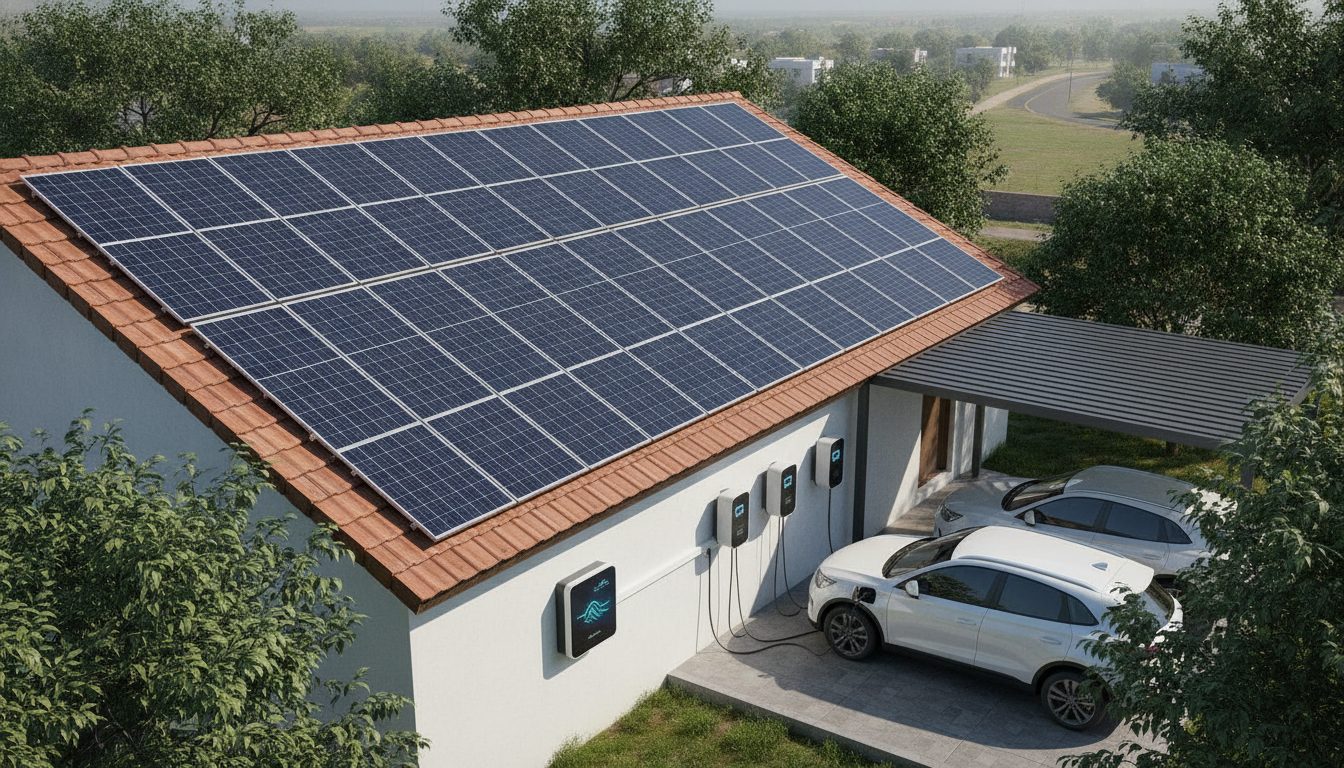
Managing Peak Loads with Rooftop Solar and EVs
The simultaneous adoption of rooftop solar and electric vehicles creates peak load management challenges for residential households. When a family charges an electric vehicle at home while running standard household appliances, the total power demand often exceeds normal grid limits or sanctioned loads. A solar ev charger home energy management system resolves this conflict by monitoring power generation and real-time consumption.
Property owners planning a clean energy setup can check their space requirements using the solar roof area calculator before installing panels. Managing this combined energy flow prevents sudden spikes in household electricity usage and protects home wiring.
To check the numbers for your own home, try the solar calculator — enter your electricity bill and get system size, subsidy and payback in seconds.
Optimizing Self-Consumption and Grid Stability
Smart EV chargers and Home Energy Management Systems work together to prioritize solar generation for vehicle charging rather than sending excess power back to the grid at lower feed-in tariffs. By scheduling charging cycles to match peak daytime solar production, households use more of the energy they generate on-site.
This direct utilization reduces reliance on grid power during expensive evening hours. Property owners can also evaluate potential financial returns on their total setup through the solar ROI and payback period calculator to understand long-term savings.
The Role of Bidirectional V2H Technology
Bidirectional charging V2H tech allows energy stored in an electric vehicle battery to flow back into the home during high-demand periods or grid outages. Home Energy Management Systems automate this process by switching power sources based on household demand and current utility tariffs.
Using stored vehicle energy during peak pricing hours lowers overall household utility expenses. This bidirectional capability turns the vehicle into a functional home storage battery without requiring a separate standalone battery bank.
🌟 Ready to Go Solar? Get 3 Free Quotes
Connect with verified, MNRE-empanelled solar installers near you — free, no obligation.
Get Free Solar Quotes →