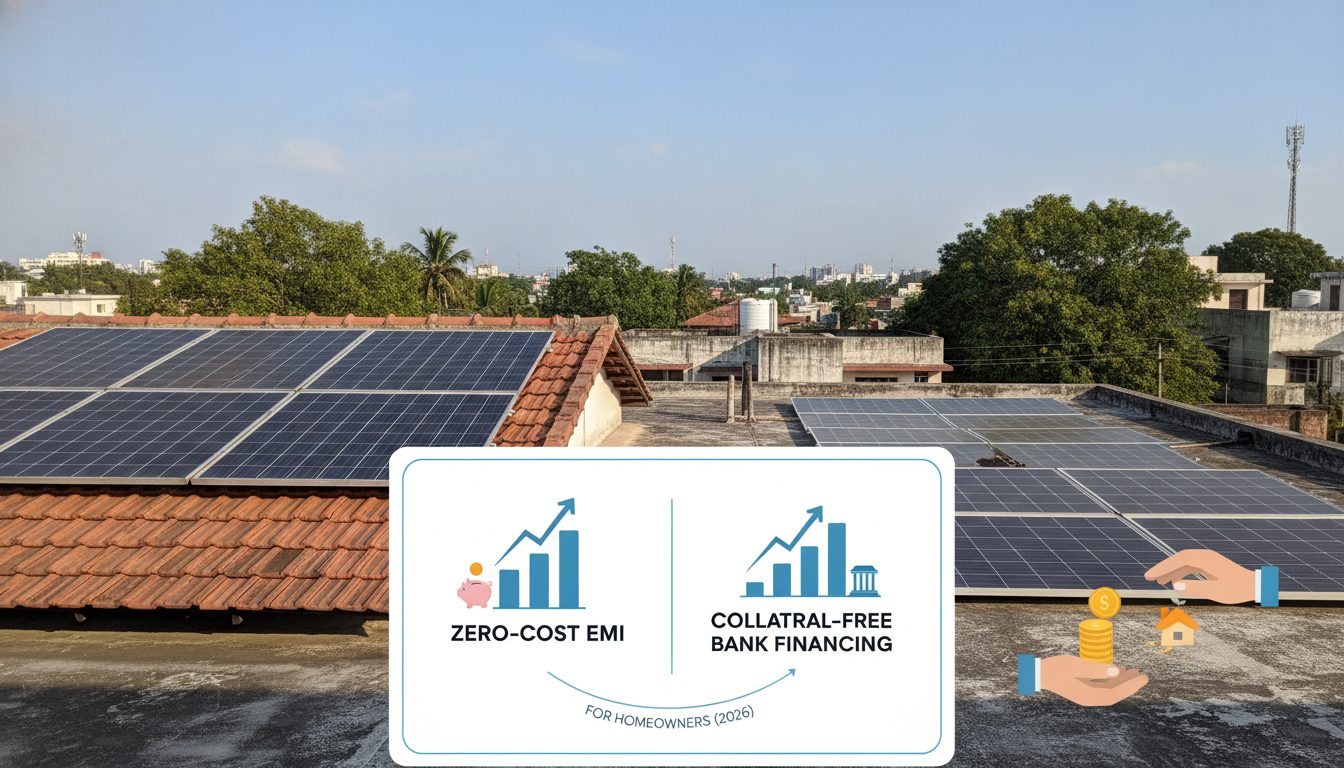
Understanding Financing Options for Residential Solar
High upfront costs remain a barrier for residential adopters despite the PM Surya Ghar subsidy, making proper financing essential for Indian households. Public and private banks now offer collateral-free green loans with interest rates ranging from 7% to 10% under priority sector lending guidelines. These loans bridge the gap between subsidy payouts and actual installation expenses. Before applying, you can use our solar financing and loan EMI calculator to figure out your monthly outgo.
To check the numbers for your own home, try the solar calculator — enter your electricity bill and get system size, subsidy and payback in seconds.
Comparing Collateral-Free Bank Loans and Zero-Cost EMI
Bank financing provides structured credit options with tenure choices extending up to 10 years. Because these are collateral-free green loans, borrowers do not need to pledge property deeds to secure approval. Processing fees vary by lender, so applicants should check specific administrative charges beforehand. Zero-cost EMI plans, often promoted directly by installers or equipment manufacturers, split payments into equal parts without added interest, though shorter repayment windows usually apply.
Calculating Net Savings and Managing Repayments
The core objective of financing a system is ensuring your loan installment sits below your monthly utility savings. When monthly electricity bill reductions exceed your EMI amount, the installation begins paying for itself immediately. Homeowners should evaluate their exact electricity usage patterns and potential tariff changes over the loan tenure. You can check your estimated returns using our solar ROI and payback period calculator before finalizing a lender.
🌟 Ready to Go Solar? Get 3 Free Quotes
Connect with verified, MNRE-empanelled solar installers near you — free, no obligation.
Get Free Solar Quotes →