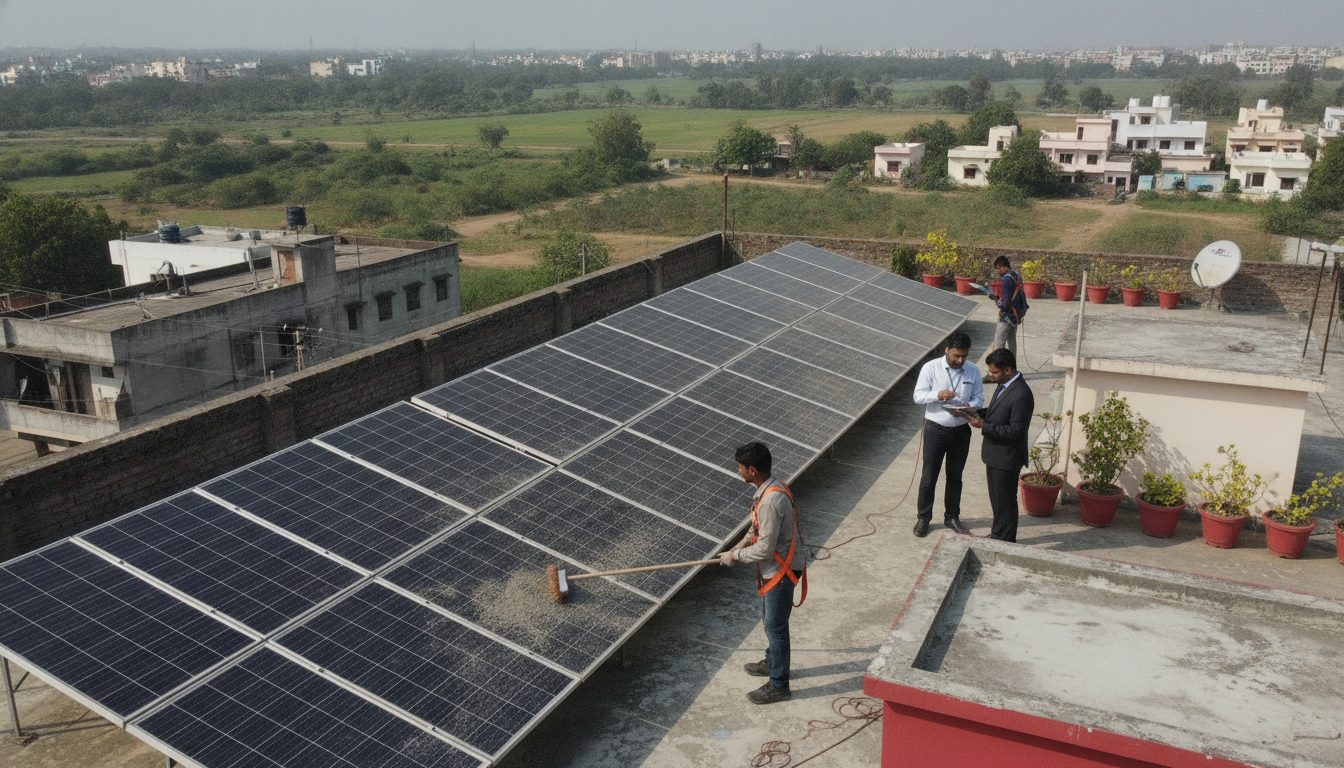
Managing Dust Accumulation and Soiling Loss
Dust accumulation can reduce generation by up to 25% in dusty Indian plains and agricultural belts. Regular upkeep ensures your rooftop installation performs as expected. Before purchasing extra panels, homeowners can use the solar roof area calculator to check if their available space accounts for practical layout and cleaning paths.
Periodic cleaning removes particulate matter that blocks sunlight from reaching photovoltaic cells. Without washing, thin layers of soil bake onto the glass surface during hot afternoons. This gradual accumulation forms a stubborn film that simple morning dew cannot rinse away.
Not sure what size you need? Our free solar calculator works out system size, cost after subsidy and payback from your monthly electricity bill.
Optimal Cleaning Frequencies and Safe Washing Methods
Establish a regular washing routine based on your local environment. Homes near unpaved roads, construction sites, or agricultural fields need monthly cleaning cycles. Urban areas with lighter dust loads generally require washing every six to eight weeks.
Protect your investment by avoiding harsh cleaning tools. The risks of abrasive washing on anti-reflective coatings include permanent micro-scratches that scatter light and permanently lower power output. Use soft microfiber brushes, squeegees, and plain water without harsh chemical detergents that leave residue films.
Understanding Panel Degradation and Warranty Protections
Standard photovoltaic modules come with a linear performance warranty guaranteeing that output will not drop below a specified percentage over twenty-five years. Gradual yearly wear is normal, but structural defects or sudden drops indicate a faulty module.
Homeowners must monitor monthly generation logs to spot anomalies early. If generation falls significantly below expected yields under clear skies, the module may qualify for manufacturer replacement under standard performance guarantees.
Steps for the Residential Solar Panel Warranty Claim Process
Executing a residential solar panel warranty claim process requires organized documentation. Follow this step-by-step procedure when panel degradation exceeds acceptable limits:
- Gather production data: Export daily and monthly generation reports from your inverter monitoring application.
- Document physical defects: Take clear photographs of any hot spots, discoloration, delamination, or glass breakage.
- Contact the installer or manufacturer: Submit a formal service ticket with your purchase invoice, installation report, and collected evidence.
- Facilitate technical inspection: Allow authorized technicians to perform thermal imaging or electrical testing on-site.
- Receive resolution: The manufacturer will repair, replace, or compensate for underperforming modules based on the verified test results.
🌟 Ready to Go Solar? Get 3 Free Quotes
Connect with verified, MNRE-empanelled solar installers near you — free, no obligation.
Get Free Solar Quotes →