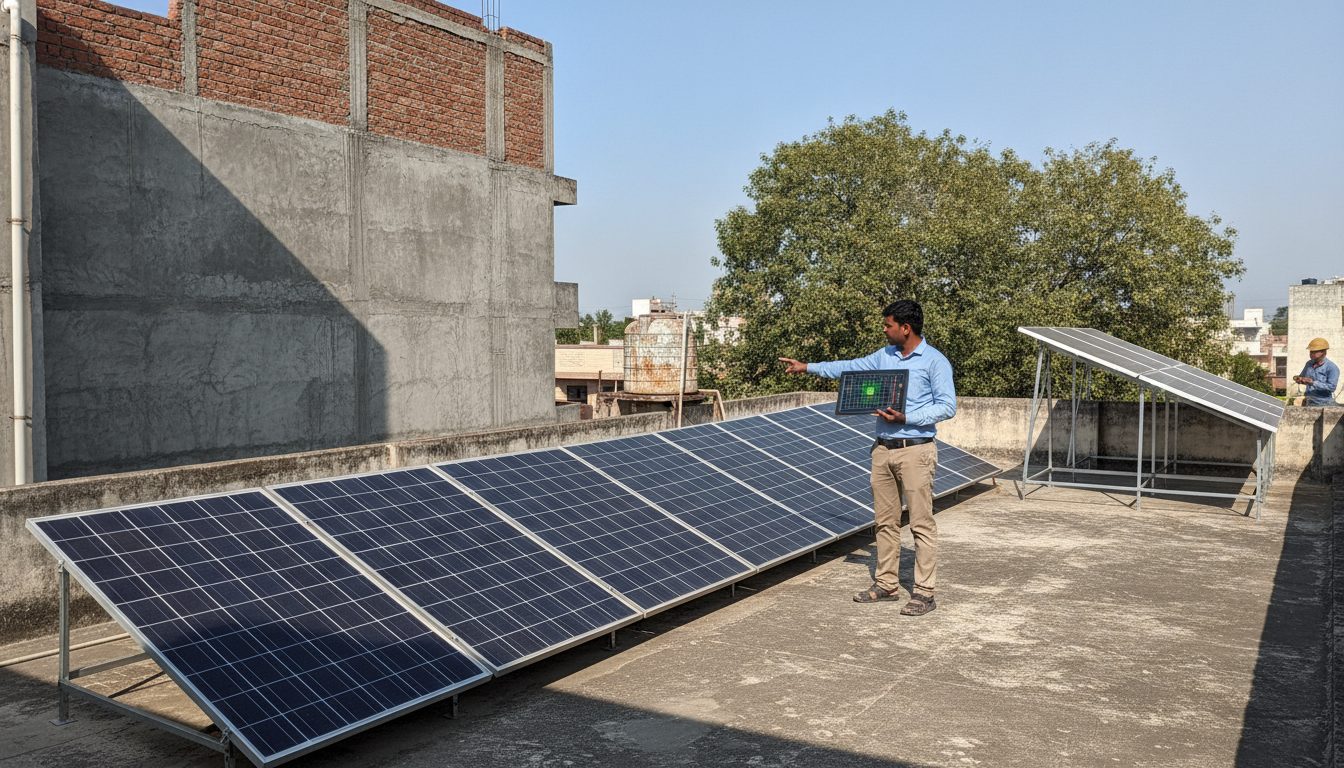
Why Shade Analysis Matters for Indian Rooftops
Surrounding trees, high-rise buildings, and parapet walls can reduce residential solar generation by 15-30% if shade analysis is ignored. Following a thorough solar shadow analysis guide helps homeowners map precise sun paths across all seasons before final installation. Before purchasing equipment, check your available space using a solar roof area calculator to ensure your unshaded sections meet your consumption goals.
To check the numbers for your own home, try the solar calculator — enter your electricity bill and get system size, subsidy and payback in seconds.
Tools Used to Map Sun Paths and Obstructions
Modern software tools help map sun paths accurately across solstices to catch seasonal variations in shadow length. PVsyst and HelioScope model the exact height and distance of nearby structures relative to your roof plane. These digital simulations reveal how morning and evening shadows stretch across different months of the year.
Practical Steps for Evaluating Your Roof Layout
Homeowners must evaluate shade profiles before finalizing rooftop layouts by visiting the roof at different times of day. Mark the exact positions of overhead wires, water tanks, and neighboring parapet walls on a scaled rooftop sketch. Avoid placing panels directly behind permanent vertical structures that cast long shadows during peak generation hours.
Mitigating Partial Shading with Modern Equipment
Traditional string inverters drop the output of an entire panel string when a single module is shaded. Microinverters or module-level power electronics (MLPE) mitigate partial shading better by letting each panel operate independently. This ensures that a shadow on one corner of the roof does not drag down the performance of the rest of the array.
🌟 Ready to Go Solar? Get 3 Free Quotes
Connect with verified, MNRE-empanelled solar installers near you — free, no obligation.
Get Free Solar Quotes →