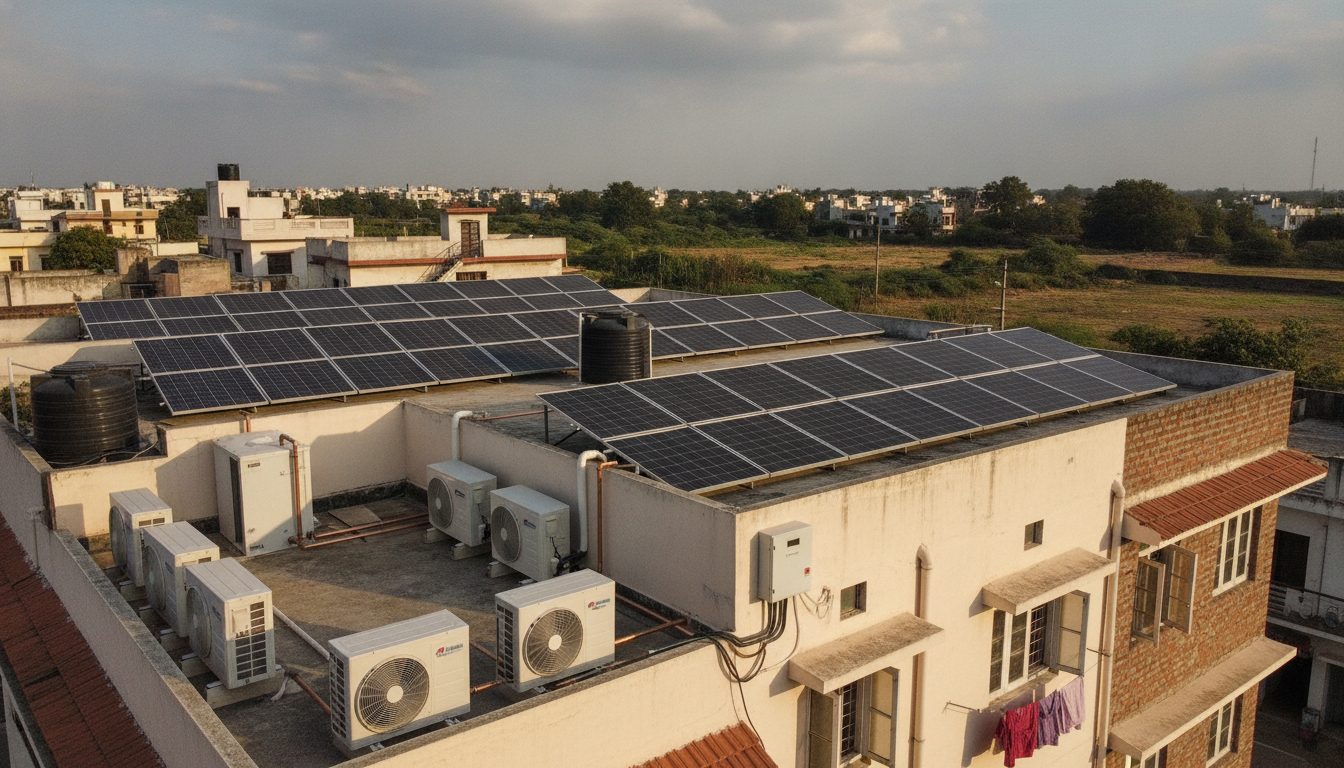
Understanding High-Load Residential Appliances
With rising summer temperatures across India, residential electricity consumption is increasingly dominated by 5-star inverter ACs and heat pump water heaters. Standard 3kW rule-of-thumb calculators often fall short when accounting for simultaneous compressor surge loads and high ambient temperature derating.
Homeowners often rely on basic calculations that only look at monthly energy bills. Heavy motor loads require a deeper look at real-time power draws. You can use our home inverter and battery backup size calculator to map out peak load profiles before finalising panel capacity.
Not sure what size you need? Our free solar calculator works out system size, cost after subsidy and payback from your monthly electricity bill.
Accounting for Surge Loads and Derating
Compressors require significantly more power at startup than during steady operation. Standard calculators miss this surge. High ambient temperatures also reduce solar panel output efficiency during peak afternoon cooling hours when ACs run hardest.
Ignoring temperature derating leads to underpowered systems during critical summer months. Balancing total daily kWh consumption with peak simultaneous demand keeps the system functional under heavy thermal stress.
Calculating Daily Consumption and Inverter Capacity
Accurate sizing requires adding the running wattage of your heat pump water heater and inverter ACs to your base household load. Match this total to a suitably rated inverter capable of handling transient spikes without tripping.
Before buying equipment, verify your total generation potential and financial returns by checking the main solar system cost, savings, and subsidy calculator to align your equipment size with available roof space and budget limits.
🌟 Ready to Go Solar? Get 3 Free Quotes
Connect with verified, MNRE-empanelled solar installers near you — free, no obligation.
Get Free Solar Quotes →