Understanding Dead Weight and Structural Integrity
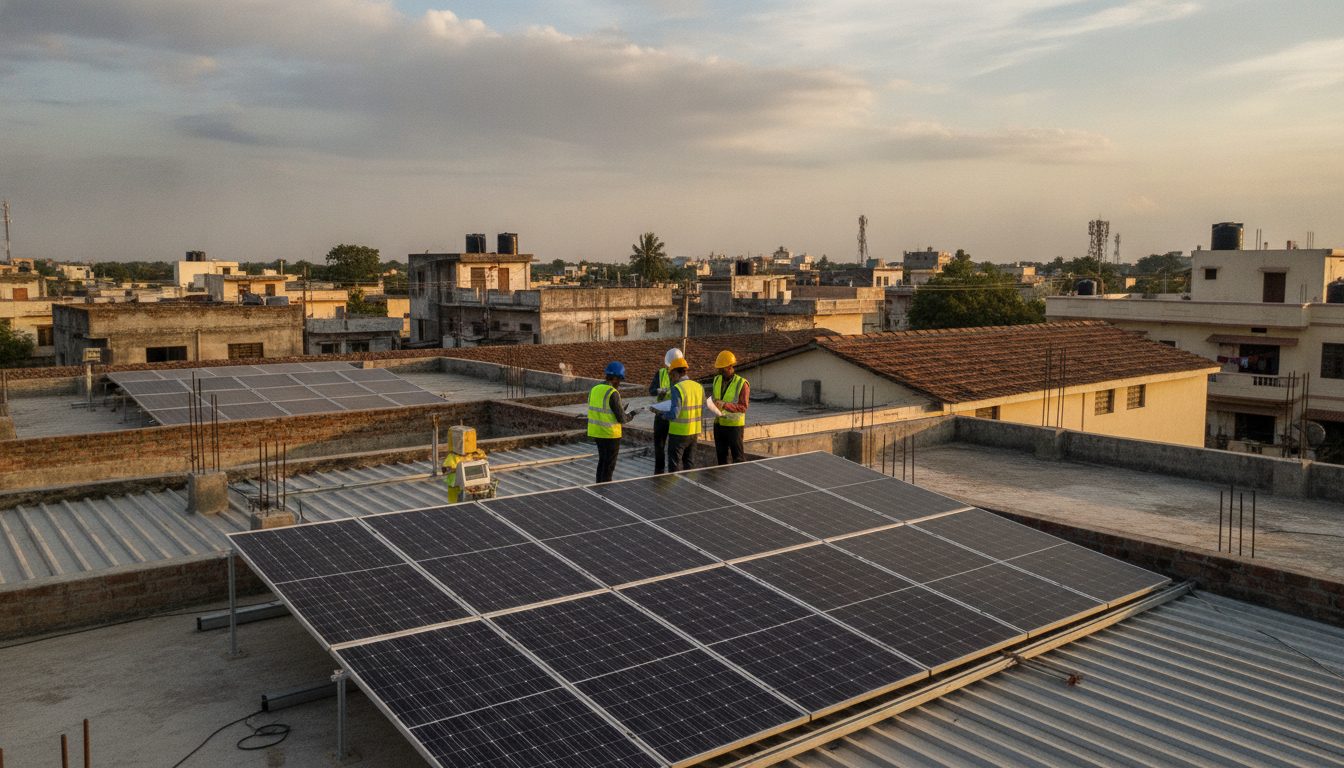
Performing a proper solar structural load calculation roof safety check is essential before placing heavy equipment on an Indian home. A standard 5kW rooftop solar system adds approximately 400 to 500 kg of dead weight to the surface. This load distributes across the mounting feet or ballast trays, exerting continuous downward pressure on RCC slabs and tin-shed roofs.
Before signing off on an installation, verify whether your roof can bear this extra weight without sagging or cracking. Homeowners often check available space using a solar roof area calculator to ensure physical layout compatibility alongside weight limits. Old concrete or weathered structures require a professional assessment to confirm that the existing masonry and reinforcement bars can handle the prolonged static load.
To check the numbers for your own home, try the solar calculator — enter your electricity bill and get system size, subsidy and payback in seconds.
Wind Load Survivability and Cyclonic Safety
India experiences severe weather variations, making wind uplift a primary threat to rooftop arrays. Wind load survivability up to 150 km/h is mandatory under BIS standards to prevent structural uplift during cyclones. Solar panels act like sails, catching high-velocity winds that can tear brackets straight out of concrete if the fastening is weak.
Installers must anchor support legs using heavy-duty expansion fasteners on RCC roofs or clamping systems on metal sheets that grip the purlins directly. Wind tunnel testing and aerodynamic angle positioning help reduce lift forces, ensuring the entire assembly stays locked to the roof during severe storms.
Ballast Versus Non-Penetrating Mounting Structures
Choosing how the system attaches to your home depends on the roof material and waterproofing concerns. Non-penetrating mounting structures rely on clamping mechanisms or gravity rather than drilling holes into the concrete slab.
Ballasted systems use heavy concrete blocks to hold the structure down without puncturing the waterproofing membrane. However, these blocks add even more dead weight to the total load. Tin-shed installations avoid heavy ballasts entirely, using specialized L-feet bolted directly to the structural purlins with rubber washers to prevent water leaks.
Corrosion Prevention and Structural Audit Checklists
Outdoor metal components face rapid oxidation from humidity, rain, and pollution. All mounting rails, nuts, bolts, and clamps must consist of hot-dip galvanized steel or structural-grade anodized aluminum to prevent rust over a twenty-five-year operational lifespan.
A thorough structural audit checklist should include checking for hairline cracks in RCC roofs, verifying the tightness of every mechanical fastener every six years, inspecting waterproofing layers around anchor points, and confirming that no pooling water surrounds the mounting feet. Regular inspections prevent minor rust or loose bolts from turning into major structural failures.
🌟 Ready to Go Solar? Get 3 Free Quotes
Connect with verified, MNRE-empanelled solar installers near you — free, no obligation.
Get Free Solar Quotes →