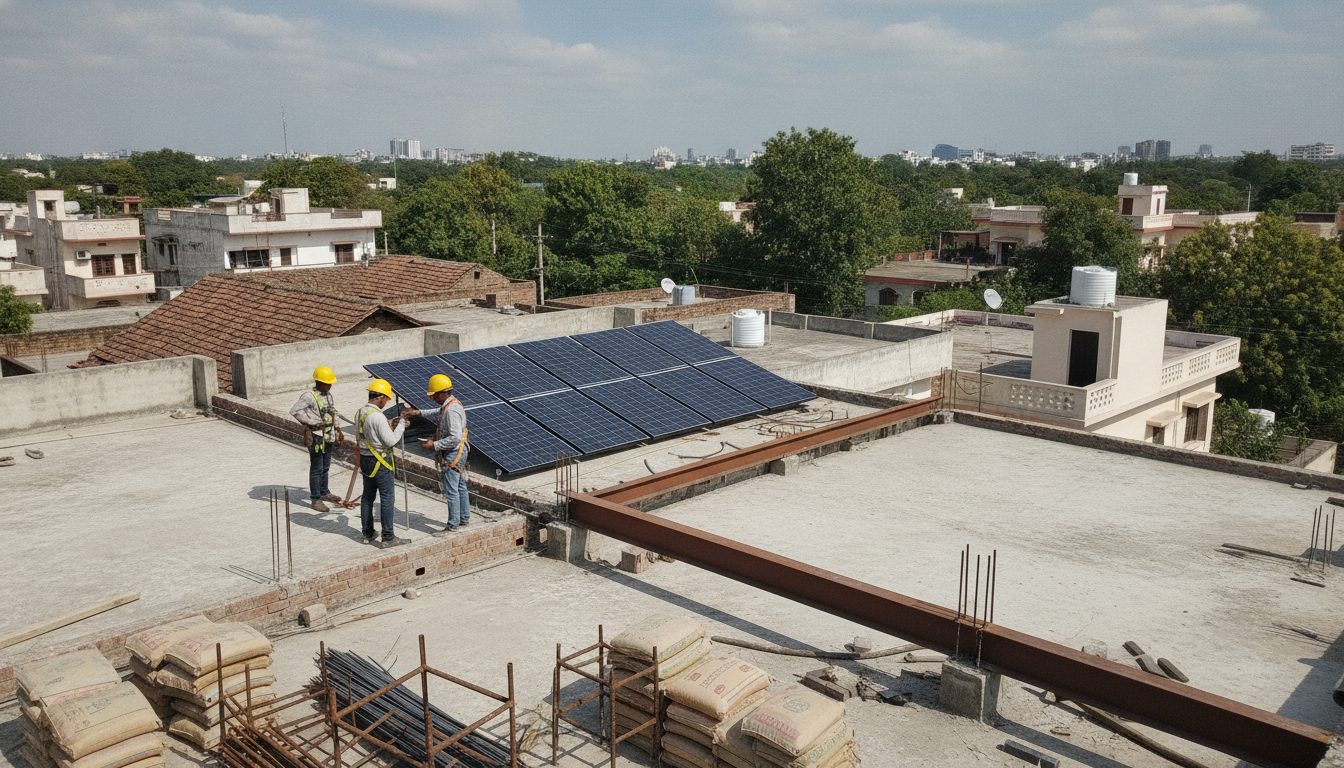
Evaluating Concrete RCC and Asbestos Roofs
Ensuring solar rooftop structural safety India starts with identifying your specific roof type. Concrete reinforced cement concrete (RCC) roofs typically handle standard residential installations easily because of their high load-bearing capacity. Asbestos sheet roofs found in older homes require a different approach due to their fragile nature and lower tolerance for concentrated weight. You must inspect the surface for existing cracks, water seepage, or structural weakening before bringing any heavy materials upstairs. If you are unsure about the available space required for installation, check the solar roof area calculator to plan your layout accurately.
To check the numbers for your own home, try the solar calculator — enter your electricity bill and get system size, subsidy and payback in seconds.
Understanding Dead Load and System Weight
Solar panels, inverters, and mounting frames add permanent weight to your home. A typical 3kW to 5kW solar system adds a dead load of approximately 35 to 50 kg per square meter across the installation footprint. This weight must distribute evenly across the supporting pillars or load-bearing walls of the building. Heavy localized concentrations can cause long-term sagging or damage to the ceiling slab. Homeowners should verify that their building plans account for this extra vertical weight before signing any vendor contracts.
Wind Load Resistance for High-Rise Apartments
Wind uplift is a major risk for rooftop solar systems, particularly on high-rise residential buildings and multi-story independent houses. Strong gusts can catch the underside of tilted panels and exert severe pulling forces on the mounting hardware. Installers must calculate local wind speeds and use proper ballasting or secure chemical anchoring into the concrete slab. Proper angle adjustments and aerodynamic spacing reduce wind resistance and keep the entire array stable during severe storms.
Preventing Monsoon Corrosion with Galvanized Structures
Indian monsoons bring heavy rainfall and high humidity that quickly rust standard iron structures. Using hot-dip galvanized mounting structures is essential to prevent rapid corrosion during these wet months. Zinc-coated steel frames resist rust formation and maintain their structural strength for decades of exposure. Inspect all nuts, bolts, and joints for rust signs annually, and replace any degraded hardware before the rainy season begins.
🌟 Ready to Go Solar? Get 3 Free Quotes
Connect with verified, MNRE-empanelled solar installers near you — free, no obligation.
Get Free Solar Quotes →