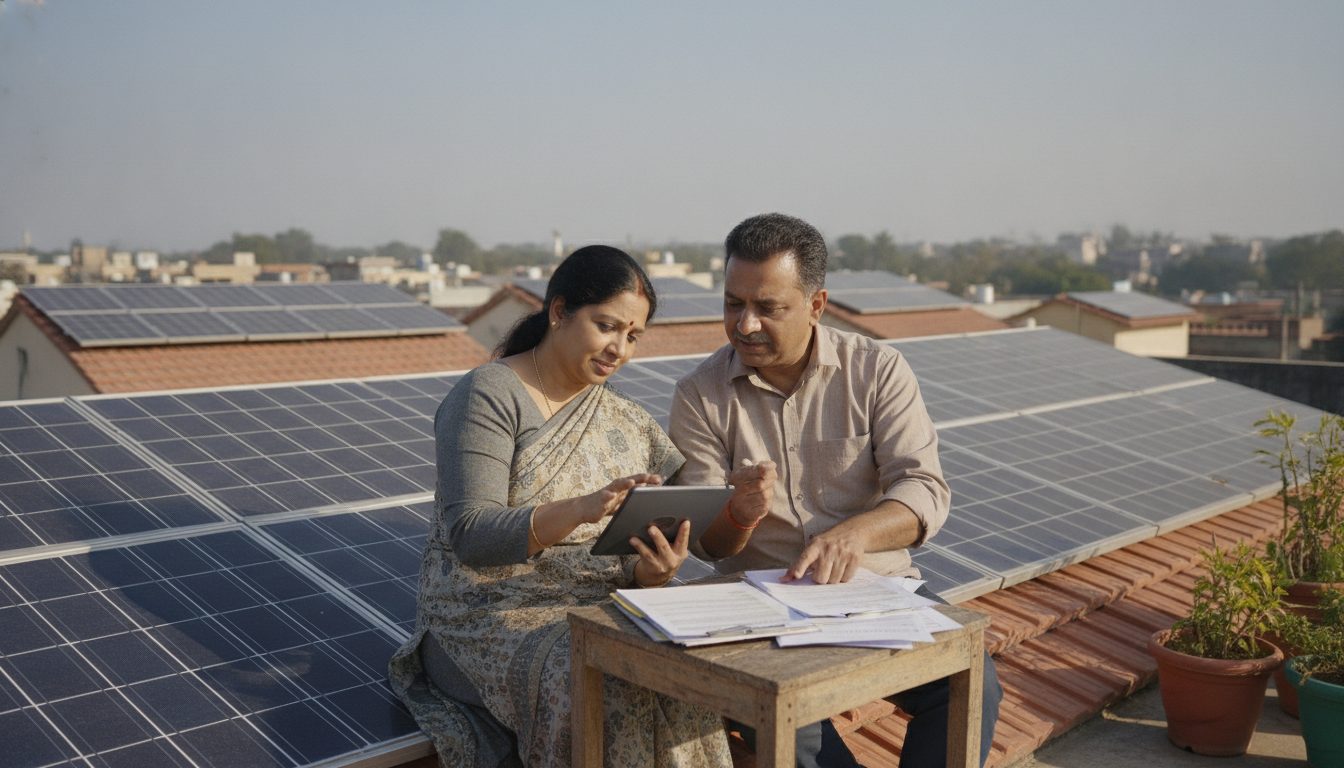
Understanding Solar Rooftop Loan Financing in India
Securing solar rooftop loan financing India is now more structured for residential property owners thanks to specific regulatory guidelines. The Reserve Bank of India classifies green energy projects up to ₹10 lakhs under priority sector lending. This designation encourages both public and private banks to offer dedicated loans for photovoltaic installations. Before applying, you can use our solar financing and loan EMI calculator to estimate your monthly outgo.
Interest rates for these clean energy loans generally range from 7% to 10.5 percent per annum. Major banks and non-banking financial companies handle these applications directly. Terms depend on the loan amount and the financial institution you choose. Most standard rooftop systems fall well within the ₹10 lakh ceiling, allowing many applicants to benefit from priority processing.
Not sure what size you need? Our free solar calculator works out system size, cost after subsidy and payback from your monthly electricity bill.
Collateral-Free Options and NBFC Alternatives
Many homeowners worry about pledging property to fund a green energy setup. Fortunately, loans up to ₹10 lakhs usually require no collateral. Banks rely on the installed hardware and future electricity savings as security. Specialized non-banking financial companies also offer fast approvals for residential installations.
These lenders often have fewer bureaucratic hurdles than traditional commercial banks. However, their interest rates might lean toward the higher end of the 7% to 10.5% bracket. Check the total processing fees and prepayment charges before signing any agreement with an NBFC.
Documentation Requirements and Loan Approval
Getting a green energy loan requires standard financial and property paperwork. Lenders evaluate your ability to repay based on clear documentation. You can plan your system size using the roof area required for solar panels calculator before gathering your documents.
Be prepared to submit the following papers:
- Recent electricity bills showing steady power consumption
- Property ownership papers or municipal tax receipts
- Standard KYC documents including Aadhaar and PAN card
- Identity and income proof like salary slips or bank statements
Banks verify these records to ensure the site is suitable for panel mounting and that you have a clear title to the property.
Bridging Upfront Costs and Subsidy Release
A common financial hurdle is managing the gap between paying the installer and receiving the government direct benefit transfer subsidy. Upfront installation costs require full payment to the vendor first. The direct benefit transfer subsidy is credited to your bank account later after inspection and commissioning.
To manage this timeline, structure your loan to cover the full invoice amount. Once the subsidy arrives from the government, you can make a partial prepayment toward the loan principal. This reduces your remaining interest burden and shortens your overall repayment tenure significantly.
🌟 Ready to Go Solar? Get 3 Free Quotes
Connect with verified, MNRE-empanelled solar installers near you — free, no obligation.
Get Free Solar Quotes →