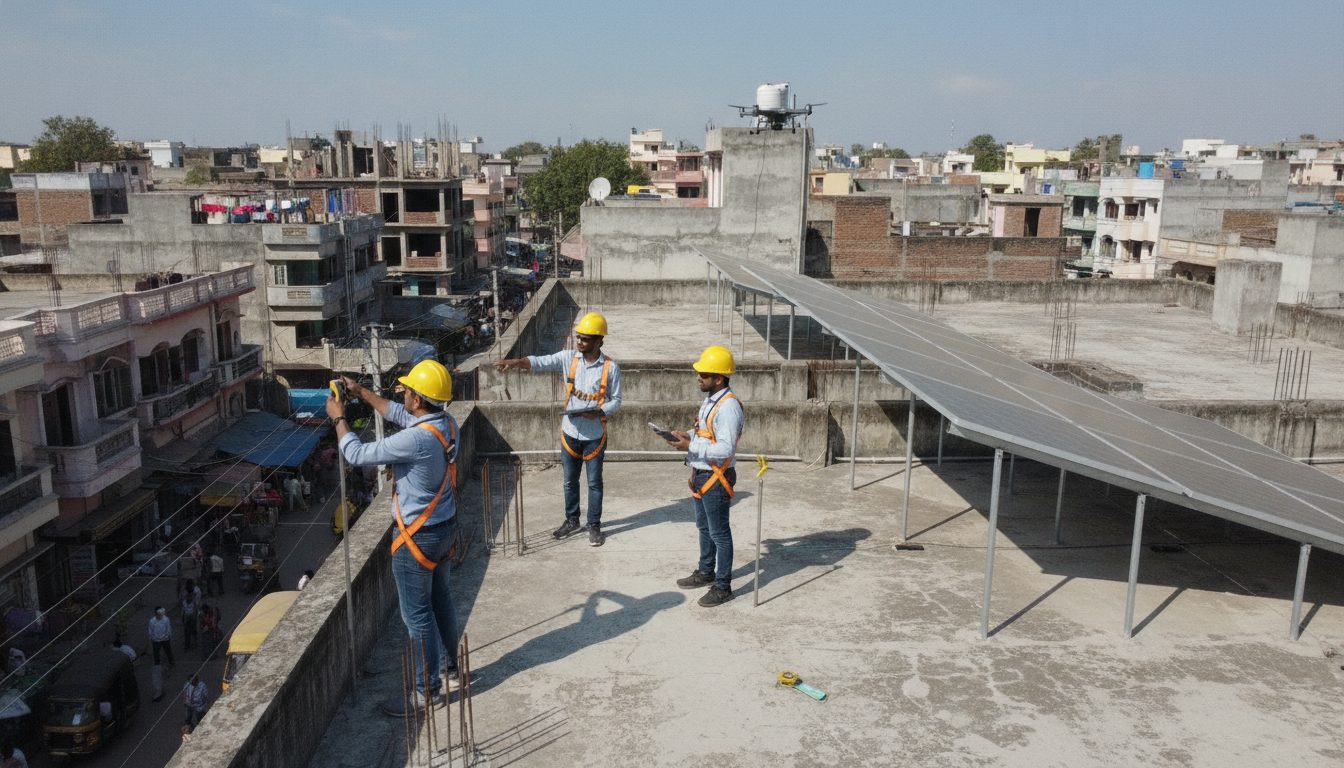
Evaluating RCC and Metal Sheet Roofs for Commercial Solar
Commercial and industrial roofs must typically bear an additional dead load of 15 to 20 kg per square meter for ballasted or rail-mounted solar setups. This solar rooftop structural audit guide explains the primary assessment steps for building owners. Reinforced cement concrete (RCC) roofs generally offer higher load-bearing capacity, but inspectors must check for concrete spalling, micro-cracks, and past waterproofing layers that add hidden weight. Metal sheet roofs on industrial sheds present different challenges. Installers must inspect purlin spacing, sheet gauge, and corrosion levels before fixing clamps. Before finalising layout plans, check your available space using a solar roof area calculator to ensure weight distribution matches the structural drawings.
Want to see what this means for your roof? Use our free solar calculator for India to estimate system size, cost after the ₹78,000 subsidy and payback period.
Calculating Wind Load Resistance as per IS 875 Standards
Wind uplift poses a primary threat to commercial solar arrays, particularly on tall industrial sheds and flat RCC roofs. Engineers must compute wind load resistance using IS 875 standards to ensure panels stay anchored during severe storms. The calculation factors in local basic wind speed, terrain category, building height, and the topographical factor of the site. Ballasted systems rely heavily on gravitational weight to counter wind forces, while anchored rail systems transfer uplift forces directly into the primary building frame. Skipping this calculation can cause structural failure or panel detachment during high-velocity wind events.
Liability Risks of Installing Solar on Aging Industrial Sheds
Mounting solar panels on aging industrial sheds without prior load verification exposes building owners and installers to severe liability risks. Older metal sheets and corroded purlins weaken over time, reducing their ability to support dynamic weather forces combined with permanent dead loads. If a roof collapses due to unverified weight additions, insurance claims are routinely rejected for lack of structural due diligence. Partnering with certified structural engineers helps prevent these failures by providing legally valid load certificates. Ensuring proper documentation protects both the capital investment and the occupants working inside the facility.
🌟 Ready to Go Solar? Get 3 Free Quotes
Connect with verified, MNRE-empanelled solar installers near you — free, no obligation.
Get Free Solar Quotes →