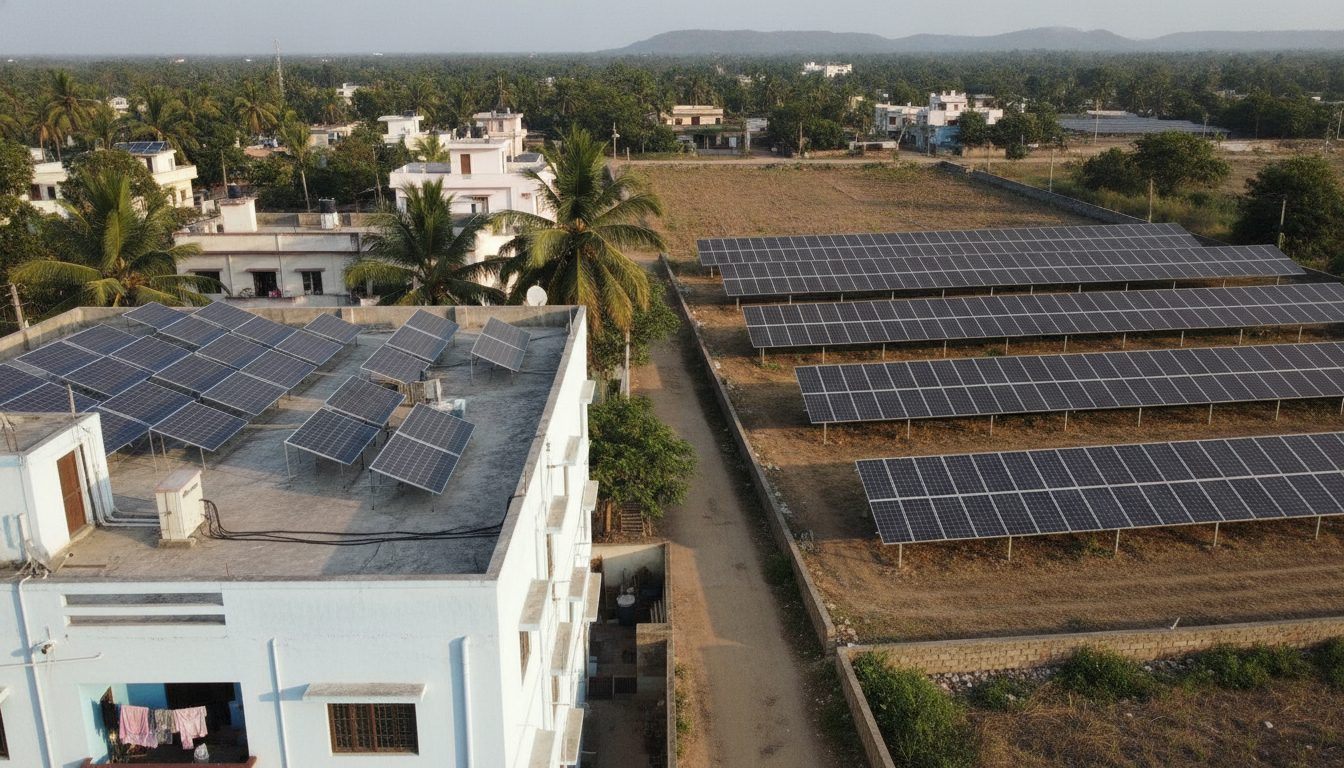
Understanding Your Property Layout
When deciding on rooftop vs ground mounted solar, your available footprint dictates the entire layout. Rooftop systems are the standard choice for most residential buildings because they make use of otherwise-unused roof space without taking up yard area. For standard city homes or apartments, placing panels overhead keeps the ground clear for daily activities and vehicle parking.
On the other hand, ground-mounted systems suit larger properties, rural houses, or farm plots with open land. If your roof has complex angles, shading from nearby trees, or weak structural framing, mounting the array directly on the ground provides a practical alternative.
Performance and Maintenance Access
Ground-mounted setups allow easier maintenance access than rooftop arrays. Technicians can clean panels, check wiring, and service inverters without climbing onto a high roof, which simplifies routine upkeep. This accessibility matters if your local area experiences heavy dust or seasonal bird droppings that require frequent washing.
Ground installations also offer more flexibility for optimal tilt and orientation. While rooftops force you to work with the existing roof pitch, ground frames can be angled directly toward the sun to capture maximum daylight across changing seasons. However, ground arrays require dedicated structural groundwork and land clearing before installation can begin.
Comparing Structural Requirements
Installing solar panels overhead requires your roof structure to support the dead weight of the mounting hardware, panels, and wind load. Engineers must inspect roof integrity before installation. Ground mounts avoid roof load concerns entirely, but they demand solid foundational work in the soil, such as concrete piers or driven steel posts, to withstand heavy winds.
| Feature | Rooftop Solar | Ground-Mounted Solar |
|---|---|---|
| Space Usage | Uses existing roof area | Requires dedicated land footprint |
| Maintenance | Requires roof access | Ground-level access |
| Tilt Optimization | Limited by roof pitch | Fully adjustable orientation |
| Structural Prep | Roof load inspection | Ground groundwork and foundations |
Making Your Final Decision
Choosing the right mounting type comes down to evaluating your physical space and long-term maintenance preferences. If you live in an urban residence with limited yard space, a rooftop array is the logical choice. If you manage a larger rural plot and want easier access for cleaning and servicing, a ground-mounted system provides the flexibility you need.
🌟 Ready to Go Solar? Get 3 Free Quotes
Connect with verified, MNRE-empanelled solar installers near you — free, no obligation.
Get Free Solar Quotes →